


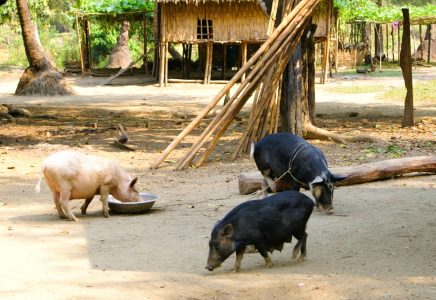
Myanmar’s pig herd has contracted significantly over the past five years. In 2018, the country had 5.8 million pigs, but 2023, only 4.47 million remained.
This 23% decline reflects the cumulative impact of African swine fever (ASF), which disrupted breeding operations and forced mass culling across commercial and backyard farms.
Disease pressure and production decline
ASF first emerged in Eastern Shan State in 2019. Since then, twelve outbreaks have been recorded, including the latest in Tachileik township in August 2023.
Thousands of pigs were culled. Pork supply chains were disrupted. Prices rose sharply, and many smallholder farmers abandoned swine production entirely.
As a result, overall swine production fell from 3 million pigs in 2021 to approximately 2.6 million in 2025, according to the latest report titled ‘Burma Future Prospects and Market Snapshot for Livestock and Feed Industry’ by the USDA Foreign Agricultural Service (FAS) in Rangoon.
Swine farming involves long production cycles and high investment. Disease outbreaks near market time can cause major financial losses for producers.
Nutrition constraints and protein supply
In addition to disease pressure, farmers face mounting challenges in feed nutrition—particularly in securing high-quality protein sources like soybean meal.
Imports of soybean meal peaked at 1.1 million tons in 2020. Quotas now cap imports at 300,000 tons in 2024/25 and 200,000 tons in 2025/26.
However, industry estimates suggest 500,000 tons is needed to sustain current livestock production levels. The shortfall is significant and growing.
Local oilcakes from peanuts, sesame, sunflower, and soybeans contribute only 100,000 tons. Their quality is poor, with high oil content and inconsistent processing.
These limitations raise feed conversion ratios and increase production costs. Swine are particularly sensitive to protein quality, especially during growth and finishing stages.
Feed costs already account for a large share of total expenses. Poor-quality protein inputs further reduce growth rates and herd efficiency.
Outlook and recovery needs
The USDA FAS report concludes that swine production will remain limited unless disease control improves and protein feed access expands. Stable trade policy, better coordination, and investment in domestic oilseed processing are essential for recovery and long-term growth.
Otherwise, pork prices will remain elevated, and the sector’s contribution to national livestock output will continue to decline.