


As the global livestock industry shifts decisively toward reducing antibiotic usage, the single greatest challenge for producers is finding an effective alternative to Antibiotic Growth Promoters (AGPs) without sacrificing herd productivity.
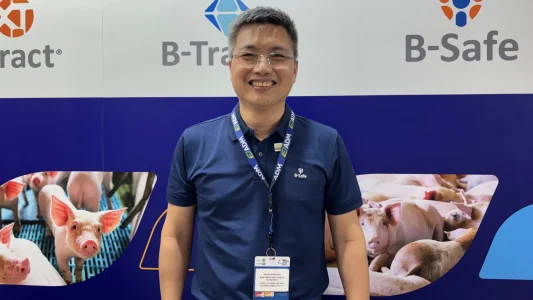
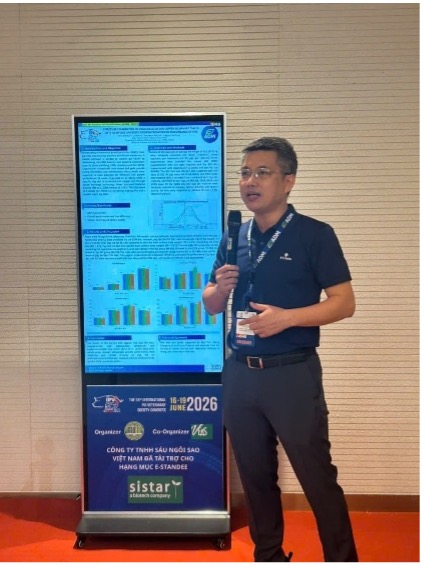
At the IPVS 2026 congress, Dr. Pham Minh Anh, Asia Animal Nutrition R&D Director at ADM, shared to porciNews Asia and nutriNews Asia the compelling results of a field study that opens a new frontier: utilizing a holistic combination of functional additives to completely replace AGPs under high-pressure commercial conditions.

The livestock industry is moving toward reduced antibiotic use. What are the key challenges producers face when replacing AGPs?
The biggest hesitation commercial producers have is the performance risk. Over the years, producers have relied on AGPs to sustain growth rates and manage gut health.
When withdrawing AGPs, their primary concern is a potential drop in animal performance, especially under real-world commercial conditions where biosecurity challenges and health challenges are highly unpredictable.
What was the primary objective of the study presented at IPVS 2026?
We know there is no single ‘silver bullet’ ingredient that can simply replace AGPs on their own. That is why our study focused on a holistic solution.
The primary objective was to evaluate a specialized combination of functional additives, specifically organosulfur compounds blended with a copper – clay combination, as a direct replacement for antibiotic growth promoters in swine diets under practical commercial farming conditions.
Could you summarize the trial design and evaluation criteria?
The trial was conducted in collaboration with a commercial producer in Vietnam over a period of 110 days. We designed the study with three distinct dietary treatments:
- ✅ Control diet: A standard commercial diet containing 120 ppm of Halquinol as the AGP.
- ✅ Blend 1 (Trial diet): Organosulfur compounds (0.005%) combined with a copper-clay combination blend (0.04%).
- ✅ Blend 2 (Trial diet): The identical formulation of Blend 1, with the addition of whole yeast at 0.1%.
During the 110-day period, we strictly monitored individual animal live weights at day 1, day 22, day 82, and day 110. At the end of the trial, representative animals from each group were randomly selected for comprehensive carcass quality and carcass dressing analysis.
What were the key results achieved by the AGP replacement strategy?
The results were highly reassuring for the industry. First and foremost, producers did not observe any negative or significant impacts on overall animal growth performance when removing the AGP.
In fact, we noticed a numerical increase in the average daily weight gain (ADG) in the groups fed our functional alternatives.
In terms of feed efficiency, the feed conversion ratios (FCR) were highly comparable across all treatments. Furthermore, when evaluating meat quality and carcass dressing percentage, all groups yielded highly uniform and similar profiles.
How did the alternative solution affect animal health, growth performance, and feed efficiency?
Beyond growth data, animal health and gut environment optimization are crucial metrics linked directly to production costs. Throughout the trial, we monitored the health status of each group closely and noted no critical health issues.
According to the producer’s feedback, no issues with diarrhea were observed in the alternative treatment groups. Remarkably, the group receiving the organosulfur and copper -clay combination demonstrated an excellent survival rate (survivability) compared to the control group fed with antibiotics.
What economic benefits can producers expect when adopting AGP alternatives?
This is the most crucial takeaway because it fundamentally changes the producer’s perspective. Historically, there was a fear that going antibiotic-free would automatically hurt the bottom line.
Our trial successfully demonstrated that a well-formulated, non-AGP dietary program does not negatively affect growth or feed performance, and it actually drives higher overall profitability by securing better herd survivability.
When you show a producer that switching away from AGPs does not threaten performance and instead protects economic returns, the conversation changes entirely. AGP replacement is no longer a compliance burden; it becomes a viable, smart business strategy.
Based on the study findings, what are the most important factors for successful AGP replacement in commercial production systems?
The data proves that the historic performance gap between AGP and non-AGP programs has been effectively closed, and in some measures, even reversed. It is no longer a question whether an effective alternative exists.
The critical factor now is how to select, combine, and correctly implement these functional tools based on the specific, localized farming conditions of each individual producer.
By using a targeted combination of scientifically validated feed additives and ingredients, combined with a comprehensive nutritional approach (e.g. evaluating raw material quality, precise formulation, continuous monitoring and adjustment) Producers can combine human expertise with modern technology, enabling informed, responsive management decisions to improve consistency, precision, and profitability in livestock operation.
What message would you like to share with livestock producers and industry stakeholders attending IPVS 2026? What innovations should we watch for?
IPVS 2026 is one of the premier global stages for swine production. ADM’s message is that we are fully committed to showcasing how our science-based, tailor-made solutions can step in to maximize production efficiency and financial profitability for farmers worldwide.
From a scientific standpoint, we want to build even deeper collaborations with global researchers, universities, and commercial farms to co-develop solutions for the swine sector.
Innovation is firmly embedded in ADM’s DNA. In the coming years, the industry should keep a close eye on our expanding portfolio of functional additives and nutritional services. We are heavily investing in research that addresses the unique, highly diverse production and husbandry systems found across Asia.
Ultimately, our goal is to supply expert knowledge and tools to secure sustainable animal production. Producers do not have to choose between animal welfare, regulatory compliance, and profitability. You can have all three.