


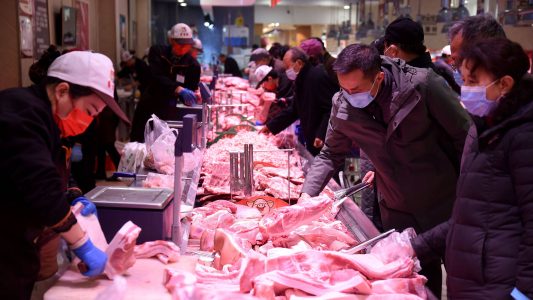
The Chinese government’s campaign to lift pork prices is finally gaining traction. But the rally is running into a familiar obstacle: consumers still are not buying enough, as reported by Bloomberg.
State-ordered capacity cuts and financial losses among breeders are starting to reduce supply. After hitting a 16-year low in June, wholesale pork prices have risen nearly 7% this month. That is helpful for the government’s priorities of fighting deflation and securing rural incomes.
As a snapshot, the price increase is also noteworthy because summer is usually a low season for demand. But broader consumption trends are not favorable, suggesting supply still needs to shrink and that any recovery is likely to be gradual and grinding.
“Production cuts will likely continue as the current herd is still above the government’s guidance. Farmers are losing money, so survival of the fittest will continue,” said Pan Chenjun, Senior Analyst with Rabobank.
China has been trying to control pig numbers and curb pork output for months. The Farm Ministry’s latest assessment is that the supply of pigs remains ample and demand is still weak, according to a briefing recently.
The government’s most important tool is a cap on the nationwide herd of breeding sows, which ultimately determines the pig population. That has been reduced to 37.5 million heads from 39 million. At the end of June, sow numbers were still above the target at 37.8 million.
At the same time, pig farmers are bleeding cash. Losses peaked in April, but they are still losing over USD 44 on every pig they raise. The biggest breeder, Muyuan Foods Group Co, is expecting to swing to a net loss of over USD 842 million in the first half.
Oversupply is proving especially stubborn as a slowing economy subdues consumer spending. Moreover, pork’s reputation as the nation’s favorite meat is starting to fray.
Per capita consumption has continued to decline, and demand from households has shown only temporary improvements after sharp drops in price, Chinese consultancy Mysteel said in a report.