


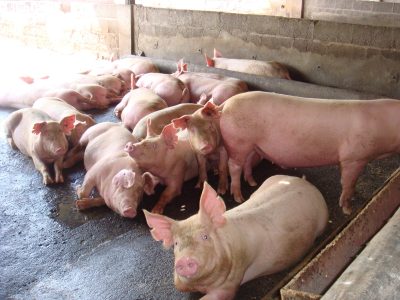
Rising feed expenses, especially corn, weigh heavily on the Philippine pork industry, according to the Philippine Institute of Development Studies (PIDS). It its paper titled Toward Competitive Livestock, Poultry, and Dairy Industries: A Consolidated Benchmarking Study, it said feed remains the single largest cost driver in hog production.
Elevated tariffs (35-50%) keep domestic prices elevated, with wholesale corn in the Philippines at USD 0.42-0.44/kg compared to Thailand’s USD 0.19-0.24/kg and Vietnam’s USD 0.22-0.29/kg. This disparity inflates feed costs, raising farmgate prices of hogs and pork products and eroding competitiveness.
High feed costs ripple across the value chain:
- ✅ Hog raisers face reduced margins and limited capacity to expand.
- ✅ Processors contend with higher input costs, squeezing profitability.
- ✅ Consumers pay elevated retail prices, making pork less affordable compared to substitutes.
ASF disruptions and recovery struggles
The industry’s growth trajectory was disrupted by African swine fever (ASF), which struck in 2019 and caused widespread herd losses. By 2020, pork production value fell by 17%, reflecting both disease impact and reduced consumer confidence.
Recovery has been slow, with inventories constrained by biosecurity challenges and high input costs. The PIDS study highlights that ASF outbreaks were more severe in backyard farms, where biosecurity measures are weaker, amplifying the vulnerability of the sector.
Dual production systems
Hog production in the Philippines is dominated by backyard systems, which account for more than half of the national inventory. These small-scale farms provide inclusivity and livelihood opportunities but limit efficiency, biosecurity, and standardization. Commercial farms, though fewer, operate at larger scales and higher productivity.
The dual structure complicates regulation and disease control, as ASF outbreaks spread more easily in backyard settings. PIDS notes that backyard farms often rely on household scraps for feed, further reducing efficiency compared to commercial systems that use formulated rations.
Regional comparisons
Neighboring countries illustrate how the Philippines lags in scale and efficiency.
In 2019, China’s hog inventory reached 310 million heads, Vietnam reported 28 million, and Thailand 11 million, against the Philippines’ 12 million.
China’s industry has consolidated rapidly, with large-scale farms producing thousands of head annually. Thailand’s sector is dominated by integrated corporations that control feed, breeding, and processing. Vietnam remains heavily small-scale, but still outpaces the Philippines in overall inventory.
The benchmarking study underscores that Philippine production costs align more closely with high-cost producers rather than competitive exporters.
Cost pressures and import reliance
Live pig prices in the Philippines remain significantly higher than in exporting countries. Between 2003 and 2012, hog producer prices rose steadily, reaching USD 3.00-3.50/kg by 2019. Despite declines from earlier peaks, Philippine prices stayed 40-60% higher than those in the US and Brazil, two of the world’s leading pork exporters.
Imports further highlight competitiveness gaps. The import dependency ratio peaked at 15% in 2019, then fell to 10% in subsequent years. While imports supplement supply, utilization consistently exceeded domestic production, reflecting the inability of local producers to fully meet demand.
Policy recommendations
The study emphasizes that the industry’s future lies in balancing backyard inclusivity with commercial consolidation. Recalibrating feed costs, strengthening farmer organizations, and upgrading technology are critical steps toward resilience.
PIDS also recommends improving disease surveillance and biosecurity, particularly in backyard farms, to prevent future ASF outbreaks and stabilize supply.