


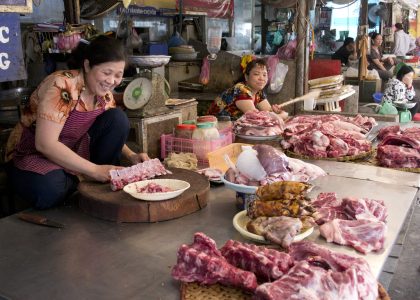
The Ho Chi Minh City People’s Committee has directed relevant departments, agencies, and local authorities to intensify inspections and monitoring of animal diseases, veterinary hygiene, food safety and the use of banned substances in livestock farming.
It also ordered tighter controls over the transportation, collection, trading and slaughtering of animals and animal products.
The move follows directives issued in July 31 by the Department of Livestock Production and Animal Health, and a proposal by the Ho Chi Minh City Department of Agriculture and Environment in mid-August.
Tightening controls on transport and slaughtering
The Department of Agriculture and Environment will lead coordinated efforts with relevant agencies to prevent and control animal diseases across the city.
Inspections will target animals and animal products transported into, out of or through Ho Chi Minh City. Authorities will prioritize major routes, gateways, animal collection and trading facilities, slaughterhouses, and locations or vehicles showing possible violations.
Checks will assess animal disease status, veterinary hygiene, and compliance with transport, trading, collection, and slaughtering regulations.
Meanwhile, the Department of Agriculture and Environment will continue to inspect the use of banned substances in livestock farming. Violations must be detected, prevented and handled promptly.
Cases showing signs of criminal offenses will be referred to the police for investigation and enforcement.
Stepping up oversight
Beyond disease prevention, the city has called for stronger monitoring of veterinary hygiene and food safety.
The Department of Agriculture and Environment will coordinate with agencies to intensify inspections. At the same time, it will work to raise public awareness of regulations on livestock production, veterinary health, and food safety.
The Department of Industry and Trade will direct market surveillance teams to strengthen inspections of businesses trading in animals and animal products, focusing on high‑risk areas.
Meanwhile, the Food Safety Department will oversee inspections of animal products intended for human consumption. This will ensure prompt identification and handling of violations.
Strengthening interagency coordination
The Ho Chi Minh City People’s Committee instructed the city’s police force to coordinate with veterinary authorities, market surveillance teams, and other agencies in inspecting animal production, transport, collection, trading, and slaughtering.
Local People’s Committees at the ward and commune level must work with veterinary agencies to monitor livestock activities in their areas. When violations occur, they must act within their jurisdiction or transfer cases to competent authorities.
Authorities must also step up dissemination of regulations to residents, producers, and businesses, reinforcing compliance across the supply chain.
This strengthened, interagency approach will help Ho Chi Minh City proactively control animal diseases, prevent banned substances, improve oversight of animal transport and slaughtering, and safeguard food safety and public health.