


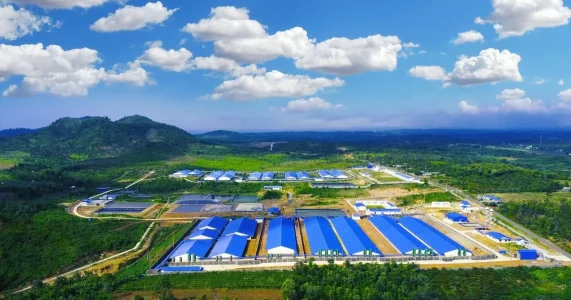
In their journey of developing high-tech agriculture in Vietnam, each project of Hung Nhon and De Heus is not merely a production farm, but also a footprint of innovation — where the economy, the environment, and people are connected within a sustainable development strategy.
In barren and underutilized areas where economic potential remains limited, Hung Nhon and De Heus have gradually invested in infrastructure, applied high technology, and built modern production models.
As a result, lands once considered less advantageous are being transformed into new spaces for development, contributing to local economic growth and GDP.
In parallel, each project directly creates stable jobs for around 100 local workers, opening up sustainable livelihood opportunities, helping employees stabilize their lives, improve their skills, enhance their living standards, and remain closely connected to their hometowns.
This is especially meaningful in areas with large ethnic minority communities, where access to stable employment remains limited.
In addition, technical training programs in livestock farming under international standards such as Global GAP, ISO, and Halal are regularly organized, contributing to improving professional skills and the quality of local human resources.
The projects also place strong emphasis on employee well-being, building a stable, humane, and fair working environment where every worker has the opportunity to learn, grow, and contribute to shared transformation.
For Hung Nhon and De Heus, innovation is not only reflected in technology or investment scale. Innovation is also about how businesses create value for local communities, align economic development with environmental protection, and place people at the center of the development journey.