


Vietnam has emerged as one of Asia’s most dynamic livestock markets. But growth is bringing new challenges. From the phaseout of in-feed antibiotics to mounting concerns over feed quality, traceability, and mycotoxin contamination, producers are being asked to do more in an increasingly demanding market.
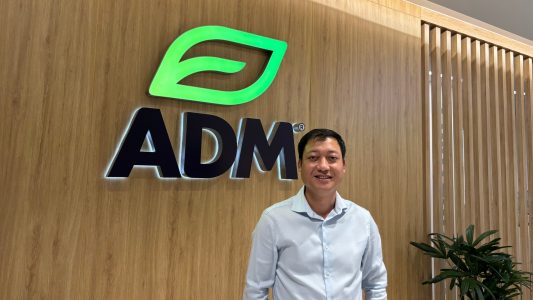
For ADM Animal Nutrition Vietnam and Cambodia, these shifts also create opportunities. Speaking with porciNews Asia and nutriNews Asia, General Manager Ngo Tien Dung discusses the outlook for Vietnam’s feed sector, the role of ADM’s SINCRO Services platform, the strategic value of local production, and why management of mycotoxin risk is becoming increasingly important for producers across the region.
How do you assess the current outlook for the animal nutrition and feed additives market in Vietnam, particularly amid rising production costs and changing consumer demand?
Vietnam is among the world’s top 10 livestock and poultry producers, particularly for pigs. Counting the EU as a single bloc, Vietnam ranks sixth; if EU member states are counted individually, it ranks fifth. Pork remains the country’s most popular meat, and consumption continues to grow.
That said, 2026 has been challenging. Raw material and transport costs have risen while livestock prices remain low. By July, most major producers had reduced feed prices to support farmers.
The use of prophylactic antibiotics in feed ended on January 1, 2026, while disease pressure has intensified. African swine fever (ASF) outbreaks rose by nearly 60% in the first half of the year.
Amid volatile logistics and global supply conditions, companies in the region also want greater control over their supply chains. Vietnam is emerging as a ‘bright star’ because of its market size and rapid growth.
More broadly, Vietnam remains a developing economy, and agriculture continues to expand across Asia.
For feed additives, increasingly stringent government requirements on product origin and quality create opportunities for major international suppliers, including ADM.
Could you give a brief introduction to ADM SINCRO Services?
SINCRO is a nutrition solution designed for feed manufacturers in Asia. ADM is one of the few companies that owns every key component needed to support feed production, including analytical laboratories, a global nutrition database, feed manufacturing expertise, research and development centers worldwide and in Vietnam, and facilities producing trace minerals and supplements for livestock and poultry.
Our goal is to bring these capabilities together as a complete solution. Feed manufacturers need comprehensive and reliable data to formulate effective diets.
Instead of relying on fragmented information sources, they can use an ADM application to access accurate ingredient and feed formulation data more quickly. This helps them produce high-quality feeds that meet increasingly demanding market requirements.
What are the key drivers behind the expansion of SINCRO Services in Vietnam, and what opportunities do you see?
The concept has global relevance, especially in Asia. Large corporations often have the resources to build extensive production databases. Small and medium-sized enterprises, however, need access to more complete datasets to support growth.
ADM already has that data, and we want to bring this service to support small and medium-sized producers in the Vietnamese market.
We provide solutions and products across the feed production chain. We do not operate in isolation, so our partners are collaborators rather than competitors.
Sharing nutritional information through SINCRO is part of ADM’s broader effort to strengthen partnerships in Vietnam and across the region.
What does ADM’s local production of mycotoxin binders mean for the company’s strategy and capabilities in Vietnam?
ADM’s local production of mycotoxin binders demonstrates its strategy of building regional manufacturing capabilities that are closer to customers, raw material sources, and market demand.
By producing in Vietnam, ADM can reduce lead times, improve supply chain efficiency, and enhance responsiveness while maintaining the same global quality standards applied across its worldwide network.
The capability also leverages ADM’s existing state-of-the-art premix facility in Long Khanh, Dong Nai, reinforcing the company’s long-term commitment to serving the Vietnamese and broader Southeast Asian markets.
What are the main challenges Vietnamese producers face in managing mycotoxin risk, and how can feed additives help address them?
According to figures published by livestock associations and international agriculture and forestry organizations, about 95% of raw materials already contain mycotoxins at the field level due to climate conditions, transportation, and handling practices.
Feed producers, especially larger companies, pay close attention to the issue, but it cannot be controlled completely. It is impossible to know which batches are contaminated. Even within a single truckload or container, toxin concentrations can vary considerably.
For that reason, mycotoxin management solutions should be used continuously, serving as a form of insurance for animal health. Longer transport times further increase contamination risks, while climate-related events such as El Niño add additional pressure on feed quality.
Mycotoxins have received considerable attention in recent years and will remain a priority as the government places increasing emphasis on feed and food quality.
How is ADM helping Vietnamese producers improve feed efficiency, animal performance, and production economics?
First, we provide historical data on imported raw material sources, so customers know which regions and which seasons are associated with higher mycotoxin risk.
Second, we have a laboratory in Vietnam that allows companies to analyze both incoming raw materials and finished feed products.
Third, we provide rapid testing equipment that can be installed directly at customer facilities. Results are available within two to three hours, enabling producers to make faster and more informed decisions about raw material use.
Which areas of animal nutrition and feed additives do you expect to grow most strongly in Vietnam over the next 3-5 years?
The market can be divided into two segments: finished feed and feed additives for feed manufacturers.
On feed side, Vietnam is still growing at around 3 to 5% per year and remains a highly promising market in the region. Given export safety concerns and trade barriers, China remains the leading producer, but diplomatic relations are creating opportunities for Vietnam to export pork and chicken to countries in the region. Vietnam’s per capita pork consumption remains relatively modest compared with other countries in the region.
On the additives side, Vietnam will see major change within the next five years. The ban on antibiotics as growth promoters in animal feed and stricter control of additive sources create opportunities for companies that can provide products with clear origins, proven quality, and recognized safety certifications.
I believe alternatives for antibiotic use as growth promoters hold significant potential. The same is true for do risk-prevention products such as mycotoxin management solutions. Feed demand itself will also continue to grow as Vietnam’s livestock sector expands.