


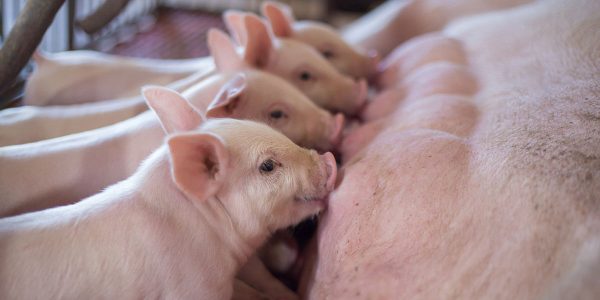
Parity played a more significant role in piglet pre-wean mortality (PWM) than the frequency of the feed delivery schedule, according to a study by researchers from the Department of Animal Science, South Dakota State University in the US, in collaboration with Jyga Technologies of Canada and the Sunswine Group of the US.
What is PWM?
PWM is a major issue in pig production, with many deaths occurring in the first few days after birth. A common cause is crushing, when piglets are accidentally laid on by the sow.
Feed dispensed several times per day (for example, more than 4 times) in lactation can enhance total sow lactation feed intake – greater sow feed intake is associated with improved litter growth.
Lactation feed delivery can prompt sows to stand up and lie down, adjusting how often feed is delivered immediately after farrowing may impact incidence of piglet crushing.
The study
In the study, 261 sows (parity 1 to 9) at a commercial farm were assigned at farrowing to one of 3 lactation feed delivery schedules: six meals per day, two meals per day, or two meals per day for the first five days followed by six meals per day until weaning.
Sow feed delivered, body condition score, and piglet growth and mortality were recorded.
Findings and suggestion
From this study, the researchers found that:
- ✅ Feeding schedule did not affect litter size at wean, piglet growth, or PWM (dead by day 5 or total). However, older sows (parity 5+) had greater stillborns and dead piglets by day 5 and overall (P < 0.02).
- ✅ Litters from parity 4 and 5+ sows also had lower daily gain than parity 1 and 2 sows.
These findings indicate that management focused on older parity sows may have a greater impact on piglet survival than changing the number of daily feed deliveries after farrowing.