


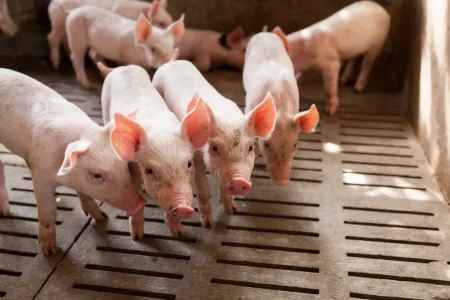
A new partnership has been launched to help restore the swine industry in Calabarzon and strengthen farming livelihoods, the Philippine Information Agency reported. Located just south of Metro Manila, the region is a key pig-producing region in the country and plays a vital role in national pork supply.
The Laguna State Polytechnic University (LSPU) leads the effort with support from the Agricultural Training Institute (ATI) and the Siniloan local government.
Called the Swine Industry Recovery Project (SIRP), the initiative focuses on innovative finisher operations for smallholder farmers. Its goal is to standardize hog production while ensuring a more stable and sustainable pork supply.
On January 14, the project became operational with the inauguration of a 40-head pig pen at the LSPU-Siniloan Campus.
Shared responsibilities for sustainability
Each partner agency plays a distinct role in ensuring the project’s success:
- ✅ ATI Calabarzon: Handles project design, capability-building programs, and funding.
- ✅ LSPU–Siniloan: Provides land, manpower, and oversees daily operations for three years.
- ✅ Siniloan LGU: Delivers veterinary support, including deworming and drug administration, to maintain herd health.
This division of responsibilities ensures that the program can enhance livelihoods, strengthen food production, and contribute to food security in Region IV-A.
Livelihoods and food security goals
The project aims to market 1692 finisher hogs over three years, averaging 564 heads annually. This will provide both food and income for farmer members.
LSPU emphasized that integrating technical assistance, infrastructure, and community-based learning supports the Department of Agriculture’s broader swine livelihood programs. The project also serves as a hub for training, extension services, and modern hog-raising practices.
Addressing ASF challenges
The DA-Bureau of Animal Industry reported on January 20, 2026, that 19 towns in Laguna, including Siniloan, are buffer zones for African swine fever (ASF). These areas have no recorded cases but remain under strict surveillance.
Ten towns in the province are still infected, while one town is classified as a surveillance zone. The project’s veterinary support and biosecurity measures are vital in this high-risk environment.