


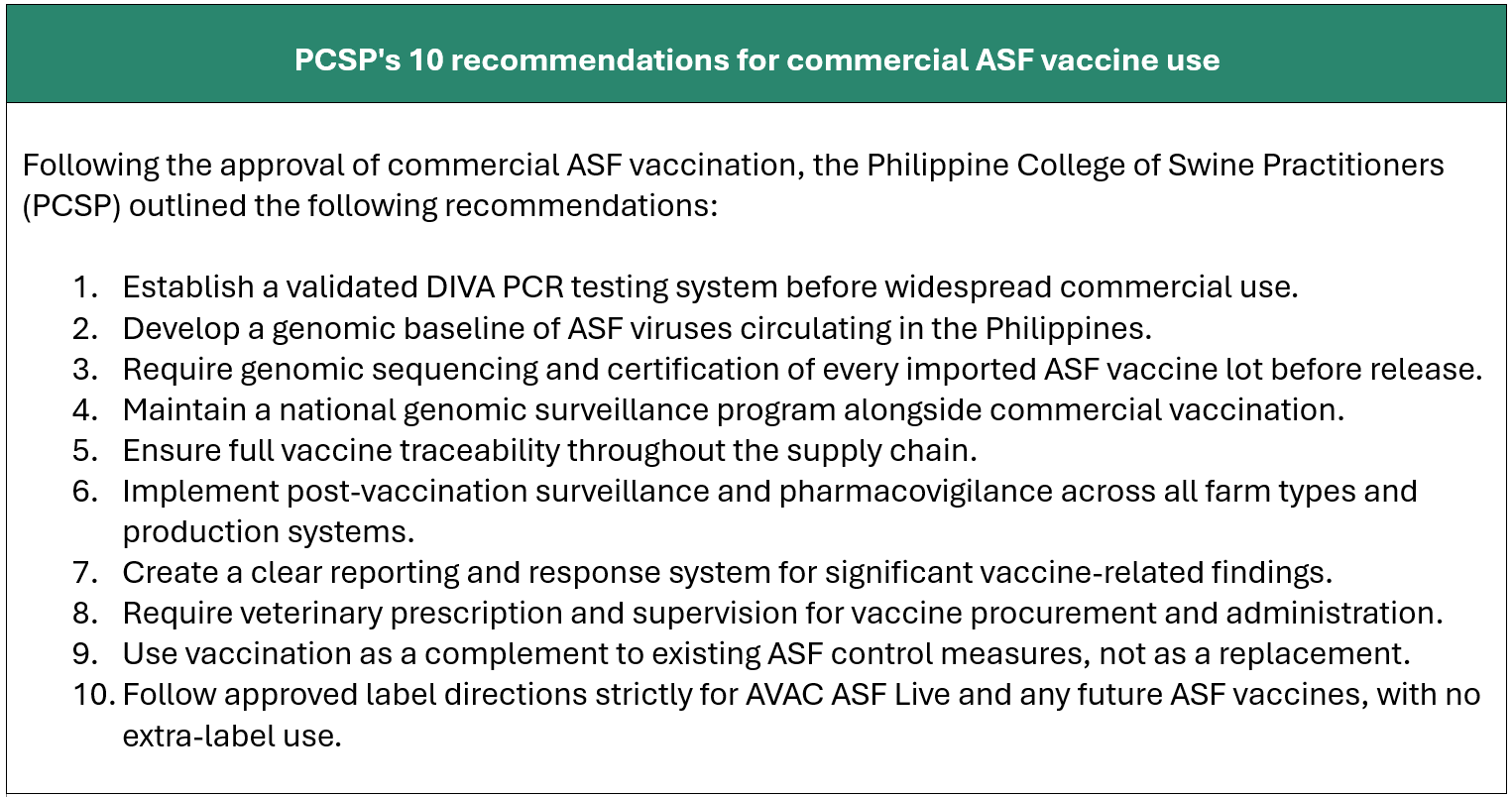
The Philippine College of Swine Practitioners (PCSP) has called for strengthened surveillance, diagnostic, traceability, and monitoring systems as the Philippines expands the commercial use of live-attenuated African swine fever (ASF) vaccines. In a position paper issued following the commercial approval of ASF vaccination, the organization outlined 10 recommendations to guide vaccine deployment in the country.

PCSP said ASF continues to affect production, livelihoods, animal health, and animal welfare in the Philippines. The organization reiterated its position that ASF prevention and control measures should be encouraged and evaluated using scientific evidence and field experience.
The group also referenced its September 2024 position on the government’s monitored release of a modified live virus, gene-deleted ASF vaccine. At the time, PCSP supported the controlled release program while recognizing the need for further evaluation under Philippine field conditions. The organization also emphasized that vaccination should follow label recommendations. It added that veterinarians should assess animal health before vaccination.
Commercial use requires stronger surveillance
According to PCSP, the commercial sale of AVAC ASF Live marks a significant development in the country’s ASF prevention and control program. The organization described the vaccine as a live-attenuated, gene-deleted genotype II product indicated for fattening pigs, not breeding stock. PCSP also described the vaccine as a potentially useful complementary tool for ASF prevention and control.
However, PCSP stressed that wider commercial deployment requires stronger support systems. The organization noted that a live-attenuated vaccine introduces a replicating vaccine virus into vaccinated populations. As a result, surveillance systems must reliably distinguish vaccine virus from circulating wild-type ASF virus. They must also monitor vaccine performance under field conditions and detect significant changes in circulating viruses.
For this reason, PCSP supports commercial use of approved ASF live vaccines only when diagnostic, surveillance, traceability, and post-vaccination monitoring systems remain fully operational and sustained.
Focus on diagnostics and genomic monitoring
Among its recommendations, PCSP called for a validated differential diagnostic or DIVA PCR system before widespread commercial use. The organization also recommended establishing a genomic baseline for circulating Philippine field ASF viruses.
In addition, PCSP recommended genomic sequencing and certification for every imported ASF vaccine lot before release. The group also called for a continuing national genomic surveillance program to accompany commercial vaccination.
Traceability, monitoring, and veterinary oversight
PCSP also recommended full vaccine traceability throughout the system. The organization called for post-vaccination surveillance and pharmacovigilance across all production systems and farm sizes.
The group further recommended a clear, accessible, and practical reporting and response mechanism for significant vaccine-related findings. It also said vaccine procurement and administration should remain under veterinary prescription and supervision.
PCSP stressed that vaccination should complement existing ASF prevention and control measures. It should not replace them. The organization also said AVAC ASF Live, and any future ASF vaccine, should be used strictly according to its registered label. No extra-label use should be allowed.
Commercial approval follows years of outbreaks
PCSP’s position paper follows the approval of AVAC ASF Live, developed by AVAC Vietnam JSC, for commercial sale by the Bureau of Animal Industry. The approval made it the first ASF vaccine cleared for public sale in the Philippines.
According to the Department of Agriculture, ASF reduced the country’s swine population to around 8 million head from about 13 million before the disease was detected in 2019. ASF outbreaks have reached 76 of the country’s 82 provinces.
The government has positioned vaccination as part of a broader repopulation strategy. The strategy also includes disease surveillance, biosecurity, movement control, and targeted restocking. Agriculture Secretary Francisco Tiu Laurel Jr previously described the vaccine as an important tool for protecting healthy animals and supporting efforts to rebuild the swine industry.
PCSP said the same principles should apply to any ASF vaccine approved in the future. These principles include appropriate diagnostics, genomic surveillance, traceability, post-vaccination monitoring, veterinary oversight, adherence to approved label indications, and consistent regulatory evaluation.