


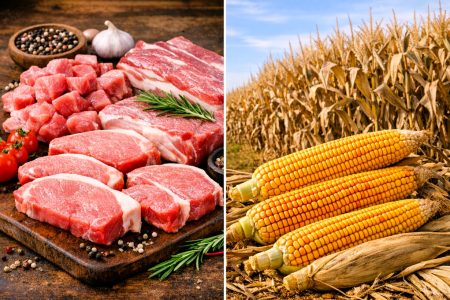
Philippine farm groups are pushing back against government plans for further tariff cuts on pork and corn imports, warning of risks to food security and rural livelihoods.
The proposal, under the Department of Agriculture’s (DA) Minimum Access Volume (MAV) Plus scheme, would expand import volumes at reduced rates. Officials argue the measure could help stabilize food prices amid rising fuel costs, but producers insist it would undermine local supply chains and benefit importers more than consumers.
Policy under review
The DA is considering the MAV Plus mechanism to expand imports of p0rk and corn at lower tariffs.
Under the proposal, corn imports would face a 5% tariff for in-quota volumes and a 15% tariff for out-quota shipments. Pork imports, meanwhile, would be subject to a 15% tariff for in-quota volumes and a 25% tariff for out-quota shipments.
The DA argues that these adjustments could help stabilize food prices at a time when rising fuel costs are driving up expenses across the supply chain. Secretary Francisco Tiu Laurel Jr emphasized that consultations are ongoing, noting that corn producers have already expressed support while pork stakeholders remain hesitant.
Producers push back
Agriculture groups reject proposals to reduce tariffs further, especially to zero. They warn such measures would harm local producers and destabilize rural communities.
The National Federation of Hog Farmers (NatFed) argues that tariff cuts primarily benefit importers rather than consumers, while also posing long-term risks to food security.
Meanwhile, the Philippine Maize Federation (Philmaize) cautions that lower tariffs could collapse corn farmgate prices. The group has urged the government to increase the MAV allocation to 500,000 tons to protect farmers and ensure stability in the domestic market.
Concerns on supply chains
In a position paper submitted by the Pork Producers Federation of the Philippines (ProPork) to the Department of Agriculture, the group stressed that tariff reductions are unnecessary. They argued that domestic supply remains stable and that retail price spikes are driven by logistics and fuel costs rather than shortages.
The paper proposed subsidies for transport and feed expenses, a cap of 500,000 tons on pork imports, and government procurement of fresh local produce for vulnerable communities.
Food security at stake
ProPork, NatFed, and Philmaize argue that lowering tariffs would:
- ✅ Increase dependence on imports.
- ✅ Expose markets to oversupply and dumping.
- ✅ Reduce government revenue without lowering retail prices.
They urge policies that strengthen domestic production and stabilize supply chains instead of import-driven solutions.
Balancing consumer and farmer needs
The DA acknowledges strong harvests in rice and vegetables, but rising transport costs remain a challenge. Officials emphasize that MAV Plus volumes will be set through consultation to balance consumer needs and farmer welfare.
Implementation could begin within three weeks if agreements are reached.