


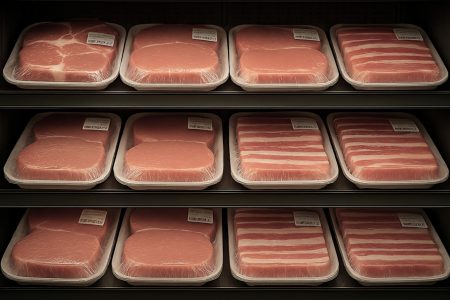
Philippine pig producers are urging the government to reduce pork imports, warning that oversupply is depressing local prices and discouraging herd-rebuilding efforts.
Cold storage surplus undermines local producers
The Samahang Industriya ng Agrikultura (SINAG) reported that cold storage facilities are filled with imported pork, creating a surplus that undermines domestic producers. Imported dressed pork sells for USD 1.40-1.75/kg, with better cuts at USD 2.10/kg.
Local pork costs about USD 2.90/kg liveweight, or USD 3.60/kg dressed. This wide price gap leaves pig farmers unable to recover production costs, discouraging them from repopulating herds.
Figures from 2025 highlight the imbalance:
- ✅ Pork consumption: 1.58 million tons
- ✅ Local production: 1.06 million tons
- ✅ Imports: 851,760 tons
- ✅ Shortfall: 520,000 tons, but imports created a surplus beyond demand
Farmers demand swift import reductions
SINAG urged cutting imports from 850,000 tons to 550,000 tons this year. Chairman Rosendo So said reducing volumes would encourage pig farmers to rebuild herds and stabilize domestic supply.
He compared the situation to rice, where temporary import limits helped farmers sell unmilled rice at fair prices.
Without adjustments, pig raisers risk further losses, leaving the industry unable to recover from past shocks such as African swine fever.
Tariffs seen as essential for fairness
The group also called for restoring higher tariffs on pork. Current rates, set in 2021, are 15% for in-quota imports and 25% for out-quota imports.
SINAG wants a return to the earlier structure of 30% in-quota and 40% out-quota, arguing that lower duties favor importers over local producers. Higher tariffs, they said, would level the playing field and give pig farmers a chance to compete.
The Bureau of Animal Industry (BAI), which oversees import permits and monitors supply, was urged to coordinate closely with the Department of Agriculture to ensure import volumes align with actual demand.
SINAG said BAI’s data should guide policy adjustments to avoid further oversupply and support domestic recovery.
Policy review needed to protect livelihoods
SINAG urged government agencies to review quotas and tariffs to protect livelihoods and restore pork self-sufficiency. Reducing imports now, while awaiting tariff decisions, would provide immediate relief for pig raisers.
Farmers stressed that without decisive action, the local industry risks further decline, leaving consumers dependent on imports and vulnerable to global price swings.