


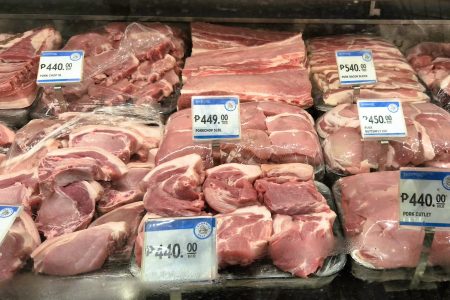
Pork production and consumption in the Philippines are set to rise in 2027, supported by repopulation programs, stronger biosecurity, and improved genetics. A report by USDA Foreign Agricultural Service said industry investment and government initiatives are driving recovery, though a forecasted strong El Niño could limit gains. Imports will remain vital as demand continues to exceed local supply.
Repopulation efforts and farm expansion drive growth
Pork production is forecast to reach 1.06 million tons carcass weight equivalent (CWE) in 2027, a 4.4% increase from 2026. This growth reflects government-led repopulation programs and commercial farm expansion. A multinational conglomerate has committed USD 1 billion to raise swine inventory from 1.3 million to 7 million heads over five years. The Department of Agriculture (DA) aims to restore the national herd to its pre-African swine fever (ASF) level of 13 million head within three years.
Smallholder farms, which account for nearly 80% of the swine inventory, remain central to recovery. The DA’s Swine Repopulation Project is distributing 32,000 gilts to multiplier farms, with piglets from these gilts passed on to second-line beneficiaries. This cascading approach is expected to boost production in 2027.
Biosecurity gains help contain ASF
ASF remains a challenge, but biosecurity practices have reduced active cases. As of July 2026, the Bureau of Animal Industry reported ASF in 21 barangays, down 25% from 2025. Major swine-producing regions such as CALABARZON, Northern Mindanao, and Central Luzon reported no outbreaks.
Smallholder farms have adopted practical measures like fencing pens, installing footbaths, and using mosquito netting. Programs such as the Community African Swine Fever Biosecurity Interventions (CABI) continue to expand, equipping farmers with cost-effective tools. Commercial farms, with greater resources, conduct laboratory testing of feed inputs and implement strict personnel protocols.
The DA also recently approved to release Vietnam-made AVAC vaccine commercially, following trials showing 90% efficacy. Other vaccines from suppliers in the US, South Korea, and Thailand are under review.
Genetics and nutrition improve farm efficiency
Improved swine genetics are helping farmers achieve better feed conversion ratios, larger litters, and heavier market weights. Some smallholder farms report feed conversion ratios of 2kg of feed per kilogram of weight gained, compared to 3kg among conventional breeds. Litter sizes have risen above 20 piglets per sow, while pigs reach marketable weights of 100–120kg in just four months.
Proper nutrition complements these gains, reducing mortality and shortening production cycles. Contract growing arrangements and cooperative systems continue to provide stability, with companies supplying feed, breeder stock, and technical support. Semi-commercial and commercial farms are also investing in herd genetics, supported by training programs at the DA’s International Training Center for Pig Husbandry.
Climate risks threated productivity gains
Despite these gains, El Niño looms as a major risk. PAGASA forecasts a strong event extending into 2027, raising the likelihood of drought and heat stress. Studies from the University of the Philippines Los Baños highlight reduced feed intake, slower growth, and higher mortality among pigs exposed to elevated temperatures. Backyard farms are most vulnerable, while commercial farms with cooling systems are better positioned.
Indirect impacts include tighter feed supply, particularly corn, which suffered heavy losses during the 2023–2024 El Niño. The DA has reactivated its El Niño task force, focusing on irrigation, planting schedules, and crop diversification. However, livestock-specific interventions remain limited. Industry contacts report practical measures such as improved ventilation, shaded pens, and adjusted feeding schedules, but rising feed costs remain a concern.
Consumption strengthens with easing prices
Pork consumption is forecast at 1.9 million tons CWE in 2027, up 6.4% from 2026. Population growth, easing inflation, and economic recovery underpin this increase. The US Census Bureau projects the Philippine population at 114.6 million in 2027. Pork remains a staple protein, widely accessible, and compatible with local diets.
Government programs such as ‘Kadiwa’ continue to expand, with nearly 830 stores nationwide offering lower-priced agricultural products. Industry players are diversifying into value-added products like ready-to-cook meals, distributed through supermarkets, convenience stores, and online platforms.
Retail prices have eased, with pork belly prices in Metro Manila markets averaging 9% lower in early 2026 compared to 2025. Inflation is expected to decline to 4–5% in 2027, further supporting demand.
Imports help meet demand
Imports remain essential as domestic production has yet to recover fully from ASF. Pork imports are forecast at 835,000 tons CWE in 2027, a 7.1% increase from 2026. Brazil is expected to remain the top supplier, benefiting from accreditation and competitive pricing. Meanwhile, reduced tariff rates and ASF regionalization agreements continue to support import flows.
The government’s revised minimum access volume guidelines also allocate larger shares to processors, aiming to keep processed pork affordable. State entities are expected to play a role in stabilizing supply and prices, though implementation details remain unclear.
Steady recovery with structural pressures
The Philippine pork sector is regaining ground, with repopulation programs, stronger farm practices, and rising demand supporting growth. Imports remain a critical supply source, underscoring the gap between domestic capacity and consumer needs. Yet the sector’s resilience is tested by structural pressures: climate volatility, high feed costs, and the slow pace of herd rebuilding among smallholder farms.
The forecast for 2027 suggests progress, but not a full return to pre-ASF levels. Recovery depends on sustained investment, effective biosecurity, and timely government interventions. The balance between local production and imports will continue to define the industry, highlighting both opportunities for modernization and vulnerabilities that require long-term solutions.