


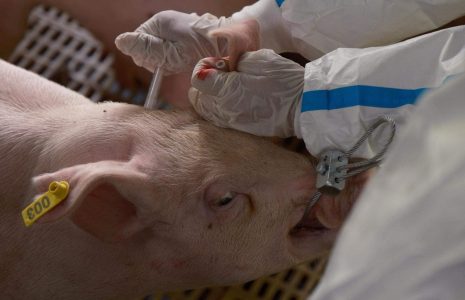
The Philippine Bureau of Animal Industry (BAI) has approved the AVAC ASF Live vaccine for commercial distribution in the country. Developed by AVAC Vietnam JSC, the vaccine is a live, attenuated, gene‑deleted formulation designed to protect pigs against African swine fever (ASF).
ASF first struck the country in 2019, reducing the swine population from 13 million to about 8 million heads. Outbreaks spread to 76 provinces, forcing farmers to cull animals and discouraging many from returning to production. The vaccine’s approval marks a turning point for pig raisers who have endured years of losses and uncertainty.
Government pushes for repopulation
Department of Agriculture (DA) Secretary Francisco Tiu Laurel Jr said the vaccine is crucial to the government’s repopulation program. He emphasized that it provides pig raisers with another tool to protect healthy animals and stabilize pork supply.
Meanwhile, DA Undersecretary for Livestock Constante Palabrica added that another vaccine, PROVAC from South Korea, is undergoing BAI testing. If cleared, it could provide farmers with an additional option by next year.
Dr Palabrica also confirmed that the DA has requested USD 16 million in subsidies to support vaccination programs for backyard raisers. He stressed that small farms remain the most vulnerable, often lacking resources to enforce strict biosecurity.
Farmers and consumers stand to benefit
ASF does not infect humans, but it devastates pig herds and disrupts pork supply chains. Backyard raisers have been hit hardest, with many abandoning swine production after repeated outbreaks. The commercial rollout of the AVAC vaccine gives farms another tool to fight the ASF virus.
Industry groups welcomed the approval, noting that rebuilding the herd is essential not only for farm incomes but also for consumer protection. A healthier swine population, they say, could reduce reliance on imports and help stabilize pork prices.
Building resilience in pig farming
The DA is positioning vaccination as part of a broader repopulation strategy. This includes surveillance, biosecurity, movement control, and targeted restocking. The goal is to restore the swine population to pre‑ASF levels.
While the vaccine is not a silver bullet, experts agree it represents a significant advance after years of containment and culling. For pig raisers, it is a long‑awaited chance to fight back against ASF and rebuild confidence in the industry.
The DA assured farmers that vaccine distribution will be closely monitored to ensure safety and effectiveness. More importantly, officials stressed that producers must pair vaccination with strict biosecurity to maximize protection.
Next steps in swine repopulation
The AVAC vaccine’s approval is expected to encourage more farmers to re‑enter pig production. Analysts believe this could gradually strengthen domestic supply and reduce dependence on imported pork. Meanwhile, consumer groups express cautious optimism, noting that stable supply could ease price pressures in local markets. However, they also warn that recovery will take time, requiring consistent vaccination and monitoring.
For now, the vaccine’s clearance is seen as a milestone in the country’s fight against ASF. It may signal a shift from containment toward proactive disease management, offering hope for recovery and resilience in Philippine pig farming.