


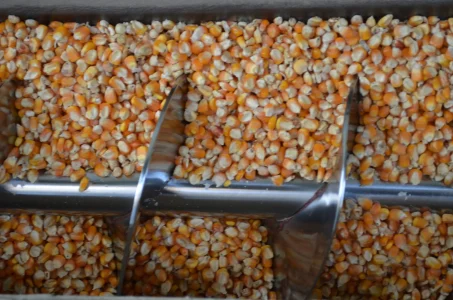
The Philippine government has opted to expand corn imports as mounting supply pressures threaten feed availability and livestock and poultry production costs. Through Executive Order (EO) No. 129, President Ferdinand Marcos Jr increased the country’s minimum access volume (MAV) for corn from 220,000 tons to 500,000 tons, adding 280,000 tons to the existing allocation.
The move reflects growing concern over a projected yellow corn deficit of about 1.422 million tons between March and December 2026. According to the EO, domestic output faces pressure from rising production costs and weather-related risks, particularly El Niño. Against that backdrop, policymakers appear to be using imports to supplement supply and limit further strain on feed markets.
Closing the supply gap
The import expansion follows a recommendation from the MAV Management Committee (MMC), which proposed activating the MAV Plus mechanism for corn. The committee viewed the additional allocation as a targeted response to an emerging supply imbalance rather than a permanent adjustment to import policy.
The timing of the measure is notable. Under the Agricultural Tariffication Act, the President may propose MAV adjustments during periods of supply shortages or abnormal price increases. The proposal was submitted to Congress on September 29, 2026, and took effect after no substantive Congressional action was taken within the period prescribed by law.
By increasing the volume eligible for lower-tariff imports, the government is effectively seeking to encourage additional corn shipments into the country. Imports within the MAV are subject to a 5% tariff, while volumes beyond the allocation carry a 15% tariff.
Keeping feed costs in check
The rationale for the measure extends beyond the corn sector itself. Corn is the principal energy component in livestock and poultry feeds, making its availability a key determinant of feed production costs.
As a result, concerns over corn supply quickly translate into concerns over meat production costs. The EO warns that inadequate supplies could increase feed expenses and, in turn, place upward pressure on pork and poultry prices. The government adopted the measure to reinforce supply and help contain pressure on consumer prices.
The additional allocation is expected to support feed millers, feed manufacturers, and livestock producers that depend on a steady flow of feed ingredients. In effect, the government is attempting to cushion feed-dependent industries from the consequences of a tightening corn market.
Weather threats remain a concern
While the expanded quota may improve market access to imported corn, it does not alter the underlying factors constraining domestic production. The EO points to rising fertilizer, fuel, freight, and other agricultural input costs as continuing challenges for growers.
Weather remains another source of uncertainty. The Department of Agriculture reported that El Niño has already damaged 132,290 tons of corn worth about USD 79.4 million (USD 1 = PHP 63). At the same time, the Philippine Atmospheric, Geophysical and Astronomical Services Administration expects El Niño conditions to continue into the first half of 2027.
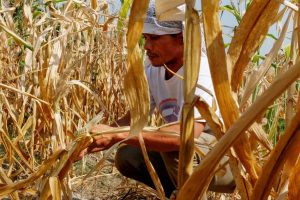

El Niño conditions expected to persist into H1 2027 are expected to add damage to corn crops. (Photo credit: ABS-CBN)
These conditions help explain why the government chose to act before the projected deficit fully materializes. The EO repeatedly emphasizes the need to ensure adequate supply for feed users and limit disruptions across the livestock and poultry sectors.
Turning policy into action
Attention now shifts to implementation. EO 129 directs the MMC to issue guidelines within 30 days and oversee the allocation of the additional 280,000 tons. The government has emphasized that distribution should be transparent and equitable, with the objective of directing supplies toward qualified industry participants.
The expanded MAV will cover only a portion of the projected deficit identified in the EO. Nevertheless, authorities moved to expand imports to bolster domestic supply. As concerns over production costs and weather persist, the effectiveness of the policy will largely depend on how quickly the additional volume reaches feed users and whether it succeeds in easing pressure on the broader livestock and poultry supply chain.