


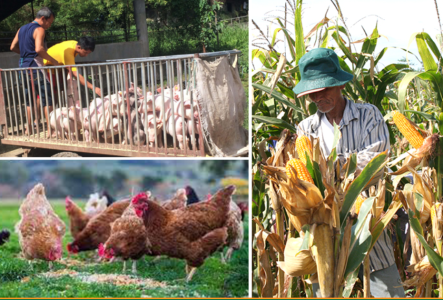
The Philippine Department of Agriculture (DA) is introducing a community-based feed program designed to cut costs, raise livestock productivity, and improve rural incomes.
Agriculture Secretary Francisco Tiu Laurel Jr approved the Village-Type Feed Complete Chain Project (VFCCP), describing it as a way to “fix the weakest link in livestock production—feeds.”
Cooperative-led feed chains
The VFCCP will be anchored on accredited farmer cooperatives or associations managing up to 25 hectares of corn and forage areas.
These groups will oversee crop production, postharvest handling, feedmilling, storage, and distribution. The aim is to build localized, closed-loop feed supply chains.
The program responds to long-standing challenges in livestock production, including high feed costs and inconsistent supply, which often disrupt smallholder operations during dry seasons.
Funding and technology
Each project site may receive up to USD 690,000 depending on readiness and approved components. Initial funding will come from the National Livestock Program.
Up to 70% of the approved cost will be released once agreements are signed.
Indicative allocations include:
- ✅ USD 345,000 for agricultural and forestry equipment
- ✅ USD 147,000 for building structures
- ✅ Remaining funds for inputs, infrastructure, and training
Climate-resilient technologies such as solar-powered irrigation, biomass dryers, and mechanized forage production will be integrated to ensure year-round feed availability.
Economic and social impact
Financial projections suggest commercial viability. A VFCCP enterprise could generate average annual revenues of USD 671,000 against operating costs of USD 529,000.
This would yield an estimated annual net cash flow of USD 142,000, with a projected internal rate of return of 23%.
The DA expects the program to support national goals on food self-sufficiency, animal health, and sustainability.
Beyond feed production, revenues will be reinvested into operations. Partnerships with local governments, Kadiwa outlets, and private buyers are expected to expand market access.
The DA sees the VFCCP as a platform for inclusive agribusiness development, strengthening community-driven livestock enterprises across the country.