


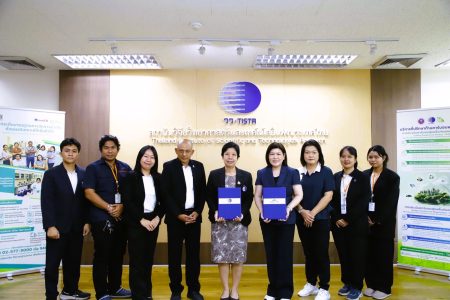
Thailand has launched a year‑long project to capture carbon dioxide from pig farm biogas and reuse it in closed farming systems, opengovasia.com reported. The initiative aims to cut emissions while boosting crop yields. Pig farms serve as the pilot sites, but the model is designed for wider livestock operations.
Pig farms lead the trial
Bio Bloom Co Ltd, part of the Saraburi Farm Group, operates pig farms that generate biogas for electricity. These farms are now the testing grounds for CO2 separation technology.
Instead of releasing greenhouse gases, captured CO2 will be reused in controlled farming units to regulate temperature and stimulate plant growth. The company is providing infrastructure and expertise to monitor crop quality and system performance.
Technology driving the experiment
The Thailand Institute of Scientific and Technological Research (TISTR) is supplying patented clean energy technologies for the project.
These include pressure swing adsorption systems to separate methane and CO2, and cooling systems to lower gas temperature. Prototypes will be installed at operational sites to test efficiency in cultivating vegetables and fruits. The systems aim to demonstrate how livestock‑related emissions can be converted into productive agricultural inputs.
Scope beyond swine operations
While pigs are the immediate focus, the project is framed as a livestock emissions initiative. Officials emphasize that residual emissions from livestock operations can be converted into productive inputs.
If successful, the model could be replicated across poultry, cattle, and other sectors. This broader scope highlights Thailand’s ambition to integrate circular agriculture principles across its livestock industry.
Supporting national climate goals
The initiative complements Thailand’s wider push toward sustainable farming, including AI‑enabled fertilizer programs and biodiesel development. By combining scientific research with livestock operations, Thailand aims to reduce greenhouse gas emissions while improving productivity.
The project demonstrates how agricultural waste streams can be repurposed into valuable resources for circular farming systems. If proven effective, the model could serve as a blueprint for other countries seeking to balance livestock production with climate commitments.