


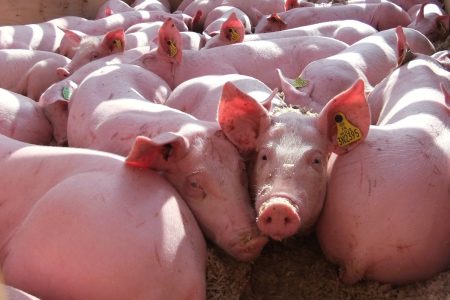
Sarawak’s pig farming industry has generated about USD 38.9 million (USD 1:MYR 4.08) in export revenue through the export of 109,606 live pigs, highlighting the sector’s continued contribution to the state’s economy.
Datuk Seri Stephen Rundi, Sarawak’s Minister of Food Industries, Primary Products and Regional Development, shared the figures during his departmental summary at the Sarawak Legislative Assembly. According to a report by Orientaldaily.com.my, the state is also advancing major investments in pig farming, biosecurity, and feed innovation to support future growth.
Expanding production capacity
To strengthen the sector, Sarawak is advancing two large-scale pig farming projects. The Selangau pig farm represents an investment of about USD 49 million and is expected to begin production next year.
A second modern pig farm in Serian Ensengai involves an investment of about USD 94.3 million. Mr Rundi said both projects aim to strengthen economic growth and improve food security.
The developments align with Sarawak’s goal of increasing annual pork production to 860,000 pigs by 2030. The targeted output is valued at about USD 367.4 million, reflecting the state’s ambitions for industry expansion.
Strengthening disease protection
Alongside production growth, the government continues to tighten biosecurity measures across the industry. Authorities are working to prevent the introduction and spread of foot-and-mouth disease and African swine fever.
Mr Rundi said the government is also improving regulations to support safe and sustainable pork exports to regional markets. These efforts aim to protect livestock production while maintaining confidence among trading partners.
Developing local feed resources
Sarawak is also strengthening an integrated animal feed ecosystem. The strategy focuses on using locally available raw materials, expanding commercial feed production, promoting research and innovation, and adopting circular bioeconomy approaches.
One initiative involves a subsidiary of the Sarawak Economic Development Corporation, which produces affordable cattle feed from local raw materials. Feeding trials recorded an average daily weight gain of 1.2 kg, demonstrating the potential of locally formulated feed to support cattle productivity.
Advancing agricultural research
The state is promoting the development of the Sarawak Advanced Technology International University College Agricultural Park in Asajaya’s Tuanbelah area. The facility is being developed as a center of excellence for research, innovation, and commercial agro-industrial feed production.
Researchers have successfully formulated ruminant feed using sago palm and mangrove biomass, creating additional value from local resources. Universities and colleges are also exploring local plants and seaweed as alternative protein sources and micromineral supplements for animal feed.
At the same time, researchers are studying edible oral livestock vaccines and targeted probiotic strains to improve animal health and reduce reliance on traditional antibiotics. Through these combined efforts, Sarawak plans to further strengthen its livestock sector while increasing ruminant self-sufficiency to 25% by 2030.