


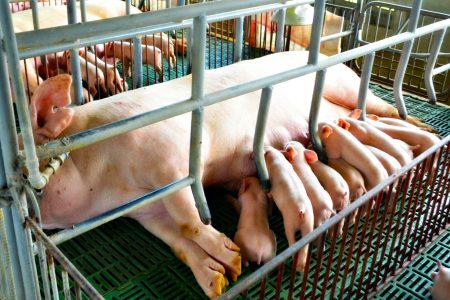
A new study by researchers from the National Pingtung University of Science and Technology and Maejo University has found that feeding strategies enriched with vitamins and minerals can significantly improve reproductive performance in sows during early gestation. The research highlights how micronutrient supplementation, particularly vitamin E, influences litter size and piglet survival without altering progesterone concentration.
Nutrition shapes embryo survival
Early gestation is a crucial stage marked by embryo implantation and rapid conceptus elongation. During this period, oxidative stress often leads to embryo loss, with up to 30% of embryos failing to survive. Nutritional management plays a central role in stabilizing the uterine environment, and progesterone concentration is closely linked to embryo development.
While high feed intake can support fetal growth, it may also accelerate progesterone clearance, potentially reducing litter size. Vitamins and minerals, especially antioxidants like vitamin E, help counter oxidative stress and support reproductive success.
Feeding strategies tested
The experiment involved 36 first-parity sows divided into four treatment groups. One group received a standard 1.5 kg/day diet, while others were fed the same ration supplemented with 1.7 times the vitamins and minerals, including 150 IU of vitamin E. A fourth group received a higher feed intake of 2.5 kg/day.
Treatments varied in duration, with supplementation provided either for the first 15 days or throughout the first 30 days of gestation. Researchers measured sow body weight, backfat thickness, body condition score, litter size, piglet survival, and plasma progesterone concentration.
Supplementation improves litter outcomes
Results showed that sows fed 2.5 kg/day had the highest body weight and condition scores by day 30 of gestation. This group also produced the largest litters. However, sows receiving 1.5 kg/day with enhanced vitamins and minerals achieved comparable litter sizes, with fewer stillborn and mummified piglets.
These outcomes led to higher numbers of weaned piglets compared to the control group. Interestingly, plasma progesterone concentrations did not differ significantly among treatments, though sows on continuous micronutrient supplementation displayed the highest levels at day 10 and day 30.
Balanced diets support productivity
The findings suggest that micronutrient supplementation can offset the limitations of lower feed intake during early gestation. By improving litter size and piglet survival, enriched diets may help commercial swine farms optimize reproductive performance without relying solely on higher feed volumes.
The study underscores the importance of balancing feed intake with targeted micronutrient support, offering practical guidance for breeders seeking to reduce embryo loss and improve sow productivity.