


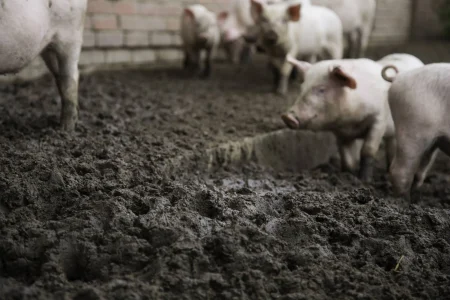
Valuable resource is one of the first things Nick Ward, President of Ward Laboratories, think of swine manure when discussing the practice of spreading manure on cropland.
Unlike synthetic fertilizers, such as urea or diammonium phosphate, manure provides micronutrients that are also key to plant growth and successful crop production.
Applying manure or slurry to cropland can improve all three pillars of soil health:
- ✅ Chemical
- ✅ Biological
- ✅ Physical
Providing micronutrients as mentioned above, it improves the chemical makeup of the soil.
Additionally, manure supplies carbon that can increase soil organic carbon and provide energy for soil microbes. By providing energy for the soil microbes, spreading manure and slurry can increase biological activity in the soil.
Furthermore, “the organic components in manure and slurry act as binding agents to help build soil aggregates. These aggregates then improve the overall physical structure of the soil,” said Mr Ward.
Some regenerative agriculture advocates argue that manure alone does not replicate the full ecological impact of livestock on pasture, such as trampling residue and cycling plant nutrients within that system. However, this approach is not always practical.
Many crop producers lack fences, water infrastructure or labor required to incorporate grazing livestock. In these cases, manure application can provide nutrients to crops, benefit soil health and, Mr Ward said, “utilize a waste product.”
He recommends monitoring the three pillars of soil health for improvement through:
- ✅ Soil nutrient analysis
- ✅ Soil respiration
- ✅ Aggregate stability
Best practices
When it comes to manure applications, testing and homogenizing are key. Mr Ward emphasized that not only is manure variable from species to species and feedyard to feedyard, but each individual load also is variable.
There are several sources of variability, the first being the diet of the animal affecting the nutrients available in the manure.
For instance, the difference in phosphorus and sulfur in the manure will change based on the use of distillers grains or steam-flaked corn in the ration.
Another big variable Mr Ward sees when reviewing manure reports is how pens are cleaned. The more soil that is scraped out of the pen, the less nutrients that are available in that manure.
Once a manure sample has been analyzed, a lab report will provide pounds of nutrients per ton. This combined with a soil report should help producers determine how much to apply to achieve crop production goals without overapplying nutrients.
It is important to remember that not all nutrients from manure will be plant-available immediately. However, over time they will become available.
Equipment matters
It is important to spread manure or slurry evenly across the field. So, the equipment used matters. Mr Ward said, “Slurries need to be circulated and mixed, so they don’t settle like a bad milkshake.”
Manure spreaders should chop larger chunks into smaller, uniform sizes for field application. If manure or slurry is applied unevenly to a field, it can result in pockets of nutrient deficiencies. This can be especially detrimental in forage production, resulting in high-nitrate patches presenting an animal health risk that requires more precise feed management.
In conclusion, manure is a valuable resource for crop production. “High fertilizer prices highlight the value of manure as a less expensive source of fertility,” Mr Ward said.
In addition to fertility, manure provides potential for improved soil health, but it must be managed as the imperfect substance that it is.