


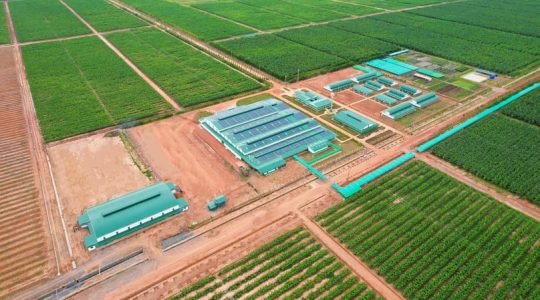
Two subsidiaries of Truong Hai Agriculture JSC (Thaco Agri) have secured approval for major agricultural projects in Gia Lai province. The centerpiece is a USD 146.8 million pig farming venture (USD 1:VND 26,000, as used in the article), according to a report by The Investor.
The project covers 1624 hectares in Po To commune, with 225 hectares allocated for livestock facilities, warehouses, and workshops. The remaining land will support perennial crops such as mangoes and pomelos.
Modern facilities with massive capacity
At its core, the project features a modern pig farm designed to house 566,050 pigs at one time. With rotations, annual throughput is expected to reach 1.34 million heads, including breeding stock and commercial pigs.
This scale positions the farm among the largest integrated pig operations in central Vietnam. It will manage boar production, grandparent sows, replacement pigs, and commercial pigs, ensuring a complete supply chain from breeding to market.
Long-term investment and timeline
The pig farming project requires USD 146.8 million in total investment, with USD 22 million from investor equity and the remainder sourced externally.
Thaco Agri plans to complete construction by early 2028 and begin operations in the first quarter of that year. The project has a planned operating term of 50 years, underscoring Thaco Agri’s long-term ambitions in livestock and crop integration.
Provincial oversight and accountability
Gia Lai’s provincial People’s Committee has stressed strict compliance with planning and financial requirements. Investors must ensure sufficient capital and pay land-use fees.
Authorities also warned that projects not implemented within 12 months of approval risk revocation. This reflects the province’s commitment to accountability and sustainable development.
Strengthening supply chains and sustainability
The pig farming project underscores Vietnam’s increasing role as a destination for large-scale agribusiness investment. By combining crop cultivation with livestock, Thaco Agri plans to establish a circular agricultural model aimed at improving efficiency and sustainability.
The initiative is expected to influence pig farming practices in central Vietnam, reinforce supply chains, and contribute to the country’s export objectives.