


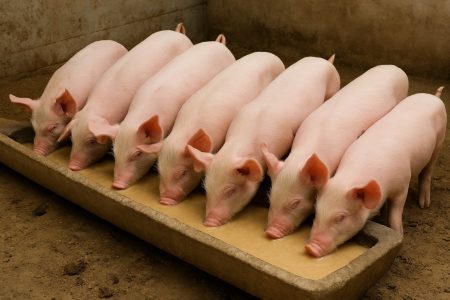
Antinutritional compounds in common feed ingredients often limit pig growth and reduce efficiency. Soybean meal, cereals, and crude fiber can impair digestion, cause gastrointestinal issues, and lead to economic losses.
To address these challenges, a team of Chinese researchers explored biological fermentation as a solution. Their study demonstrated that a two-stage probiotic fermentation process can significantly improve the nutritional value and safety of pig liquid feed.
Tackling antinutritional factors
Soybean antigenic proteins, phytic acid, and trypsin inhibitors are among the most problematic compounds in pig diets. They reduce nutrient absorption and can trigger digestive disorders. Fermentation helps degrade these compounds, improving digestibility and feed palatability.
Liquid-state fermentation is especially promising. It allows for shorter processing times, higher bacterial density, and better compatibility with automated feeding systems. However, single-stage fermentation has limitations, prompting the need for a more robust approach.
Screening and selecting functional strains
The research team screened 71 Bacillus and 41 Lactobacillus strains. From these, seven Bacillus and four Lactobacillus plantarum strains showed strong enzymatic activity and antibacterial capacity.
- ✅ Bacillus subtilis 3-16 displayed high protease activity and inhibited Staphylococcus aureus.
- ✅ Lactobacillus plantarum E5 showed the strongest antimicrobial effect among Lactobacillus strains.
- ✅ The combination of 3-16 and E5 produced the lowest pH, minimal dry matter loss, and effective protein degradation.
This combination was chosen for the two-stage fermentation trials, combining aerobic and anaerobic phases.
Nutritional and safety gains
Fermentation significantly increased crude protein and acid-soluble protein while reducing crude fiber. Antigenic proteins degraded into smaller peptides, improving digestibility. Biogenic amines, which affect feed odor and safety, were reduced.
Antioxidant activity improved, with lower malondialdehyde levels indicating reduced oxidative stress. Enzymatic activities such as protease, cellulase, and amylase also increased, enhancing feed functionality.
Microbial diversity analysis revealed higher beneficial bacteria abundance, including Lactobacillus and Bacillus, while pathogenic bacteria such as Escherichia coli and Staphylococcus aureus declined.
Practical benefits for pig farming
The findings confirm that low-temperature two-stage fermentation enhances nutrition, safety, and probiotic functionality of pig feed.
This approach provides a foundation for developing functional fermented feeds and supports modern livestock systems seeking efficiency and improved animal health.