


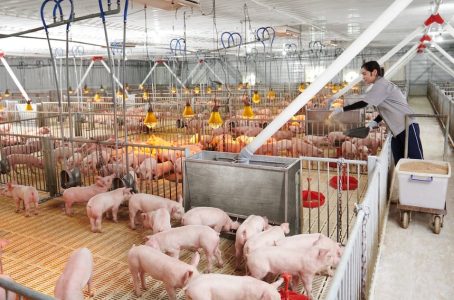
Vietnam is ready to become a trusted partner and a bridge for technology transfer and experience sharing to promote the livestock sector toward modernization, transparency, and sustainability. Deputy Minister of Agriculture and Environment Phung Duc Tien emphasized this commitment at the recent conference on ‘Sustainable Livestock Transformation in Food Systems in Asia-Pacific’ (March 24-26).
The sector contributes about 27% of Vietnam’s total agricultural production value and supports millions of farming households. It has become one of the key pillars of national agriculture, underpinning both food security and rural livelihoods.
In recent years, production has shifted from small-scale farming toward large-scale commodity systems. The adoption of science, technology, and value chain development has created a stronger foundation for Vietnam’s deeper integration into global supply chain.
Opportunities and challenges in transformation
Mr Tien noted that livestock contributes between 18-30% of agricultural GDP in many countries in the region. Vietnam’s sector continues to expand, with more than 31 million pigs, over 585 million poultry, and annual meat production of around 8.7 million tons. The country has also become a major hub for animal feed production, highlighting its dynamic growth potential.
Yet challenges remain. Climate change, environmental pressures, shifting consumer preferences, and limited land and water resources pose significant risks. Addressing these issues will be critical to ensuring sustainable growth and competitiveness.
Three pillars for sustainable livestock development
Mr Tien emphasized that transforming food systems toward sustainability is no longer an option but an urgent requirement.
He identified three strategic directions:
- ✅ Science, technology, and digital innovation: Biotechnology, precision nutrition, improved breeds, and smart management systems will drive productivity and competitiveness.
- ✅ Biosecurity and the ‘One Health’ approach: Modern veterinary systems and effective disease surveillance are essential to protect human, animal, and ecosystem health.
- ✅ Green livestock and circular economy models: Better waste management, reduced greenhouse gas emissions, and enhanced rural livelihoods will position livestock as part of the climate solution
International cooperation: The “key” to driving transformation
From an international perspective, representatives of FAO Asia-Pacific emphasized that livestock is linked not only to food production but also to livelihoods, resilience, and rural development.
Strengthening animal health systems, improving biosecurity, and adopting advanced farming practices are seen as vital to reducing disease risks and antimicrobial resistance.
Meanwhile, the International Livestock Research Institute (ILRI) highlighted that science and innovation are decisive factors in the transformation process.
Research on animal health, climate-resilient livestock systems, and the ‘One Health’ approach will help countries improve productivity while better controlling environmental risks.
ILRI has worked with Vietnam for nearly two decades in areas such as animal health, food safety, and livestock value chain development.
Vietnam as a regional technology bridge
Delegates agreed that sustainable livestock transformation is inevitable and requires coordination among science, policy, and investment.
During the conference, ILRI and the French Agricultural Research Centre for International Development (CIRAD) signed four cooperation agreements with Vietnamese institutions, including the National Institute of Veterinary Research, Vietnam National University of Agriculture, and the Vietnam Academy of Agricultural Sciences.
Emphasizing Vietnam’s role, Mr Tien reaffirmed Vietnam’s readiness to serve as a trusted partner in technology transfer and knowledge sharing. Vietnam aims to contribute to building a modern, responsible, and sustainable livestock sector for both the region and the world.