


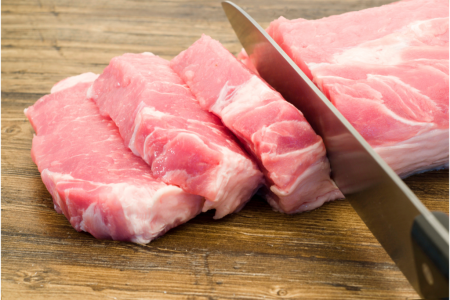
Vietnam has reached a striking milestone in global food consumption. With annual per capita pork intake climbing to nearly 39kg, the country now ranks as the largest pork consumer in Southeast Asia and the fourth largest worldwide.
This growth not only underscores the dominance of the livestock sector but also presents significant challenges for price stabilization and inflation control in 2026.
Consumption trends and market structure
According to the Department of Domestic Market Management and Development, Vietnam’s position has shifted dramatically. In 2023, the country ranked sixth globally. By 2025, it had overtaken several nations to secure fourth place worldwide and first in Southeast Asia.
The upward trend is clear. Average consumption rose from 30kg/person in 2021 to 37kg in 2024, before reaching 39kg last year. Pork now accounts for more than 63% of total livestock product consumption, underscoring its role as the dominant source of animal protein in the Vietnamese diet.
Supply capacity and price volatility
To meet this massive demand, the domestic livestock industry has undergone a significant structural shift. Live pig output in 2025 was estimated at 5.4 million tons, a 5% increase year-on-year.
However, to maintain the supply-demand balance, Vietnam is projected to import approximately 200,000 tons of pork in 2026, a 14% rise in volume.
Price dynamics in the early months of 2026 have been volatile. After dipping to about USD 2.13-2.17/ kg in late 2025, live pig prices unexpectedly surged to USD 3.19/kg in January 2026.
Nguyen Xuan Duong, Chairman of the Vietnam Livestock Association, described this spike as “anomalous and heavily influenced by speculative trading among small-scale merchants, particularly during the peak consumption period of the Lunar New Year.”
Inflation pressures and policy response
Because pork carries the greatest weight in the food category of the Consumer Price Index, price swings directly affect inflation targets. Economists caution that without tighter regulation of supply and distribution, sudden “price fever” could destabilize the broader economy.
With demand expected to remain strong through Q1 2026, close coordination between the Ministry of Industry and Trade and the Ministry of Agriculture and Rural Development will be essential. Balancing domestic production with imports will determine whether inflationary risks can be contained.
Outlook for the livestock industry
Vietnam’s new status as Southeast Asia’s pork consumption leader offers opportunities for integrated 3F (Feed-Farm-Food) enterprises. Yet it also demands more sophisticated market management.
Holding the “champion” title for pork consumption in Southeast Asia opens massive opportunities for integrated 3F (Feed-Farm-Food) enterprises but also demands more sophisticated market management.
Reducing reliance on middlemen and improving transparency will be critical. By strengthening supply chains and stabilizing prices, Vietnam can meet domestic demand while positioning itself for future export growth.