


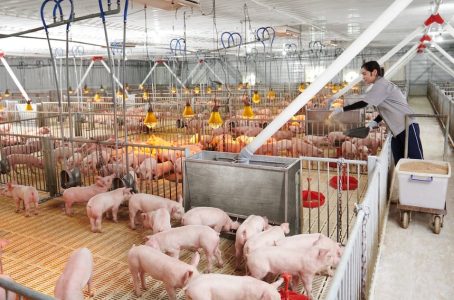
Following the peak consumption period of the Lunar New Year, livestock and poultry producers across Vietnam are ramping up restocking efforts. In provinces such as Gia Lai, Phu Tho, and Cao Bang, farmers are shifting from rapid expansion to a more calculated approach. The focus now lies on biosecurity, market adaptability, and sustainable growth.
Prudence in production recovery
In Gia Lai, the restocking phase is characterized by professional planning rather than impulsive growth. Companies like Nam Sai Gon Livestock Co Ltd have implemented a phased restocking strategy to balance supply and demand, targeting a 15-20% increase in headcount by Q2 2026. Smallholders mirror this caution, closely monitoring market signals before expanding herds and flocks.
Phu Tho producers face a similar dilemma. Hog prices remain profitable, ranging from USD 2.76-2.87/kg, yet many hesitate to scale up. High input costs for breeding stock and feed, coupled with shrinking grazing land, temper enthusiasm for aggressive recovery.
The primary deterrents include high input costs, specifically for breeding stock and feed, alongside the shrinking availability of natural grazing land.
Strategic pivot: Poultry gains ground
A notable trend in the 2026 restocking season is the agility of farmers in the mountainous province of Cao Bang.
Following the impact of African Swine Fever (ASF) in late 2025, a significant number of households have shifted from swine to poultry production. Farmers view poultry as a resilient alternative, offering shorter cycles, quicker capital turnover, and steady demand. By 2025, the province’s poultry population surpassed 3.1 million birds, exceeding annual targets.
Crossbred ‘Ri’ chickens have become a preferred choice due to their high resistance and suitability for hilly terrains, providing a stable livelihood for highland communities in early 2026.
Strengthening biosecurity measures
The seasonal transition in early spring-characterized by high humidity and drizzle-creates an ideal environment for pathogens such as Highly Pathogenic Avian Influenza (HPAI) and ASF. In response, provincial veterinary authorities have issued strict technical guidelines:
- ✅Environmental decontamination: Facilities must undergo thorough disinfection with lime powder or specialized chemicals. A downtime of at least 1-2 weeks is mandatory before introducing new batches.
- ✅Genetic traceability: Farmers are urged to source day-old chicks (DOCs) exclusively from certified, disease-free hatcheries with valid quarantine certificates.
- ✅Closed-loop farming: Authorities are encouraging the adoption of ‘all-in, all-out’ systems and strictly controlled access to farming zones to mitigate cross-contamination.
Market outlook: Balancing supply and demand
Huynh Ngoc Diep, Director of the Gia Lai Department of Livestock and Veterinary Services, said restocking must align with facility capacity and financial resources to avoid oversupply.
The industry is currently facing a price squeeze: while DOC prices are rising (with ‘Mía’ chickens reaching USD 0.75/bird), consumer demand typically softens post-Tet.
Experts advise producers to monitor market trends closely and strengthen value-chain linkages, connecting production, processing, and distribution. With proactive farmer strategies and vigilant veterinary oversight, Vietnam’s livestock and poultry sectors are positioned for stability and resilience in 2026.