


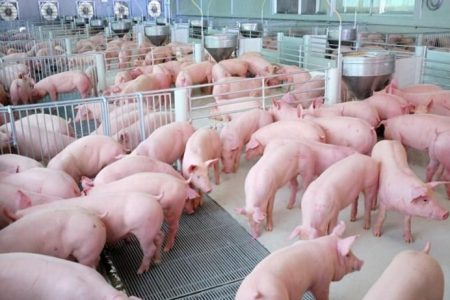
Gia Lai province is emerging as one of Vietnam’s hottest destinations for livestock investments, with pig farming projects worth between USD 1.3 million and USD 8.2 million approved in rapid succession. Yet as capital pours in, provincial authorities are tightening approval criteria, particularly regarding environmental standards and investor capacity.
In 2025 , Gia Lai attracted 192 investment projects, surpassing its target by more than 16%. The agriculture, forestry, and fisheries sector accounted for 50 projects, with total registered capital exceeding USD 273 million.
Livestock projects dominated, with 41 projects worth over USD 196 million. Most were approved in the latter half of the year, indicating the sector’s strong acceleration. This surge set the stage for larger, more industrial projects entering 2026.
Pig farming expands in scale
Investment sizes varied widely, from smaller projects of around USD 1.3 million to large-scale ones reaching up to USD 9.8 million.
Momentum continued into 2026, with several new pig farming projects approved in February. Many of these are designed for tens of thousands of pigs per production cycle, moving toward industrial, closed-loop production models.
Environmental safeguards take center stage
Alongside investment promotion, Gia Lai introduced tougher environmental conditions. All projects must install wastewater treatment systems that meet Column A standards before discharge. Investors unable to comply must upgrade technology or risk losing approval. This requirement serves as a technical safeguard, designed to reduce pollution risks in increasingly concentrated livestock areas.
Authorities also require farms to maintain a minimum distance of 1.5km from residential areas and adopt modern farming models to better control disease and waste. By enforcing higher standards like Column A rather than the commonly applied Column B, the province underscores its commitment to balancing growth with environmental protection.
Selective approval takes hold
African swine fever outbreaks in 2025 exposed the vulnerability of small-scale farms. The disease mainly affected household farms, while large-scale operations were largely unaffected. This experience has shaped Gia Lai’s new approach: concentrated livestock zones with high‑tech applications and raw material areas to support deep processing.
In 2026, the province plans to establish seven concentrated livestock zones and attract enterprises with strong financial capacity and proven expertise.
However, policies are shifting from ‘open-door’ to ‘selective’, prioritizing well-structured, large-scale projects, while limiting smaller ones that pose greater environmental and social risks.
Provincial leaders say that future approvals may exclude small‑scale projects, reserving consideration for corporate‑backed ventures or those with finalized land arrangements.
Toward industrial and circular farming
Gia Lai’s long‑term vision is to industrialize agriculture, moving livestock toward large‑scale, value chain operations and circular economy practices. While small‑scale farming is not dismissed, authorities recognize its challenges in disease control and waste management.
The province aims to gradually reduce small‑scale operations and expand concentrated production. This transition promises stronger disease prevention, higher economic efficiency, and reduced environmental pressure, aligning livestock development with sustainable growth.