


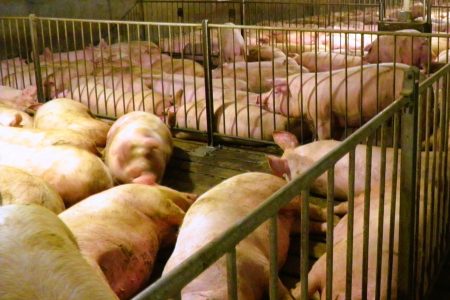
In 2025, Vietnam’s livestock and veterinary sector faced dual pressures from animal disease outbreaks and global market fluctuations, particularly the impact of US tariff policies. Despite these challenges, the sector recorded notable progress.
Production activities were gradually restored, with livestock populations and output increasing across regions.
Disease prevention and control measures were implemented in a coordinated manner, enabling timely containment of African swine fever, avian influenza, and foot-and-mouth disease. These efforts minimized losses for farmers and stabilized production.
The Ministry of Agriculture and Environment emphasized biosecure farming, organic-oriented production, and high-tech adoption. This transition accelerated professionalization across both large enterprises and smallholder farms, laying the foundation for sustainable growth.
The livestock sector has been rapidly shifting from small-scale household production to concentrated farm-based and large-scale, professional livestock operations.
These entities play a core role in improving productivity and product quality, strengthening disease control, ensuring food safety, and promoting sustainable development. They also contribute significantly to national agricultural growth targets in 2025.
Livestock production in 2025: Recovery and stability
Between 2021 and 2025, the Ministry coordinated with local authorities to implement comprehensive development solutions. As a result, the structure of livestock products aligned with sector restructuring goals and the Livestock Development Strategy for the 2021-2030 period, with a vision to 2045.
Value-chain linkage models emerged, connecting production with markets and positioning enterprises at the center. Provinces in the Central Highlands and Southeast, including Dak Nong, Gia Lai, Binh Phuoc, and Tay Ninh, recorded strong growth driven by enterprise expansion and new projects.
Partnerships among enterprises, farms, cooperatives, and households reduced costs, improved efficiency, and increased added value. These linkages promoted sustainable livestock production based on organic practices and biosecurity, reinforcing resilience across the sector.
Development orientation for 2026
Looking ahead, the Ministry of Agriculture and Environment outlined priorities for 2026. The focus will be on consolidating and strengthening livestock and veterinary systems, particularly at district and commune levels.
Communication campaigns will raise public awareness of sustainable production, economic efficiency, and proactive disease prevention.
Key tasks and solutions include:
- ✅ Strengthening grassroots livestock and veterinary systems and improving disease monitoring and management capacity at district and commune levels.
- ✅ Expanding communication and training programs to raise farmers’ awareness of sustainable livestock production, biosecurity, and disease prevention.
- ✅ Implementing policies to attract investment from all economic sectors into livestock development.
- ✅ Enhancing inspection, supervision, dissemination, and enforcement of specialized regulations on livestock production, veterinary services, and food safety.
- ✅ Establishing and operating traceability systems for livestock establishments and products.
- ✅ Improving production capacity and quality management of breeding stock, animal feed, veterinary drugs, and vaccines.
- ✅ Tightening control over banned substances and antibiotic use, while promoting antimicrobial resistance prevention during 2025-2030.
Science, technology, and digital transformation will remain central pillars, with the following goals:
- ✅ Developing domestic raw material zones and applying modern technologies in livestock production.
- ✅ Promoting biosecure livestock farming and value-chain-based production linkages.
- ✅ Strengthening quarantine and inspection of imported animals and animal products.
- ✅ Encouraging enterprises and farmers to adopt digital tools to improve productivity and quality, and meeting both domestic and export requirements.
Strengthening disease control and local responsibilities
Disease prevention and control efforts will continue to be strengthened. Focus will be placed on:
- ✅ Implementing and monitoring six national programs and action plans on animal disease prevention and control.
- ✅ Closely monitoring and updating disease developments in livestock and poultry, especially dangerous diseases.
- ✅ Enhancing surveillance and outbreak investigations, including sample collection for genome sequencing research and vaccine efficacy evaluation.
- ✅ Developing epidemiological maps and conducting in-depth analyses.
- ✅ Guiding and supporting local authorities and enterprises in establishing disease-free facilities and zones in accordance with Vietnamese standards and WOAH/OIE requirements to support exports of animals and animal products.
Local authorities are encouraged to:
- ✅ Re-plan livestock production toward a more concentrated model that leverages regional advantages.
- ✅ Invest in the development of large-scale, concentrated livestock production areas.
- ✅ Develop breeding industries, research activities, and livestock breed selection suited to each region.
- ✅ Promote animal feed industries, environmental technologies, slaughtering, processing, and the production of livestock equipment.
- ✅ Allow facilities that cannot yet be relocated to continue operating under strict control, with mandatory application of waste treatment technologies to reduce pollution during the transition period.
- ✅ Ensure timely and accurate reporting of livestock and poultry disease data on the Vietnam Animal Health Information System (VAHIS) to support effective disease prevention, control, and management.