


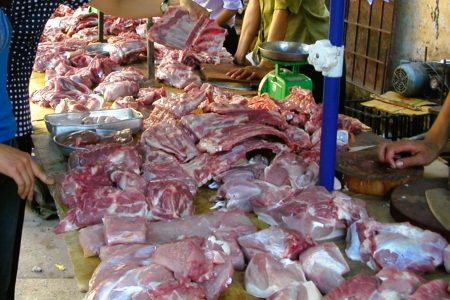
Vietnam’s traditional markets remain vital to daily life, supplying fresh pork to millions of households. Yet a recent study reveals troubling levels of microbial contamination, raising urgent questions about food safety and vendor practices.
Contamination patterns across regions
Researchers sampled pork and cutting boards from 68 markets in five provinces. Salmonella was detected in 64.4% of pork samples, with southern provinces showing far higher prevalence than northern ones. Only 30% of pork met national bacterial count standards, while cutting boards showed heavy contamination.
Temperature was a critical factor, with warmer conditions driving bacterial growth. Surfaces that were easier to clean helped reduce contamination, underscoring the importance of basic infrastructure.
Vendor knowledge and everyday practices
Vendor knowledge of food safety was limited. Most recognized the need to wash surfaces, but few mentioned disinfection. Some even believed unsafe practices, such as washing meat with water or using cardboard, improved safety.
Observations revealed pork displayed on cloth or cardboard, knives rarely disinfected, and limited use of soap. Water access was inconsistent, with many stalls lacking reliable supply. These conditions created an environment where contamination could spread easily.
Market realities and vendor profiles
The study found that most vendors were women, averaging 49 years of age, with decades of experience in pork selling. Few had attended food safety training. Vendors worked long hours and sold large volumes of pork daily.
Selling organs was linked to higher contamination risks, while larger stalls in provinces like Dong Nai faced additional challenges due to higher throughput and longer working hours. Regional differences reflected both environmental conditions and infrastructure gaps.
Beyond the stalls: Systemic challenges
The findings highlight systemic issues that extend beyond individual vendors.
- ✅ Traditional markets often lack cold chains, standardized hygiene practices, and regular inspection.
- ✅ Vendors operate with limited equipment, such as soap, disinfectants, or separate knives.
- ✅ Market-level infrastructure, including water supply and waste management, remains uneven.
- ✅ Consumer demand for fresh pork reinforces practices that prioritize availability over safety.
These factors combine to create persistent risks that cannot be solved by training alone.
Policy directions and regional lessons
Vietnam has launched a national food systems plan emphasizing transparency and sustainability. Yet practical interventions at market level remain essential.
Low-cost measures—such as infrastructure upgrades, training, and behavioral incentives—could significantly improve hygiene. Pilot projects have shown promise, but scaling them requires coordinated support. Addressing vendor knowledge gaps, improving access to clean water, and incentivizing safer practices are critical steps toward reducing contamination.
Regional comparisons offer valuable insights. Northern provinces showed lower contamination, suggesting that cooler climates and better infrastructure may help reduce risks. Southern provinces, with consistently warm and humid conditions, require stronger interventions.
These findings may also apply to other Southeast Asian countries where traditional markets dominate food supply chains.