Experts highlight AI’s role in reshaping livestock health management, ensuring targeted treatment, reducing stress, and aligning with global welfare trade standards.





Artificial intelligence is reshaping livestock health management by reducing blanket antibiotic use and promoting sustainable farming. This shift highlights how animal welfare is increasingly tied to public health and trade resilience. Experts stress that technology, regulation, and welfare standards must align to safeguard both animals and human societies, reported CodeBlue.
Speaking at the Global Animal Production and Veterinary Industry Summit (Gavis) 2026, which ran on July 21-23 in Putrajaya, Malaysia, Prof Dr Goh Yong Meng of Universiti Putra Malaysia explained that AI‑driven monitoring systems can detect early disease signs through animal movement, sound, and biometric data. Farmers can then treat only sick animals instead of medicating entire herds.
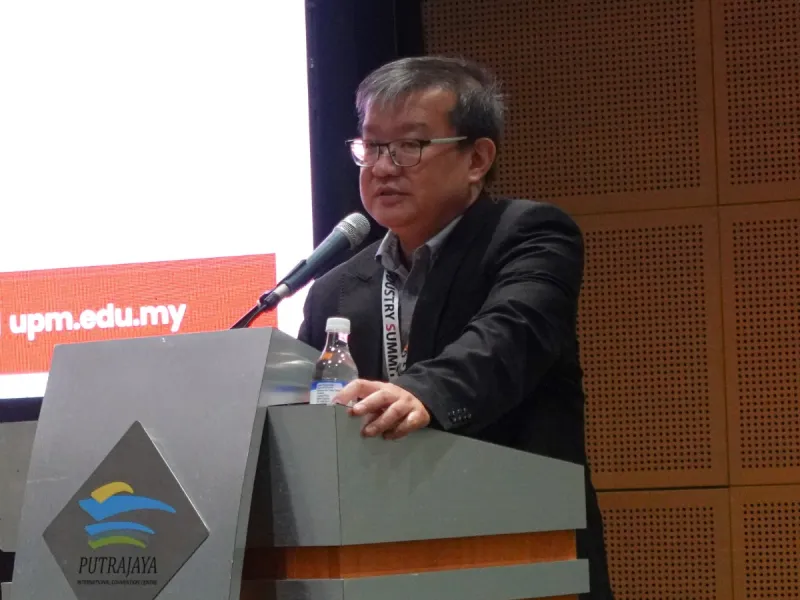
Prof Dr Goh Yong Meng. (Photo credit: CodeBlue)


He cited a pig farm in China where AI detects coughing among individual animals. Treatment is targeted to affected cages rather than entire pens. Predictive sensors now enable individual health tracking, giving veterinarians the ability to intervene earlier. Continuous monitoring of stress indicators and biological signals helps prevent illness from spreading, further reducing reliance on mass medication.
Dr Goh emphasized that animal welfare should be viewed as a public health strategy. Stress-free animals are less likely to become reservoirs of disease, lowering risks of zoonotic outbreaks. Welfare is no longer just an ethical choice but an ecosystemic requirement to safeguard human societies.
Modern breeding programs often prioritize efficiency, producing animals that grow faster or yield more milk. However, these practices impose physiological burdens. For example, broiler chickens bred for rapid growth sometimes develop bone disorders because their skeletons cannot support their weight. Stress from such conditions contributes to antimicrobial resistance and other health issues. Dr Goh stressed the importance of balance, noting that welfare reduces disease emergence and strengthens resilience.
Animal welfare is also becoming an economic issue. Countries are tightening import requirements, making welfare standards trade necessities rather than voluntary guidelines. Malaysia’s Animal Welfare Act 2015 was partly introduced to ensure continued imports from nations with strict welfare expectations, such as Australia.
Dr Goh noted that tariffs and standards can accelerate improvements in countries initially reluctant to adopt welfare measures. He argued that beyond regulation and technology, the challenge requires rethinking human-animal relationships. Sustainable stewardship, where humans care for animals and vice versa, is essential for long-term resilience.
AI offers livestock farmers a path away from blanket antibiotic use, aligning with One Health and One Welfare principles. By combining technology, welfare, and trade standards, the livestock sector can move toward sustainable practices that protect animals, humans, and the environment.





Subscribe now to the technical pig magazine
AUTHORS

Bifet Gracia Farm & Nedap – Automated feeding in swine nurseries

The importance of Water on pig farms
Fernando Laguna Arán
Microbiota & Intestinal Barrier Integrity – Keys to Piglet Health
Alberto Morillo Alujas
Impact of Reducing Antibiotic use, the Dutch experience
Ron Bergevoet
The keys to successful Lactation in hyperprolific sows
Mercedes Sebastián Lafuente
Addressing the challenge of Management in Transition
Víctor Fernández Segundo
Dealing with the rise of Swine Dysentery
Roberto M. C. Guedes
Actinobacillus pleuropneumoniae – What are we dealing with?
Marcelo Gottschalk
The new era of Animal Welfare in Pig Production – Are we ready?
Antonio Velarde
Gut health in piglets – What can we do to measure and improve it?
Alberto Morillo Alujas
Interview with Cristina Massot – Animal Health in Europe after April 2021
Cristina Massot
Differential diagnosis of respiratory processes in pigs
Desirée Martín Jurado Gema Chacón Pérez


To provide the best experiences, we use technologies like cookies...