


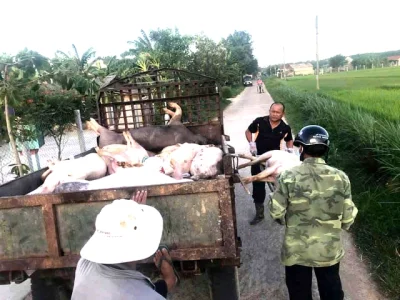
Authorities in Da Nang City, central Vietnam, have urged that ASF be classified as a dangerous infectious disease requiring mandatory vaccination, a report from Tuoi Tre News said. The proposal was presented by Tran Nam Hung, vice-chairman of the Da Nang People’s Committee, during a meeting with the Ministry of Agriculture and Environment.
ASF has spread to 52 of the city’s 94 communes and wards, forcing the culling of over 11,000 pigs weighing nearly 686 tons. Only one commune has remained disease-free for 22 days, while other areas have seen shorter gaps without new infections.
Small-scale farming complicates disease control
Mr Hung emphasized that 80% of local pig production comes from small-scale farms, which often lack proper biosecurity. These scattered operations make containment difficult, especially as some farmers neglect basic preventive measures.
He also noted that limited veterinary staff in certain localities hampers timely outbreak response. ASF first struck Da Nang in 2019 and has recurred annually, underscoring the need for stronger preventive policies.
National concerns over pork supply and prices
Deputy Minister of Agriculture and Environment Phung Duc Tien highlighted Vietnam’s reliance on pork, which accounts for 65% of total meat value. In 2024, production reached 8.2 million tons, with the country maintaining a herd of 31 million pigs.
Mr Tien warned that uncontrolled ASF outbreaks could severely disrupt supply chains. A previous wave once drove pork prices to USD 4/kg, with recovery taking two years. He stressed that strict and timely control is essential to avoid similar economic shocks.
Call for prevention over cure
Mr Hung concluded that ASF’s recurring nature demands proactive measures. “Prevention is better than cure. ASF returns every one to two years. We propose it be added to the list of dangerous animal diseases requiring mandatory vaccination,” he said.
The proposal reflects growing urgency to safeguard Vietnam’s pork industry, stabilize consumer prices, and protect farmers from recurring losses.