The initiative aims to modernize Vietnam’s livestock sector through integrated, high-tech and sustainable development.
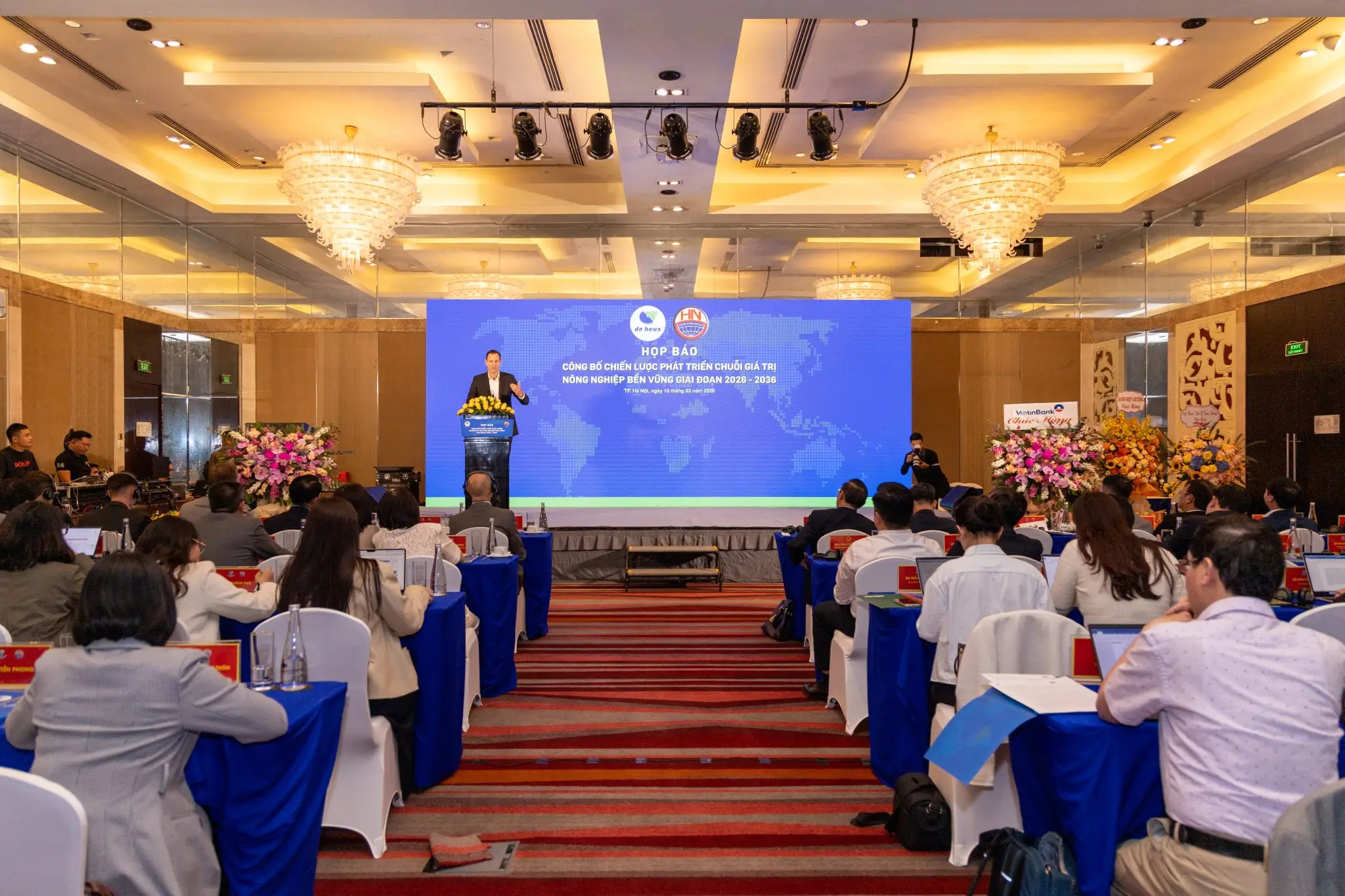
In a major move to modernize Southeast Asia’s livestock sector, the Netherlands-based Royal De Heus Group and Vietnam’s Hung Nhon Group officially announced their ‘Sustainable Agricultural Value Chain Development Strategy for 2026-2036’ during a high-level press conference in Hanoi on March 10, 2026.
The event was attended by senior government officials, including Deputy Minister of Agriculture and Environment Phung Duc Tien, Deputy Minister of Justice Nguyen Thanh Ngoc, and the Ambassador of the Kingdom of the Netherlands to Vietnam, Kees van Baar.
The strategy underscores a long-term commitment to transforming Vietnam’s independent farming households into a high-tech, export-oriented industry.
This announcement follows a period of aggressive growth for De Heus in the region.


On March 3, the Group finalized its acquisition of CJ Feed & Care in Asia, a move that significantly bolstered its technological and management capabilities.
By integrating these assets, De Heus aims to provide comprehensive solutions, ranging from animal nutrition and genetics to farm management-aligned with Vietnam’s national sustainability goals.
The 2026-2036 roadmap focuses on creating a transparent, modern value chain.
Beyond animal feed, De Heus is investing heavily in high-quality breeding stock and biosecure farming systems.
These efforts are designed to mitigate disease risks and enhance productivity, ensuring that Vietnamese livestock products meet the rigorous safety standards required for global competition.
Hung Nhon Group, De Heus’s primary strategic partner in Vietnam, is spearheading the development of large-scale, automated ‘Green’ farming models.
To date, the partnership has launched 15 projects across Tay Ninh and the Central Highlands, representing a combined investment of approximately USD 490 million.
Tay Ninh has emerged as the hub of this partnership, hosting 12 projects valued at USD 400 million.
These facilities are designed to operate under international standards, including Halal, ISO 22000, and FSSC 22000 certifications. Upon completion, the ecosystem is projected to produce:
The partnership plans to expand further in Tay Ninh and Gia Lai with an additional USD 235 million in investment.
This brings the total projected capital for the 2026-2036 period to USD 720 million.
“Vietnam remains a cornerstone of our long-term vision in Asia,” stated Gabor Fluit, General Director of De Heus. “Through this 10-year strategy, we are not just selling feed; we are building an integrated system that ensures food security and empowers local farmers to join the global supply chain.”
Once fully operational, the Hung Nhon-De Heus alliance expects to generate nearly USD 2 billion in annual revenue.
By focusing on low-emission production and high-tech slaughtering facilities, the collaboration aims to serve as a ‘lever’ for Vietnam’s agriculture, creating thousands of local jobs and positioning the country as a leading exporter of premium livestock products in the region.

Subscribe now to the technical pig magazine
AUTHORS

Bifet Gracia Farm & Nedap – Automated feeding in swine nurseries

The importance of Water on pig farms
Fernando Laguna Arán
Microbiota & Intestinal Barrier Integrity – Keys to Piglet Health
Alberto Morillo Alujas
Impact of Reducing Antibiotic use, the Dutch experience
Ron Bergevoet
The keys to successful Lactation in hyperprolific sows
Mercedes Sebastián Lafuente
Addressing the challenge of Management in Transition
Víctor Fernández Segundo
Dealing with the rise of Swine Dysentery
Roberto M. C. Guedes
Actinobacillus pleuropneumoniae – What are we dealing with?
Marcelo Gottschalk
The new era of Animal Welfare in Pig Production – Are we ready?
Antonio Velarde
Gut health in piglets – What can we do to measure and improve it?
Alberto Morillo Alujas
Interview with Cristina Massot – Animal Health in Europe after April 2021
Cristina Massot
Differential diagnosis of respiratory processes in pigs
Desirée Martín Jurado Gema Chacón Pérez