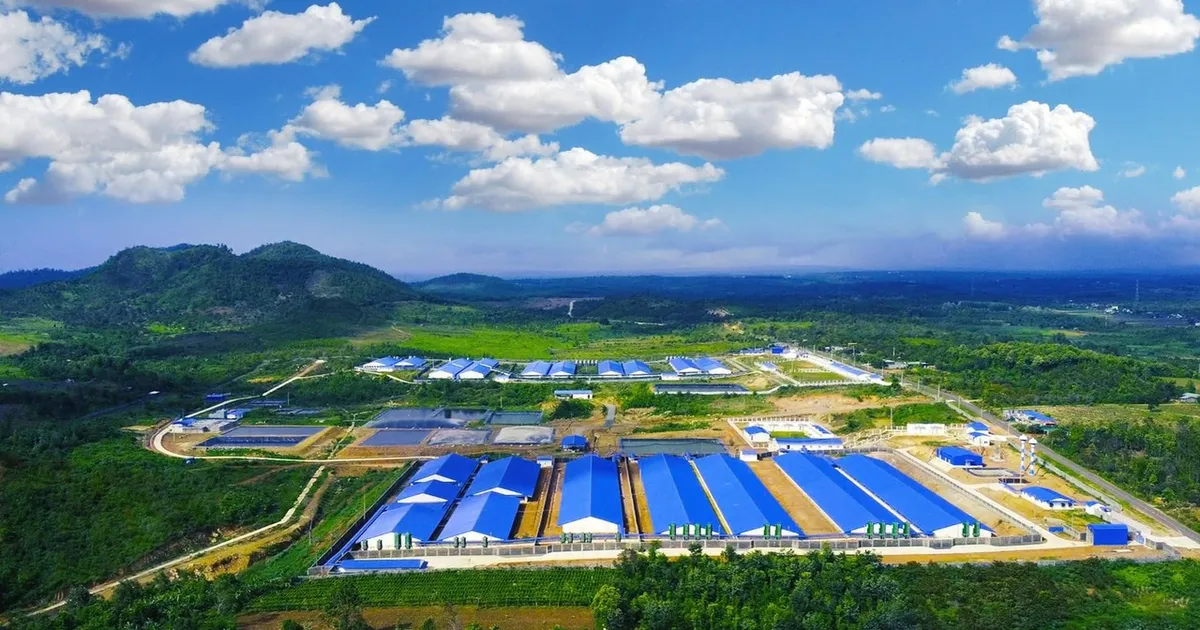
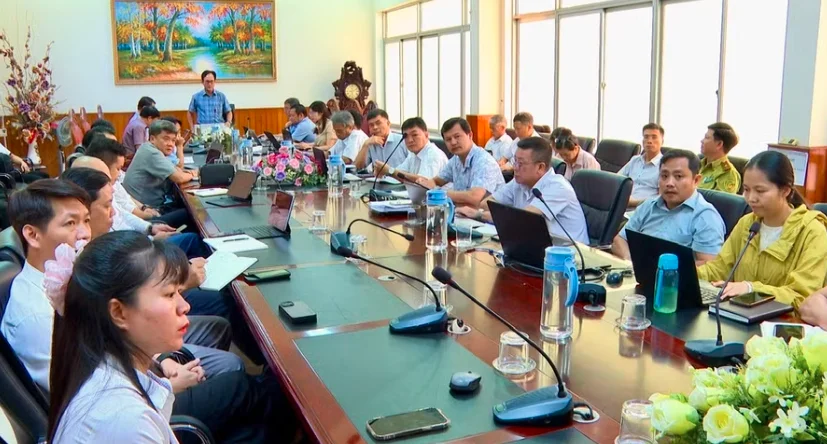
The city’s new slaughterhouse network aims to ensure safer meat supplies, stricter disease control, and better environmental protection across the capital.





The Hanoi People’s Committee has issued Decision No. 4314/QD-UBND dated August 16, 2026, approving a network of centralized livestock and poultry slaughterhouses across the city.
This new decision replaces Decision No. 761/QD-UBND from February 2020. It aims to bring greater order to slaughtering activities, strengthen food safety and veterinary hygiene, prevent animal diseases, and improve environmental protection.
Under the plan, Hanoi’s centralized slaughterhouse network will comprise 28 facilities across 25 communes. These facilities will operate under industrial-scale models, with varying land areas designed to meet the capital’s substantial demand for meat and poultry products.
Several projects within the approved network have already drawn investor interest and entered development.


Notable facilities include the Minh Hien Livestock and Poultry Slaughterhouse in Binh Minh Commune (1.2 ha), the Quang Lang Slaughterhouse in Dai Xuyen Commune (16.6 ha), and the Hong Phong Slaughterhouse in Hoa Phu Commune (2 ha).
The network also includes a 5.6-ha pig slaughterhouse and a 2.5-ha poultry slaughterhouse in Phu Nghia Commune, the Vinh Anh Slaughterhouse in Thuong Tin Commune (1.6 ha); and the Dong Thanh Livestock Slaughterhouse in Thu Lam Commune (3.1 ha).
The network is expected to strengthen slaughtering controls and reduce small-scale operations. This shift will help ensure that meat entering the market meets food safety and disease control standards.
The Hanoi People’s Committee requires all slaughterhouse construction, renovation, and expansion to follow strict regulations. These cover investment, land use, construction, environmental protection, fire prevention, and food safety.
The Department of Agriculture and Environment will announce and implement the decision. It will coordinate with departments and local authorities to guide, inspect, and monitor progress. The city aims to complete the network by Q4 2028.
Local authorities must publicize and protect land designated for the facilities while strengthening oversight of construction and slaughtering operations. They will also review sites, coordinate land clearance, and create favorable conditions for investors.
At the same time, local governments will step up communication campaigns. These efforts aim to encourage farmers and traders to use centralized slaughterhouses. Authorities plan to intensify inspections and enforce stricter penalties for violations. These measures aim to gradually eliminate small-scale slaughtering operations that fail to meet hygiene and safety standards.





Subscribe now to the technical pig magazine
AUTHORS

Bifet Gracia Farm & Nedap – Automated feeding in swine nurseries

The importance of Water on pig farms
Fernando Laguna Arán
Microbiota & Intestinal Barrier Integrity – Keys to Piglet Health
Alberto Morillo Alujas
Impact of Reducing Antibiotic use, the Dutch experience
Ron Bergevoet
The keys to successful Lactation in hyperprolific sows
Mercedes Sebastián Lafuente
Addressing the challenge of Management in Transition
Víctor Fernández Segundo
Dealing with the rise of Swine Dysentery
Roberto M. C. Guedes
Actinobacillus pleuropneumoniae – What are we dealing with?
Marcelo Gottschalk
The new era of Animal Welfare in Pig Production – Are we ready?
Antonio Velarde
Gut health in piglets – What can we do to measure and improve it?
Alberto Morillo Alujas
Interview with Cristina Massot – Animal Health in Europe after April 2021
Cristina Massot
Differential diagnosis of respiratory processes in pigs
Desirée Martín Jurado Gema Chacón Pérez


To provide the best experiences, we use technologies like cookies...