


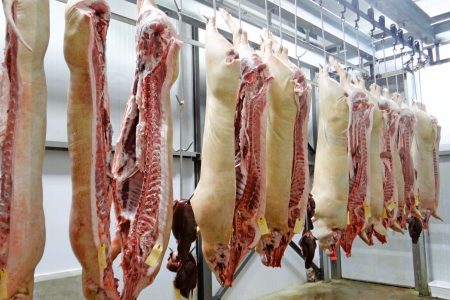
Hanoi, Vietnam is taking a major step towards ending small-scale slaughter by bringing 52 centralized and temporarily centralized slaughterhouses into operation. The move marks an important milestone in efforts to place livestock and poultry slaughtering under a more structured and regulated system.
The policy is also bringing substantial changes for hundreds of traditional slaughterhouse operators, market traders and local wet markets across the capital.
Nguyen Ngoc Son, former head of the Hanoi Sub-Department of Livestock Production and Animal Health and Standing Vice Chairman of the Vietnam Livestock Association, the initiative represents an important step toward modernizing the city’s livestock sector.
However, he emphasized that the measure should be viewed as part of a wider restructuring effort. Lasting reform will require improvements across livestock production, slaughtering, processing, and distribution.
Moving beyond fragmented slaughtering
Small-scale slaughtering has developed alongside Vietnam’s long-standing smallholder farming model. Household producers still account for about 40% of total livestock production, creating a fragmented slaughter network that is difficult to monitor and regulate.
At the same time, food safety, disease control, veterinary hygiene, and environmental requirements have become increasingly stringent. As a result, the need for centralized facilities operating under regular supervision has grown.
Hanoi began planning a centralized slaughterhouse network years ago. Progress, however, has been slowed by challenges including land availability, investment constraints, and the continued operation of unauthorized facilities.
Some centralized plants have already been built with significant capacity. Yet many have struggled to operate efficiently because they must compete with informal slaughterhouses that face lower costs and fewer regulatory requirements.
Against this backdrop, authorities view the 52 operational facilities as a practical solution during the transition period. Local authorities have approved the facilities, and veterinary officials supervise animal inspections before, during, and after slaughter.
This oversight strengthens food safety protections while reducing disease risks and environmental impacts. It also helps align slaughtering activities with the city’s long-term development plans.
Supply chain habits remain the biggest obstacle
Dr Son believes the greatest challenge is not building additional facilities, but changing established practices throughout the meat supply chain.
The transition affects livestock farmers, slaughterhouse operators, traders, and consumers alike. Operators must replace informal practices with regulated systems that meet veterinary, food safety, environmental, and traceability standards.
Meeting those requirements often requires new equipment, upgraded facilities, and operational changes. For many small-scale operators with low operating costs, adapting to these standards represents a significant challenge.
Traders also face an important shift. Instead of sourcing meat from informal slaughterhouses, they must increasingly rely on facilities operating under veterinary supervision.
This transition requires closer coordination between livestock production, slaughtering, processing, and distribution. As a result, Hanoi will need more than inspections and enforcement alone.
Therefore, Hanoi needs policies that provide support, practical guidance, and public communication. As a result, Hanoi will need more than inspections and enforcement alone.
Dr Son said authorities should also provide practical guidance, support programs, and public outreach efforts. Such measures could help operators and traders adapt to more transparent and traceable business practices.
Market controls will determine success
Hanoi aims to largely eliminate small-scale slaughtering by 2030. According to Dr Son, achieving that goal will require a coordinated package of measures supported by consistent enforcement.
Authorities must continue developing livestock, slaughtering, and processing infrastructure while creating favorable conditions for private investment. Land policies, financing options, and investment incentives could help attract long-term business participation.
However, Dr Son identified control of meat entering traditional markets as the critical bottleneck.
If products from unauthorized slaughterhouses continue reaching consumers, centralized facilities may struggle to achieve their intended purpose. Stronger oversight at the market level is therefore essential.
Only meat carrying veterinary inspection marks and clear proof of origin should be allowed into the marketplace, he said. Such controls would gradually reduce the role of slaughterhouses operating outside the regulatory framework while ensuring fairer competition for compliant businesses.
At the same time, authorities will need to intensify inspections, crack down on illegal slaughtering, and strengthen public awareness campaigns. As consumers increasingly seek products with verified origins, market demand itself could encourage more professional practices.
Vietnam’s regulatory framework already contains extensive provisions governing slaughtering activities. The challenge now is less about introducing new regulations and more about enforcing existing rules effectively.
Benefits beyond food safety
Experience in Ho Chi Minh City, where slaughtering activities have been consolidated for many years, demonstrates the importance of coordinated controls across slaughterhouses, distribution channels, and retail markets. That experience may provide a useful model for Hanoi and other northern provinces.
If implemented effectively, the transition could deliver benefits throughout the supply chain. Consumers would gain greater access to products with traceable origins and veterinary oversight, strengthening food safety and public health protections.
Standardizing slaughtering operations can help the livestock sector improve traceability and product quality. It can also drive closer integration between production, slaughtering, processing, and distribution.
This creates a strong foundation for the sector to move beyond fragmented, small-scale production and develop a more modern, transparent, and sustainable model.
From a regulatory perspective, gradually eliminating small-scale slaughtering will also help reduce environmental pollution, limit the risk of zoonotic disease emergence and transmission, and improve the urban and rural environment.
To achieve its 2030 target, Hanoi will need consistent enforcement, stronger controls on product origins, and coordinated action across the supply chain. If successful, the city’s transition could provide a model for other localities seeking safer, more transparent meat supply systems.