Zhuochuang Information believes that the reduction of live pig capacity will continue moderately in the third quarter of 2026.




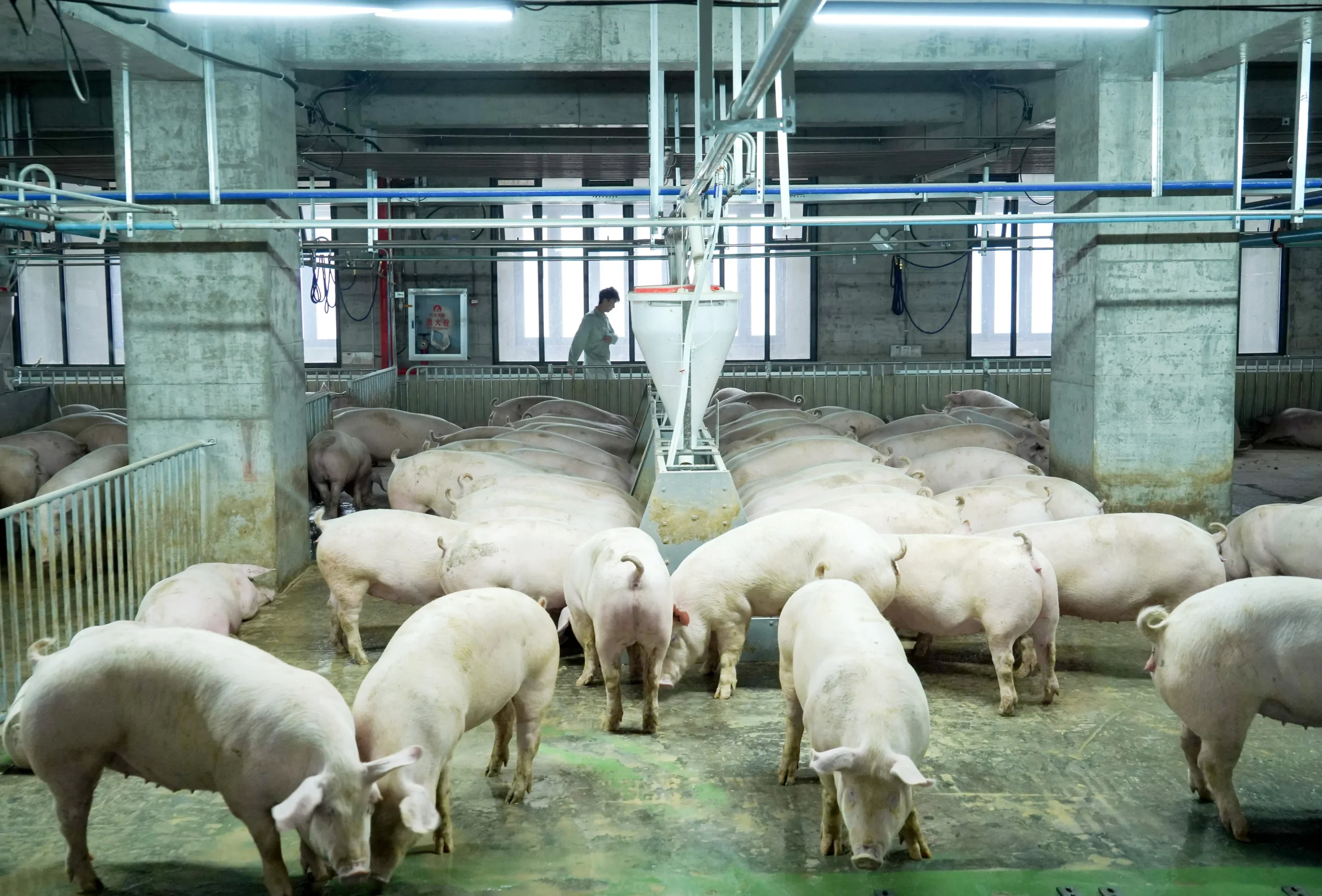
The current round of the pig cycle in China has entered the phase of capacity reduction, but compared with the previous two rounds, the overall reduction range has narrowed and the progress has been slow, according to a market report by SunSirs.
Coupled with the iterative upgrading of breeding technology, production efficiency has been greatly improved, and hidden capacity has been continuously released, offsetting the effect of capacity contraction.
Based on this, looking ahead to the market, Zhuochuang Information believes that the reduction of live pig capacity will continue moderately in the third quarter of 2026, and the time for the market to bottom out at a low level may be relatively longer than in previous rounds.
Pig cycle


The pig cycle refers to the periodic fluctuations in the live pig market formed around the dynamic balance between production capacity supply and demand.
The key links—such as the time, magnitude and rhythm of production capacity reduction—directly determine the trend of hog prices.
Looking at the two complete pig cycles in recent years, affected by unexpected industry incidents and differences in the market environment, production capacity reduction has shown two completely different forms: cliff-style and moderate-style, which provide important references for the current cycle.
This cycle from June 2016 to April 2022 was a “super cycle” hit by swine disease, with production capacity reduction showing a “cliff-like” characteristic.
The hard reduction directly led to a cliff-like drop in subsequent pig supply, pushing hog prices to a historical high and also accelerating the large-scale exit of small-scale farmers and the expansion of leading enterprises.
The period from May 2022 to September 2024 belongs to the post-African swine fever era, and the production capacity reduction features a “moderate” pattern.
Production capacity reduction
In terms of the intensity of production capacity reduction, in August 2018, with the introduction of swine fever into China, the production capacity reduction was rapidly promoted until the inventory of fertile sows hit rock bottom in September 2019.
According to statistics from Zhuchuang Information, the cumulative reduction of fertile sows reached 39.40%. From July 2023 to April 2024, driven by the deep losses in the industry caused by early overcapacity and the continuous slump in hog prices, the inventory of fertile sows decreased by a cumulative 6.67%.
Since the start of a new hog cycle in October 2024, the industry has gradually entered the production capacity reduction phase in July 2025. As of March 2026, the inventory of fertile sows has decreased by a cumulative 3.41%.
Compared with the previous two rounds of production capacity reduction processes, the decline in fertile sow inventory has not yet reached the bottom.
Production efficiency
Meanwhile, the production efficiency of pig breeding has been significantly improved, and hidden production capacity has increased. With the continuous progress of breeding technology, the national average PSY and MSY have been on the rise.
In 2025, PSY reached 25.10 heads and MSY rose to 21.52 heads, an increase of nearly 30%-40% over the past decade. The improvement in production efficiency means that even if the inventory of breeding sows has decreased to some extent, the corresponding pig supply has not dropped at the same rate.
Hidden production capacity has effectively offset part of the destocking effect, further reducing the magnitude of destocking.
Therefore, in terms of the pace of production capacity reduction, the current hog market is in the initial stage of production capacity reduction on the breeding side.
In accordance with the conventional order of production capacity reduction in the industry, breeders will first ease the loss pressure by reducing the slaughter weight of live pigs and increasing the external sales of piglets, then gradually reduce personnel, rent out or sell idle breeding farms, and finally eliminate breeding sows.
At present, the market is in a stage where the slaughter weight of live pigs is being reduced and the external sales of piglets are being increased simultaneously.
The first quarter of 2026
In the first quarter of 2026, the average slaughter weight of live pigs nationwide remained at a high level in the same period of history.
At the same time, the price discount rate for eliminated sows in the first quarter of 2026 was higher than that in the same period of previous years.
This indicator also indicates that breeders have a strong reluctance to eliminate sows, the progress of breeding sow elimination is relatively slow, and the current capacity reduction is still in the middle and early stage of steady progress, and has not yet entered the stage of large-scale capacity reduction.
Looking ahead to the pace of future capacity reduction, it is expected that the capacity reduction process will continue in the third quarter, but the inflection point of hog prices still needs to be awaited.
Combined with the policy orientation and market fundamentals, the destocking of pig production capacity will not stop in the short term, and we still need to wait patiently for the inflection point of pork prices.
At the policy level, the Ministry of Agriculture and Rural Affairs has lowered the target for the normal breeding stock of fertile sows. At present, the national inventory of sows is still higher than the reasonable range, and the policy will continue to guide the industry to destock production capacity in an orderly manner.
At the market level, hog prices have lingered at a long-term low, coupled with the rising prices of feed ingredients such as corn and soybean meal.
The pressure of breeding losses has been mounting, which will force some small and medium-sized breeders to gradually withdraw, and large-scale enterprises will also passively adjust their production capacity structure.
However, large breeding groups have relatively strong financial strength and risk resistance, so there will be no concentrated production reduction. The current round of production capacity reduction will maintain a moderate pace in the long run.
Overall, this round of the pig cycle is characterized by a small scale of production capacity reduction, a slow pace and a long cycle. It is expected that the reduction of hog production capacity will continue to advance in the third quarter of 2026, and the industry supply and demand will recover slowly.
In the short term, the hog industry will continue to be in a bottom adjustment cycle, and hog prices will likely maintain a low and volatile trend, making it difficult to see a rapid rebound.




Subscribe now to the technical pig magazine
AUTHORS

Bifet Gracia Farm & Nedap – Automated feeding in swine nurseries

The importance of Water on pig farms
Fernando Laguna Arán
Microbiota & Intestinal Barrier Integrity – Keys to Piglet Health
Alberto Morillo Alujas
Impact of Reducing Antibiotic use, the Dutch experience
Ron Bergevoet
The keys to successful Lactation in hyperprolific sows
Mercedes Sebastián Lafuente
Addressing the challenge of Management in Transition
Víctor Fernández Segundo
Dealing with the rise of Swine Dysentery
Roberto M. C. Guedes
Actinobacillus pleuropneumoniae – What are we dealing with?
Marcelo Gottschalk
The new era of Animal Welfare in Pig Production – Are we ready?
Antonio Velarde
Gut health in piglets – What can we do to measure and improve it?
Alberto Morillo Alujas
Interview with Cristina Massot – Animal Health in Europe after April 2021
Cristina Massot
Differential diagnosis of respiratory processes in pigs
Desirée Martín Jurado Gema Chacón Pérez


To provide the best experiences, we use technologies like cookies...