


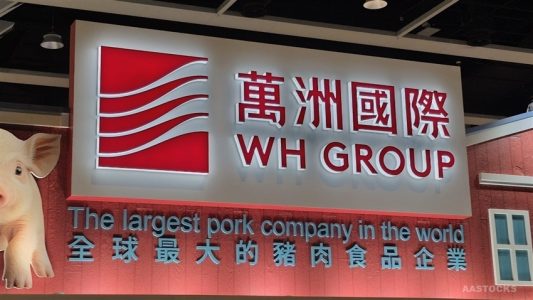
China’s pork giant WH Group operates as a vertically integrated pork producer, controlling everything from hog farming and processing to packaged meats and distribution, wrote Elena Harper, Senior Stock Market Editor at Ad Hoc News, in her report.
This model spans China, the US, and Europe, with Smithfield Foods serving as its key US arm for fresh pork, bacon, and value-added products. This integration minimizes costs and ensures supply reliability, even during disruptions like disease outbreaks or trade tensions.
WH Group’s revenue primarily comes from pork sales, supplemented by other proteins and by-products, creating diversified streams within the meat sector. Manufacturing efficiencies in large-scale facilities support competitive pricing, while branded products like Smithfield bacon build consumer loyalty.
Strategic focus on biosecurity and animal welfare enhances operational resilience, aligning with rising regulatory standards. Digital tools optimize feed conversion and herd health, boosting margins without heavy capital spending.
Overall, the model’s scale positions WH Group to weather commodity price swings better than smaller peers.
Key products, markets, and industry drivers
WH Group’s portfolio centers on fresh pork, processed meats like sausages and hams, and premium packaged goods under brands such as Smithfield and Farmland. These products target retail, foodservice, and wholesale channels, with strong demand in grocery stores and restaurants. In the US, bacon and ribs drive volume, while China focuses on high-volume fresh pork for everyday consumption, the report explained.
Markets include mature North American and European segments with premium pricing, contrasted by high-growth Asia where urbanization boosts protein intake. Industry drivers like population growth and rising middle-class incomes fuel per capita meat consumption worldwide. Sustainability trends push innovations in lower-emission farming, meeting consumer preferences for ethical sourcing.
Export dynamics add complexity, as US pork fills global gaps from African swine fever recoveries in Asia. E-commerce growth for meal kits and direct sales expands reach, particularly in urban areas.
Competitive position and strategic initiatives
WH Group holds a leading edge through its scale, outpacing rivals like Tyson Foods, JBS, and Chinese domestic producers in production volume and geographic diversity, the report stated.
Smithfield’s US network provides unmatched processing capacity, securing prime retailer partnerships. This positioning allows premium pricing on branded items while competing on volume in commodity segments.
Strategic moves emphasize capacity expansions in high-demand regions and investments in automation for labor efficiency. Acquisitions have bolstered vertical integration, reducing reliance on external suppliers. Compared to peers, WH Group’s dual-market exposure balances US stability with Asian growth potential, appealing to diversified investors.
Innovation in plant-based alternatives and ready-to-eat products counters shifting tastes, while traceability tech builds trust.
Analyst views on WH Group stock
Analysts from reputable institutions view WH Group as a solid pick in the protein sector, citing its scale and US exposure as strengths amid global supply challenges.
Coverage emphasizes resilient margins from vertical integration, though some note sensitivity to feed costs and trade policies. Recent assessments highlight steady demand recovery post-pandemic, positioning the stock for moderate growth.
Banks like those covering agribusiness peers underscore WH Group’s competitive moat through Smithfield, suggesting it outperforms in downturns. Qualitative consensus leans positive on long-term trends like protein consumption, but cautions on execution in China.
Risks
Disease outbreaks like African swine fever remain a top risk, potentially disrupting herds and spiking prices across the chain. Trade tensions between the US and China could limit exports, pressuring volumes.
Regulatory scrutiny on antibiotics and environmental impact adds compliance costs, particularly in the US. Labor shortages in processing plants challenge operations amid tight immigration policies.
Sustainability demands from retailers push investments in methane reduction, testing short-term profitability.