The state agriculture department has recorded no rainfall for more than 20 days in at least 83 talukas spread across 20 districts.




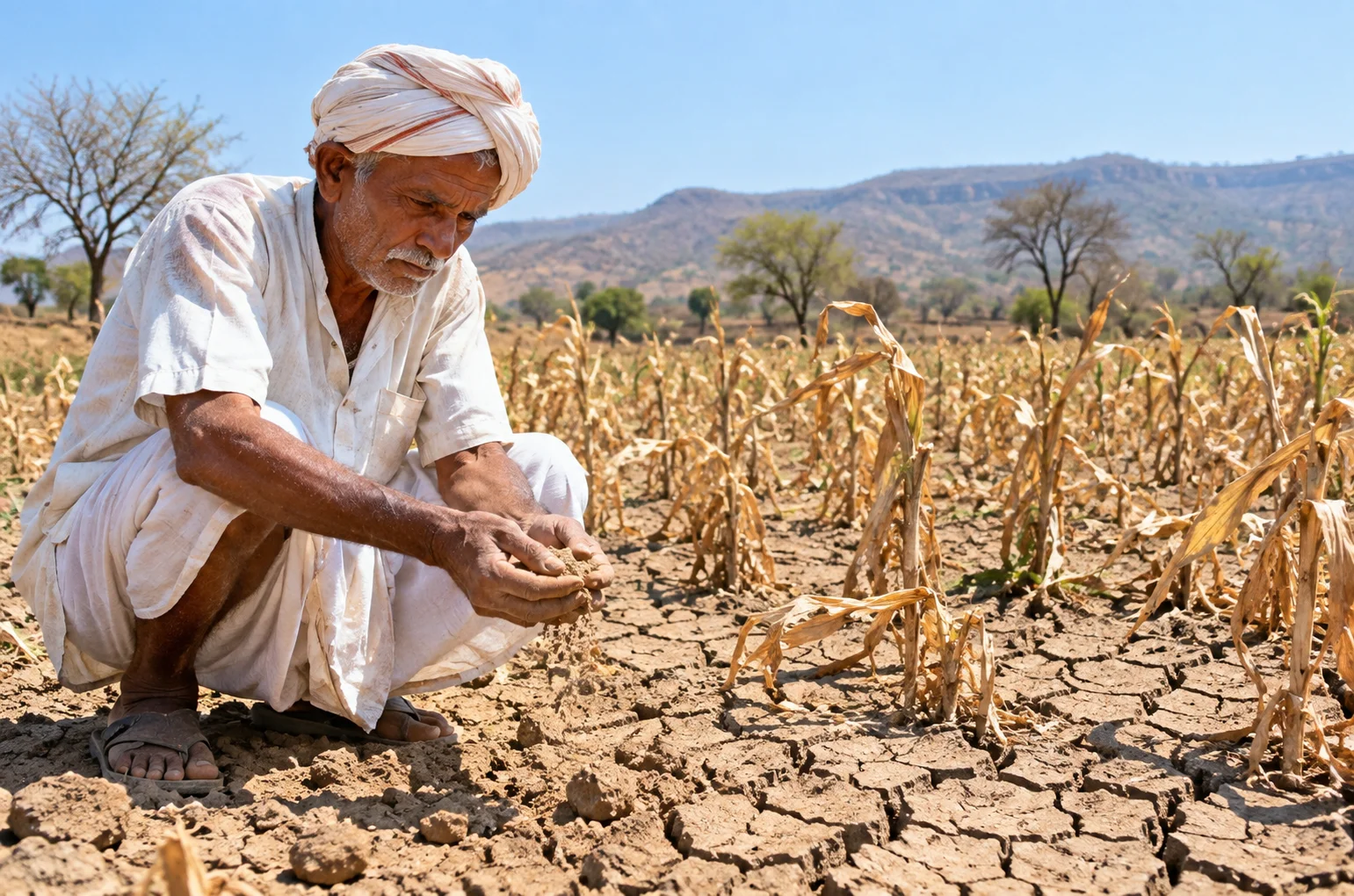
A prolonged dry spell across Maharashtra has pushed several regions of the state to the edge of drought, and the compound feed industry is watching closely as corn and soybean, the two crops that anchor poultry and livestock rations, take the hit.
The state agriculture department has recorded no rainfall for more than 20 days in at least 83 talukas spread across 20 districts. Six of those districts, including Amravati, Solapur and Latur, have posted rainfall deficits of 40-50%.
Independent tallies reported in the Indian press put the number of severely affected districts at 19 rather than 20, and describe the same belt, Marathwada and parts of Vidarbha, as the hardest hit.
Latur has received under 50% of its normal rainfall this season, and Dharashiv and Parbhani are not far behind, according to district-level rainfall data cited in regional media.


Maharashtra is either the largest or second-largest producer of sugarcane, soybean and cotton in India, and a major grower of fruits and vegetables, so a weak kharif season there is felt well beyond the state’s own farms and mandis.

Divya Kumar Gulati
Divya Kumar Gulati, Chairman of the Compound Livestock Feed Manufacturers Association of India (CLFMA of India), said the situation has implications that reach into the livestock value chain.
“The emerging drought-like situation in Maharashtra is a concern not only for farmers but for the wider livestock value chain. The impact on crops such as corn and soybean could have a direct bearing on the availability and prices of key feed ingredients in the coming season. Maharashtra is an important agricultural state, and any significant reduction in corn and soybean output can tighten feed raw material supplies and increase input costs for poultry, dairy and other livestock segments,” he explained.
For the livestock sector, he continued, feed availability is closely linked to production stability and farm economics. If feed ingredients become scarce or significantly more expensive, the pressure ultimately moves through the value chain, from farmers and producers to the prices of milk, eggs and meat. This can affect both the viability of livestock producers and the affordability of animal protein for consumers.
“It is therefore important that the situation is assessed comprehensively and that timely measures are taken to safeguard the availability of feed raw materials in the coming season. Ensuring adequate supplies of corn and soybean, along with supporting affected farmers and strengthening supply-chain preparedness, will be critical to preventing a temporary agricultural shock from translating into wider feed and food inflation,” Mr Gulati said.

The warning lands at an already stretched moment for Indian feed economics.
Feed accounts for 65-70% of the cost of producing eggs and broiler meat in India, so swings of this size move quickly into farmgate prices.
Supply-side pressure on corn is unlikely to ease soon regardless of how the Maharashtra situation resolves. Kharif corn acreage nationally is down by about 4.1% this season, and the US Department of Agriculture projects India’s 2026-27 corn output will fall to around 50 million tons from 55.1 million tons the previous year.
Soybean meal, by contrast, has room to soften further if the kharif soybean harvest due in October and November comes in as expected, and if roughly 0.9 million tons of contracted soybean imports arrive as planned.

Maharashtra’s government has so far stopped short of a formal drought declaration. Chief Minister Devendra Fadnavis and his cabinet discussed the rain shortfall this month and set up a sub-committee under Revenue Minister Chandrashekhar Bawankule to assess crop losses and coordinate relief, while directing the state administration to stay on alert.
Opposition leaders, including Congress’s Vijay Wadettiwar and Praniti Shinde and members of the Shiv Sena (UBT), have pressed for an immediate drought declaration, arguing that farmers need relief measures such as crop loan waivers, fodder camps and tanker water supply without waiting for the usual post-monsoon assessment timeline. Some ruling-coalition legislators from Marathwada have made the same request to the Chief Minister.
For now, CLFMA’s message to the sector is one of preparedness rather than alarm: track how the corn and soybean crop develops over the coming weeks, and have supply-chain and procurement plans ready so that a regional dry spell does not turn into a wider feed shortage.





Subscribe now to the technical pig magazine
AUTHORS

Bifet Gracia Farm & Nedap – Automated feeding in swine nurseries

The importance of Water on pig farms
Fernando Laguna Arán
Microbiota & Intestinal Barrier Integrity – Keys to Piglet Health
Alberto Morillo Alujas
Impact of Reducing Antibiotic use, the Dutch experience
Ron Bergevoet
The keys to successful Lactation in hyperprolific sows
Mercedes Sebastián Lafuente
Addressing the challenge of Management in Transition
Víctor Fernández Segundo
Dealing with the rise of Swine Dysentery
Roberto M. C. Guedes
Actinobacillus pleuropneumoniae – What are we dealing with?
Marcelo Gottschalk
The new era of Animal Welfare in Pig Production – Are we ready?
Antonio Velarde
Gut health in piglets – What can we do to measure and improve it?
Alberto Morillo Alujas
Interview with Cristina Massot – Animal Health in Europe after April 2021
Cristina Massot
Differential diagnosis of respiratory processes in pigs
Desirée Martín Jurado Gema Chacón Pérez


To provide the best experiences, we use technologies like cookies...