Based on in silico results, feeding the gestating sows individually according to their energy requirements enabled to better reach the target BT at farrowing with the succession of cycles.
Modern sows are heavier than those used 30 years ago to establish the equations linking body energy, protein and fat to body weight (BW) and backfat thickness (BT).
These equations remain central to nutritional models that assess individual daily requirements to implement a precision feeding strategy (PF).
Study design
Using calibrations of equations and a simulation approach, Clément Ribas of INRAE conducted a study to evaluate the impact of four feeding strategies across six successive gestations on sows’ long-term performances.


Using a database of 3098 gestations from 1121 sows containing sows’ parity, BW, BT, feed intake, and litter performances, the study team calibrated predictive equations of the sows’ body chemical composition in a nutritional model.
Comparing feeding strategies
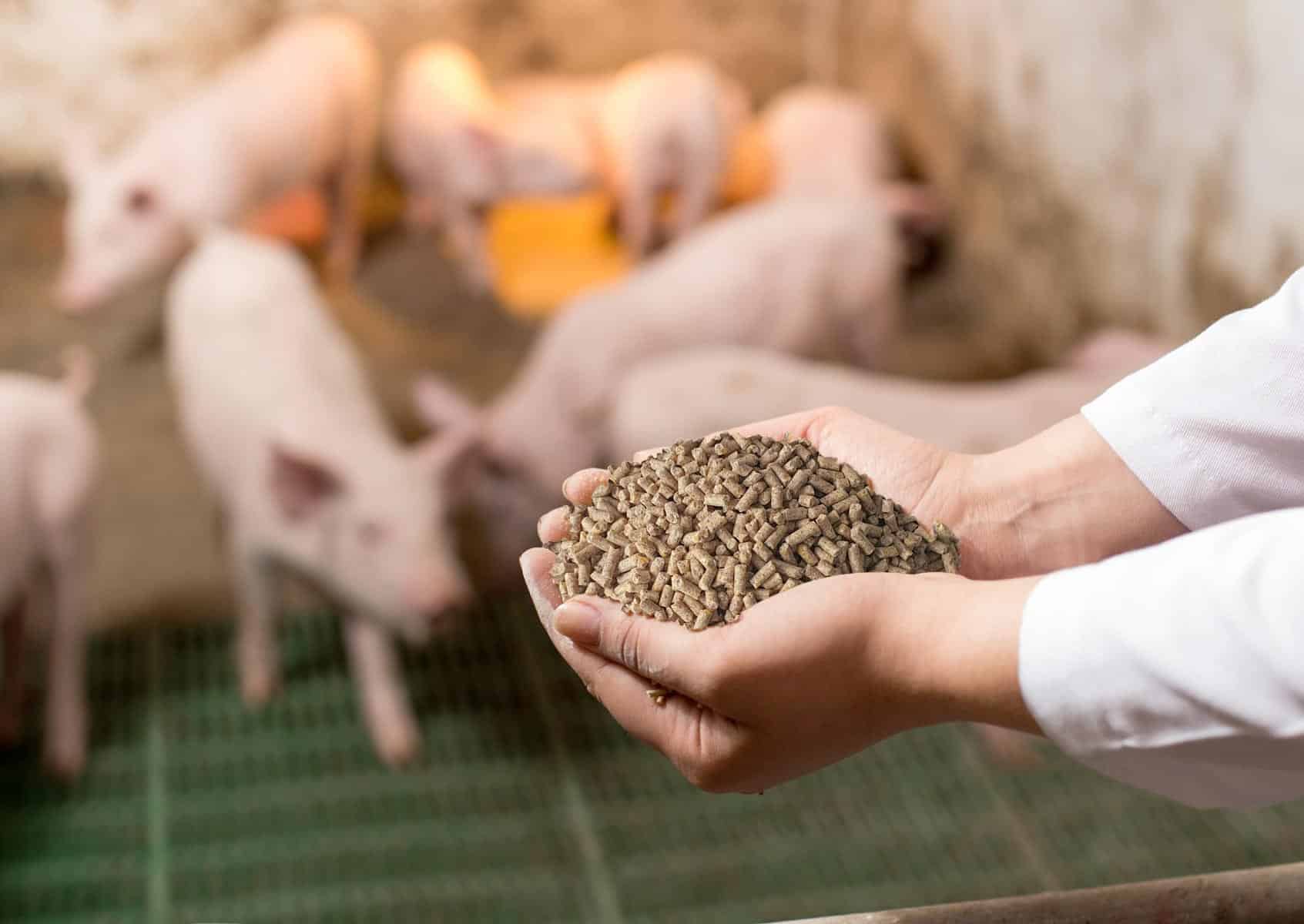
During gestation, four feeding strategies were compared. The conventional strategy (CF) gave all sows the same feed amount. The standard strategy (SF) adjusted feed to each sow’s energy needs.
Two precision feeding strategies (PFAA and PFAA‑P) went further. PFAA adjusted feed amounts and lysine content by sow and day. PFAA‑P added phosphorus adjustments, tailoring both lysine and phosphorus levels across sows and days.
The database was divided into two parts: a training set and a testing set. The training set fit body composition equations, while the testing set evaluated differences between observed and predicted BW and BT at farrowing.
What the data revealed
Based on in silico results, feeding the gestating sows individually according to their energy requirements improves the ability to reach the target BT at farrowing across cycles.
Adjusting nutrients to individual sow requirements, whether AA alone or combined with P, reduces feed costs and enhances nutrient efficiency over the long term.

Subscribe now to the technical pig magazine
AUTHORS

Bifet Gracia Farm & Nedap – Automated feeding in swine nurseries

The importance of Water on pig farms
Fernando Laguna Arán
Microbiota & Intestinal Barrier Integrity – Keys to Piglet Health
Alberto Morillo Alujas
Impact of Reducing Antibiotic use, the Dutch experience
Ron Bergevoet
The keys to successful Lactation in hyperprolific sows
Mercedes Sebastián Lafuente
Addressing the challenge of Management in Transition
Víctor Fernández Segundo
Dealing with the rise of Swine Dysentery
Roberto M. C. Guedes
Actinobacillus pleuropneumoniae – What are we dealing with?
Marcelo Gottschalk
The new era of Animal Welfare in Pig Production – Are we ready?
Antonio Velarde
Gut health in piglets – What can we do to measure and improve it?
Alberto Morillo Alujas
Interview with Cristina Massot – Animal Health in Europe after April 2021
Cristina Massot
Differential diagnosis of respiratory processes in pigs
Desirée Martín Jurado Gema Chacón Pérez