Pig carcasses were found floating in a canal feeding Dau Tieng reservoir in southern Vietnam in 2025, posing a high risk of disease transmission and water pollution.
The reservoir at the upstream section of the Saigon River supplies water to several southern provinces and Ho Chi Minh City in Vietnam.
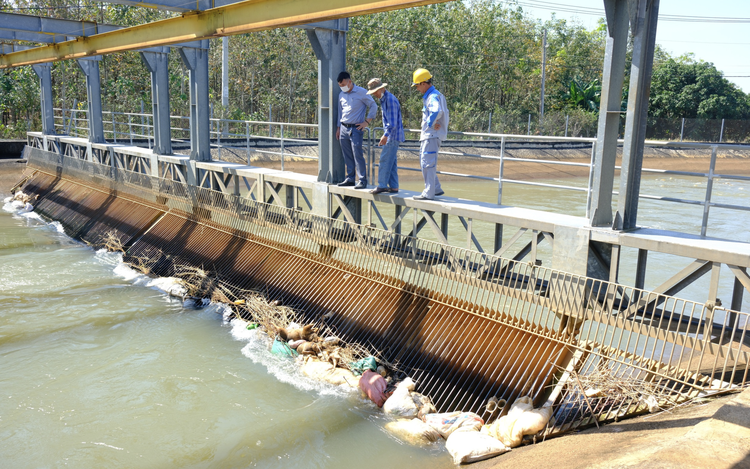
On December 31, 2025, local media reported numerous animal carcasses, including pigs, floating on the Phuoc Hoa–Dau Tieng Canal. They were trapped in the trash screen at Minh Tan hydropower plant in Minh Thanh Commune. The canal carries water from the Phuoc Hoa reservoir to the Dau Tieng reservoir.
Many carcasses were decomposing, releasing a strong stench. Fast-flowing water battered them repeatedly, accelerating decay and creating a severely unhygienic environment.
A persistent problem

Staff at the reservoir’s K37 station said that the carcasses seen during the visit had accumulated over just two days, December 30 and 31. However, they emphasized that this has been a persistent problem since early 2025. Workers have had to regularly collect and dispose of the carcasses to prevent environmental pollution and protect water quality.
Images recorded by local media showed diseased pigs carried downstream in large numbers, sometimes reaching dozens in a single day. Each incident required urgent clean-up and disposal to prevent further contamination.
Nguyen Huu Manh, Deputy Director at the Dau Tieng-Phuoc Hoa branch of Southern Irrigation Management One Member LLC, said additional equipment, including a truck and an excavator, had been deployed to reinforce operations at K37 station. Extra funds were allocated to handle the clean-up and destruction of carcasses trapped in the hydropower plant’s trash screen throughout the year.
“We strictly manage water quality in accordance with standards, but dealing with carcasses in the canal is only a temporary solution,” Mr Manh said. He warned that if carcasses are not collected and destroyed promptly, the risk of water pollution is very high.
“We have repeatedly worked with local authorities to prevent people from dumping waste and animal carcasses into the canal, but the problem persists,” he added.
Longstanding issue across the canal
Tran Phu Cuong, Head of the Livestock Production and Animal Health Division under the Ho Chi Minh City Department of Agriculture and Environment, said the accumulation of waste and animal carcasses in the canal has persisted for many years.
The canal stretches across multiple wards and communes, and waste tends to accumulate when it reaches the trash rack at Minh Tan hydropower plant.
Mr Cuong explained that his division has repeatedly proposed solutions, including coordination with local authorities and agencies to strengthen monitoring and prevent illegal dumping.
His unit has also worked directly with farms along the canal, urging livestock owners to sign commitments not to discard waste or animal carcasses into the environment.
“The canal is long, and no single force can monitor it completely,” Mr Cuong said. “This issue ultimately comes down to public awareness and requires stronger involvement from local authorities, police and other agencies.
“There must be stricter supervision and penalties. If this continues, domestic water supplies will be affected, and livestock diseases could spread to other areas.”
Disease risks from dumping carcasses
A veterinary expert warned that dumping animal carcasses into waterways is a dangerous practice that must be eliminated. In cases such as African swine fever, infected carcasses carried by water can spread disease to farms downstream, causing severe economic losses.
Current regulations require strict procedures for the disposal and disinfection of livestock and poultry that die from disease. Dumping carcasses into the environment is a violation of the law, the expert said. Offenders face administrative fines or even criminal charges depending on the severity of the violation.



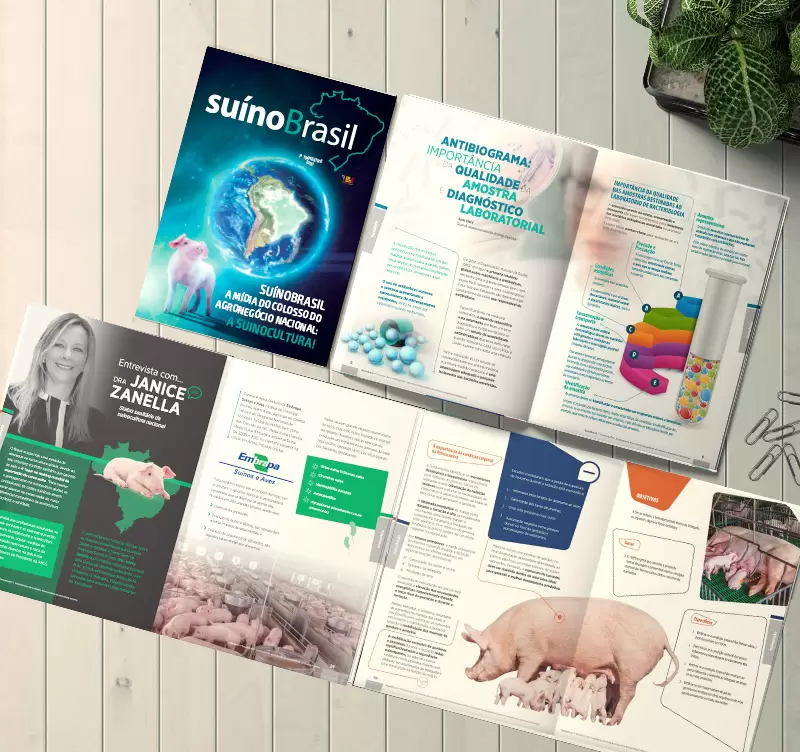
Subscribe now to the technical pig magazine
AUTHORS

Bifet Gracia Farm & Nedap – Automated feeding in swine nurseries

The importance of Water on pig farms
Fernando Laguna Arán
Microbiota & Intestinal Barrier Integrity – Keys to Piglet Health
Alberto Morillo Alujas
Impact of Reducing Antibiotic use, the Dutch experience
Ron Bergevoet
The keys to successful Lactation in hyperprolific sows
Mercedes Sebastián Lafuente
Addressing the challenge of Management in Transition
Víctor Fernández Segundo
Dealing with the rise of Swine Dysentery
Roberto M. C. Guedes
Actinobacillus pleuropneumoniae – What are we dealing with?
Marcelo Gottschalk
The new era of Animal Welfare in Pig Production – Are we ready?
Antonio Velarde
Gut health in piglets – What can we do to measure and improve it?
Alberto Morillo Alujas
Interview with Cristina Massot – Animal Health in Europe after April 2021
Cristina Massot
Differential diagnosis of respiratory processes in pigs
Desirée Martín Jurado Gema Chacón Pérez