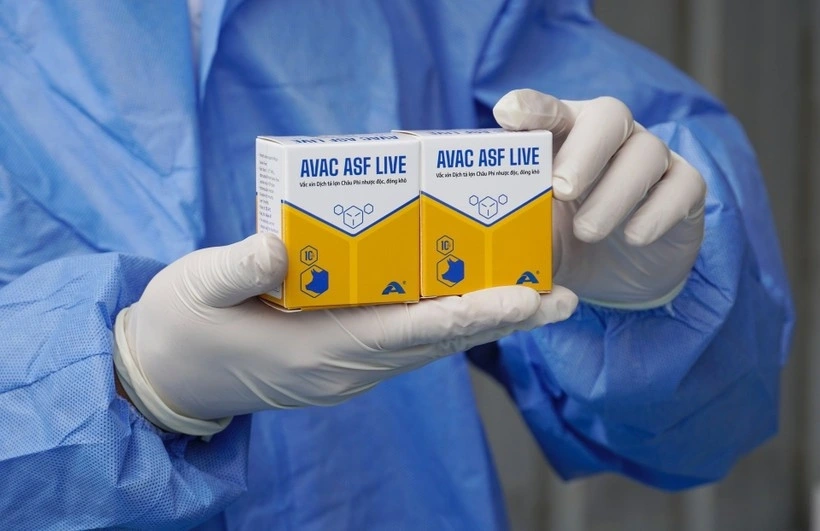
Pork consumption remains strong as households shift from beef, while imports are forecast to moderate as domestic supply stabilizes.





South Korea’s pork sector is navigating a year of disruption and recovery, according to a recent report by the USDA‑Foreign Agricultural Service (USDA‑FAS). Despite setbacks from African swine fever (ASF) detections and extreme summer heat, the industry is expected to regain momentum in late 2026 and continue modest growth into 2027.
The report highlights both the vulnerabilities and resilience of the sector. Disease outbreaks and climate stress remain pressing concerns, yet productivity gains and strong consumer demand provide a foundation for recovery.
Swine production is projected to reach 19.3 million heads in 2027, driven largely by improvements in sow productivity. Better genetics, nutrition, and reproductive efficiency are boosting piglet output per sow, while large commercial farms are investing in smart livestock technologies to manage disease risks and optimize feeding.
Government programs supporting Information and Communications Technology (ICT) adoption have already reached nearly one‑fifth of pig farms, signaling a gradual shift toward more efficient production systems. These investments are expected to strengthen long‑term competitiveness and reduce vulnerability to shocks.


The first half of 2026 was marked by ASF outbreaks across several provinces, including South Jeolla and South Gyeongsang. The Ministry of Agriculture, Food, and Rural Affairs confirmed 24 farm detections in Q1 alone, leading to the culling of about 150,000 pigs—roughly 1.3% of the national herd.
The outbreaks were traced to contaminated feed containing blood plasma protein. While the losses were significant, swift containment measures limited further spread, and production began recovering by mid‑year.
Beyond disease, prolonged heat waves have emerged as another challenge. More than 30,000 pigs died from heat stress by early August 2026, following record losses of 172,000 pigs in 2025. Rising electricity costs for cooling systems compound the problem, raising production expenses and threatening productivity. Analysts warn that climate volatility could remain a persistent risk for the sector. Sustained high temperatures may continue to undermine herd health and increase costs for producers.
The report estimates a slight decline in 2026 slaughter numbers due to ASF‑related losses and temporary movement restrictions. However, the impact is expected to remain limited, with recovery in the second half of the year offsetting early declines.
By 2027, slaughter numbers are forecast to stabilize, supported by herd rebuilding and stronger sow productivity. This gradual rebound reflects the industry’s ability to recover from short‑term shocks.
South Korea’s pork imports surged in early 2026, fueled by competitively priced European pork. However, imports are expected to moderate in the second half of the year as domestic production recovers.
Looking ahead to 2027, imports are projected to decline slightly, reflecting reduced demand as local supply strengthens. This shift underscores the balance between international trade and domestic resilience.
Despite production challenges, pork consumption continues to grow. Price competitiveness against beef and steady consumer demand underpin this trend. As inflation pressures households, many consumers are shifting from beef to pork, chicken, and fish.
This substitution effect has reinforced pork’s role as the most affordable protein option, ensuring sustained demand through 2026 and 2027. Pork’s appeal as a versatile and accessible meat remains central to its market strength.
The USDA‑FAS report underscores both the resilience and vulnerabilities of South Korea’s pork industry. Disease outbreaks and climate stress remain critical risks, but productivity gains and consumer demand provide a strong foundation for recovery.
With government support for technology adoption and herd management, the sector is positioned to stabilize and expand modestly in the coming years. The industry’s ability to adapt will determine how well it sustains growth amid ongoing challenges.




Subscribe now to the technical pig magazine
AUTHORS

Bifet Gracia Farm & Nedap – Automated feeding in swine nurseries

The importance of Water on pig farms
Fernando Laguna Arán
Microbiota & Intestinal Barrier Integrity – Keys to Piglet Health
Alberto Morillo Alujas
Impact of Reducing Antibiotic use, the Dutch experience
Ron Bergevoet
The keys to successful Lactation in hyperprolific sows
Mercedes Sebastián Lafuente
Addressing the challenge of Management in Transition
Víctor Fernández Segundo
Dealing with the rise of Swine Dysentery
Roberto M. C. Guedes
Actinobacillus pleuropneumoniae – What are we dealing with?
Marcelo Gottschalk
The new era of Animal Welfare in Pig Production – Are we ready?
Antonio Velarde
Gut health in piglets – What can we do to measure and improve it?
Alberto Morillo Alujas
Interview with Cristina Massot – Animal Health in Europe after April 2021
Cristina Massot
Differential diagnosis of respiratory processes in pigs
Desirée Martín Jurado Gema Chacón Pérez


To provide the best experiences, we use technologies like cookies...