The move aims to strengthen its supply chain, mitigate cost risks, increase the share of high-margin products, and propel revenue to new record highs.

Thailand’s Thai Foods Group (TFG) has unveiled an aggressive business strategy for 2026, focusing on retail expansion and accelerated investment in Vietnam, alongside the expansion of its production base in Thailand’s Northeast region.
The move aims to strengthen its supply chain, mitigate cost risks, increase the share of high-margin products, and propel revenue to new record highs.
Petch Nantavisai, Chief Operating Officer, said the company’s 2026 roadmap centers on sustainable growth driven by retail expansion and overseas investment, particularly in Vietnam, which remains a key growth engine for the group.
In the retail segment, Thai Foods Fresh Market — regarded as the company’s primary S-Curve driver — is set to expand from 615 branches in 2025 to 850 branches in 2026.


The company will also enlarge its production base and distribution centers in the Northeast of Thailand to enhance logistics efficiency, improve direct consumer access, and strengthen cost management capabilities.
Expansion in Vietnam
Overseas, Vietnam continues to play a pivotal role in TFG’s growth strategy.
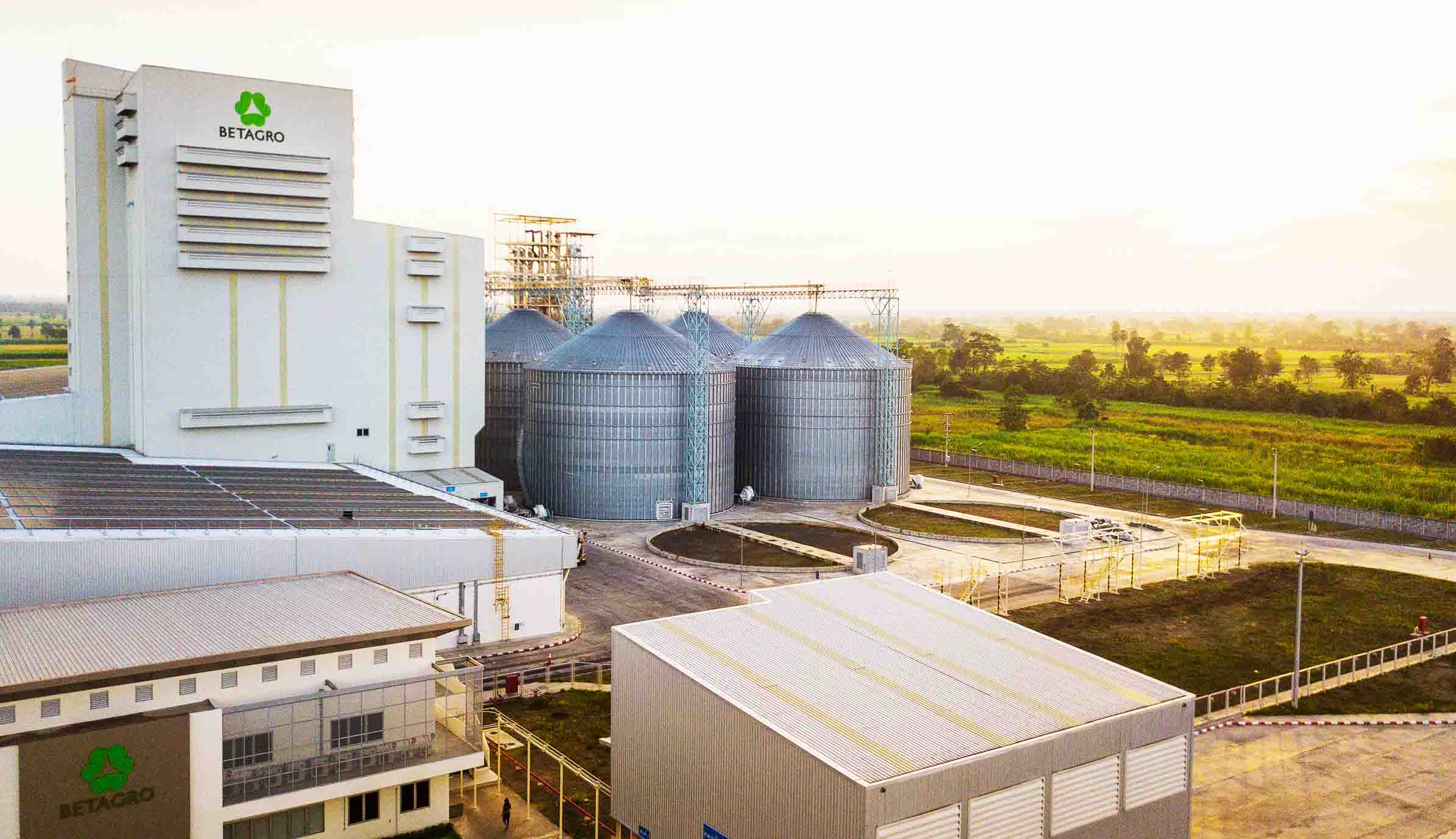
In 2026, the company plans to begin construction of an animal feed mill and expand its poultry operations, building on its existing swine business in the country. Additional investments in swine farm expansion are also underway.
These projects are expected to be completed by the end of 2026, with clearer positive contributions to revenue and production costs anticipated from 2027 onwards.
Retail business to drive revenue
For 2026, TFG aims to achieve consecutive record-high revenue. Retail is projected to contribute approximately 50% of total revenue, followed by swine, poultry, and animal feed businesses, respectively.
The company has earmarked an investment budget of around USD 144 million for 2026. Around 60% will be allocated to retail branch expansion, while the remainder will be invested in upstream operations to support its integrated retail supply chain, including further production capacity expansion in the Northeast.
Raw material costs are expected to decline in 2026, with 60-70% of input costs already locked in, enhancing cost risk management.
More market-driven approach
The year 2026 marks a significant transition for TFG from a production-driven model to a more market-driven approach.
By expanding its proprietary retail network, the company gains direct access to consumer data, reduces exposure to meat price volatility, and strengthens long-term business sustainability.
Financial performance in 2025
For the first nine months of 2025 (ending September 30, 2025), TFG reported a record net profit of around USD 201 million, an increase of around USD 129 million or 177.7% year-on-year.
Total revenue rose 14.6% to around USD 1.76 billion, supported by strong growth in retail operations and swine businesses in both Thailand and Vietnam.
In 2025, the company also paid interim dividends totaling USD 0.013 per share across three payments, with the latest disbursement of USD 0.0032 per share made on December 11, 2025.
The dividend payments reflect TFG’s strong financial position and solid cash flow, supporting its continued business expansion plans.


Subscribe now to the technical pig magazine
AUTHORS

Bifet Gracia Farm & Nedap – Automated feeding in swine nurseries

The importance of Water on pig farms
Fernando Laguna Arán
Microbiota & Intestinal Barrier Integrity – Keys to Piglet Health
Alberto Morillo Alujas
Impact of Reducing Antibiotic use, the Dutch experience
Ron Bergevoet
The keys to successful Lactation in hyperprolific sows
Mercedes Sebastián Lafuente
Addressing the challenge of Management in Transition
Víctor Fernández Segundo
Dealing with the rise of Swine Dysentery
Roberto M. C. Guedes
Actinobacillus pleuropneumoniae – What are we dealing with?
Marcelo Gottschalk
The new era of Animal Welfare in Pig Production – Are we ready?
Antonio Velarde
Gut health in piglets – What can we do to measure and improve it?
Alberto Morillo Alujas
Interview with Cristina Massot – Animal Health in Europe after April 2021
Cristina Massot
Differential diagnosis of respiratory processes in pigs
Desirée Martín Jurado Gema Chacón Pérez