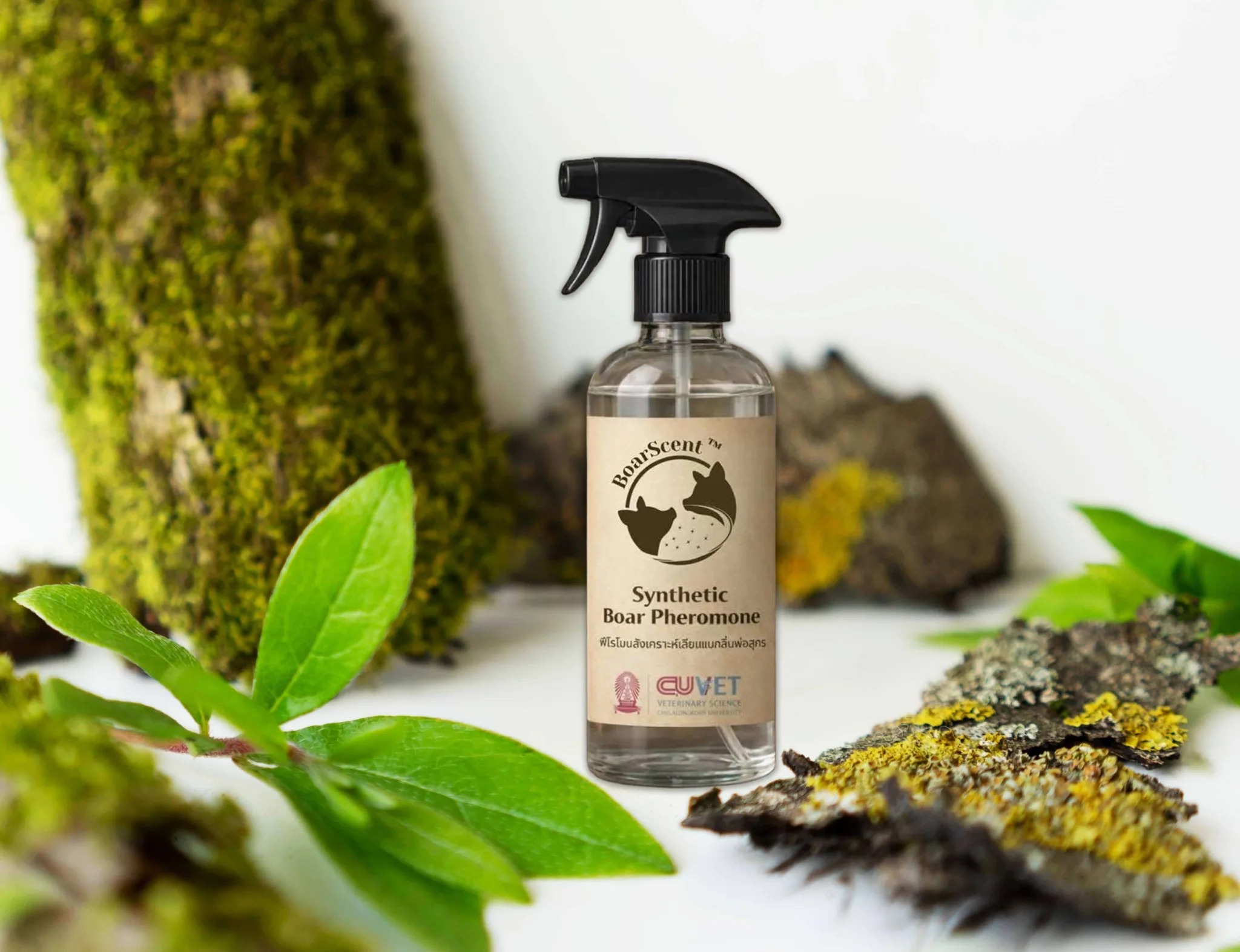
Research team from Chulalongkorn develops the world’s first synthetic boar pheromone which could transform pig farming by improving gilt breeding and minimizing disease outbreaks.




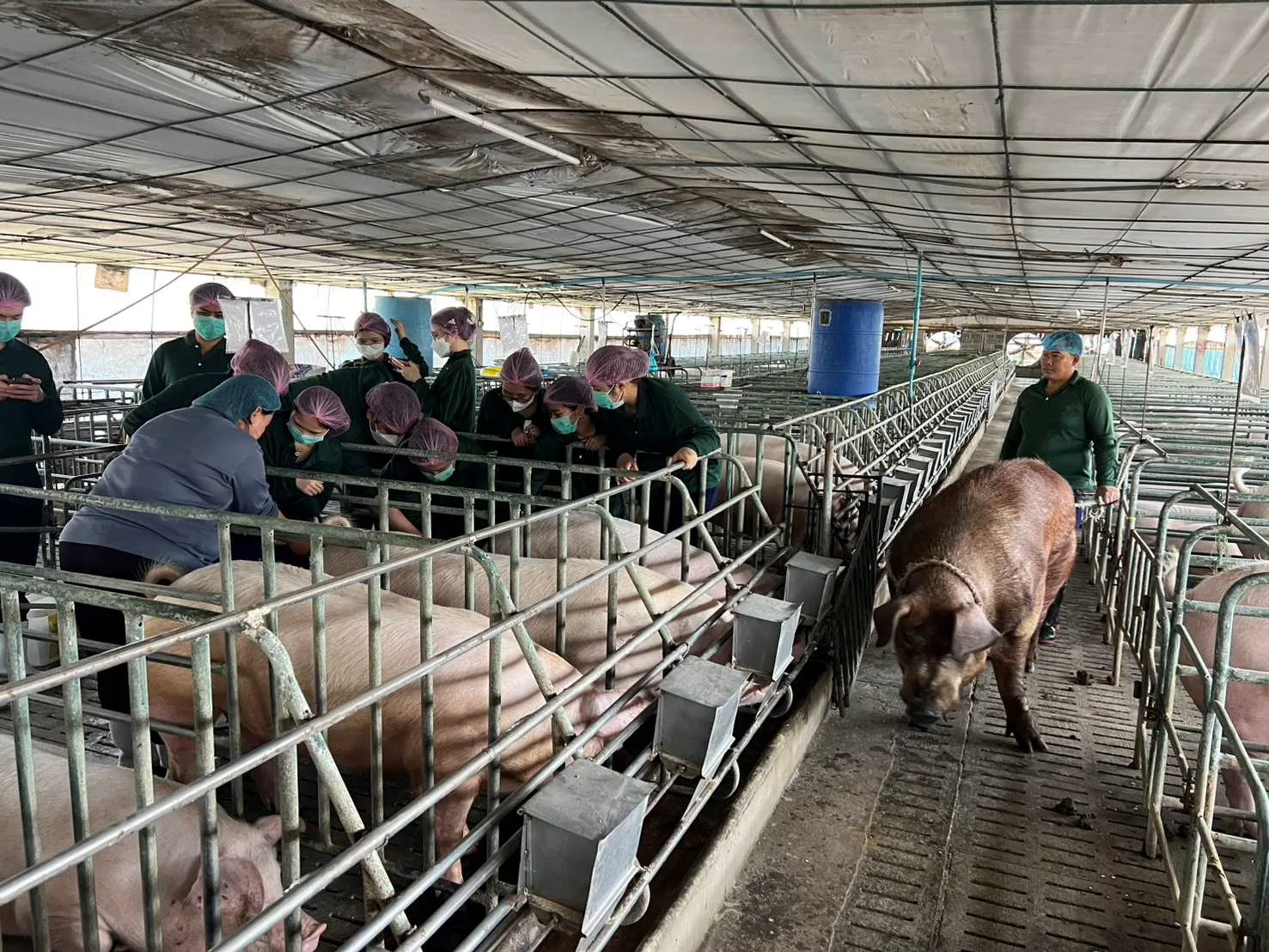
Preparing gilts for reproduction is essential to producing strong breeding sows. Yet many fail to enter estrus at the right age. Farmers often redirect these animals to meat production, losing valuable breeding stock and facing financial setbacks. Traditionally, gilts are stimulated by direct contact with mature boars, but this method carries risks. Boars are large, sometimes aggressive, and can transmit diseases such as African swine fever.
To address these issues, researchers at Chulalongkorn University’s Faculty of Veterinary Science, led by Professor Padet Tummaruk, developed a synthetic boar pheromone that mimics natural scent cues. This development offers pig farmers a safer, disease‑free way to stimulate gilt breeding, and could reshape livestock management by reducing risks and improving farm efficiency.

Professor Padet Tummaruk. (Photo credit: https://www.chula.ac.th/)

Animal communication relies heavily on chemical signals, especially in reproduction. Mature boars release pheromones through saliva and secretions that trigger estrus in gilts. Not all gilts respond equally, however, due to differences in olfactory receptors.
Dr Isaya Thaveesangsakulthai, an expert in chemical communication, helped identify the compounds responsible. Samples from five mature boars were analyzed using gas chromatography, revealing 23 odor compounds. The dominant scent carried a woody‑green aroma, similar to fresh leaves and cut grass.
From these findings, the team created the world’s first synthetic boar pheromone. Trials compared gilts exposed to live boars, the synthetic pheromone, and a control group. Estrus behavior appeared in 75% of gilts exposed to boars, 50% with the synthetic pheromone, and only 18% in the control group.
Although live boars remain more effective, the synthetic pheromone offers clear advantages. It reduces disease risks, avoids handling large animals, and simplifies farm management. Farmers can spray the pheromone onto a scent pad and present it to gilts safely.
Large pig farms have already expressed interest in testing the prototype. The team has filed a petty patent and is working with manufacturers to secure certification from Thailand’s Department of Livestock Development. Their aim is to produce the pheromone locally, keeping costs affordable for farmers.
Future studies will explore gilt scent profiles to develop diagnostic tools that could further improve breeding efficiency. Dr Padet stresses that the innovation should directly benefit Thai farmers, reducing reliance on imports and strengthening domestic livestock practices.



Subscribe now to the technical pig magazine
AUTHORS

Bifet Gracia Farm & Nedap – Automated feeding in swine nurseries

The importance of Water on pig farms
Fernando Laguna Arán
Microbiota & Intestinal Barrier Integrity – Keys to Piglet Health
Alberto Morillo Alujas
Impact of Reducing Antibiotic use, the Dutch experience
Ron Bergevoet
The keys to successful Lactation in hyperprolific sows
Mercedes Sebastián Lafuente
Addressing the challenge of Management in Transition
Víctor Fernández Segundo
Dealing with the rise of Swine Dysentery
Roberto M. C. Guedes
Actinobacillus pleuropneumoniae – What are we dealing with?
Marcelo Gottschalk
The new era of Animal Welfare in Pig Production – Are we ready?
Antonio Velarde
Gut health in piglets – What can we do to measure and improve it?
Alberto Morillo Alujas
Interview with Cristina Massot – Animal Health in Europe after April 2021
Cristina Massot
Differential diagnosis of respiratory processes in pigs
Desirée Martín Jurado Gema Chacón Pérez


To provide the best experiences, we use technologies like cookies...