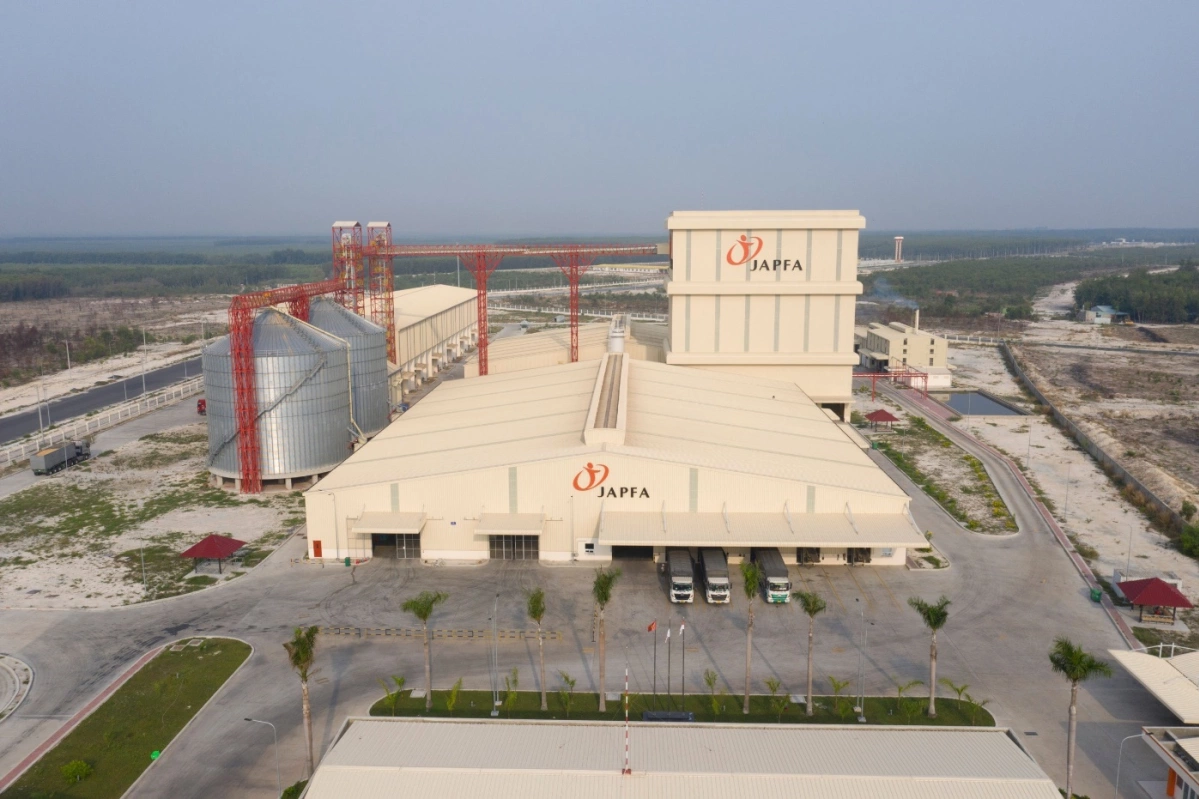
As Tet 2026 approaches, concerns are growing over a possible supply shortage and sharp spike in pork prices.
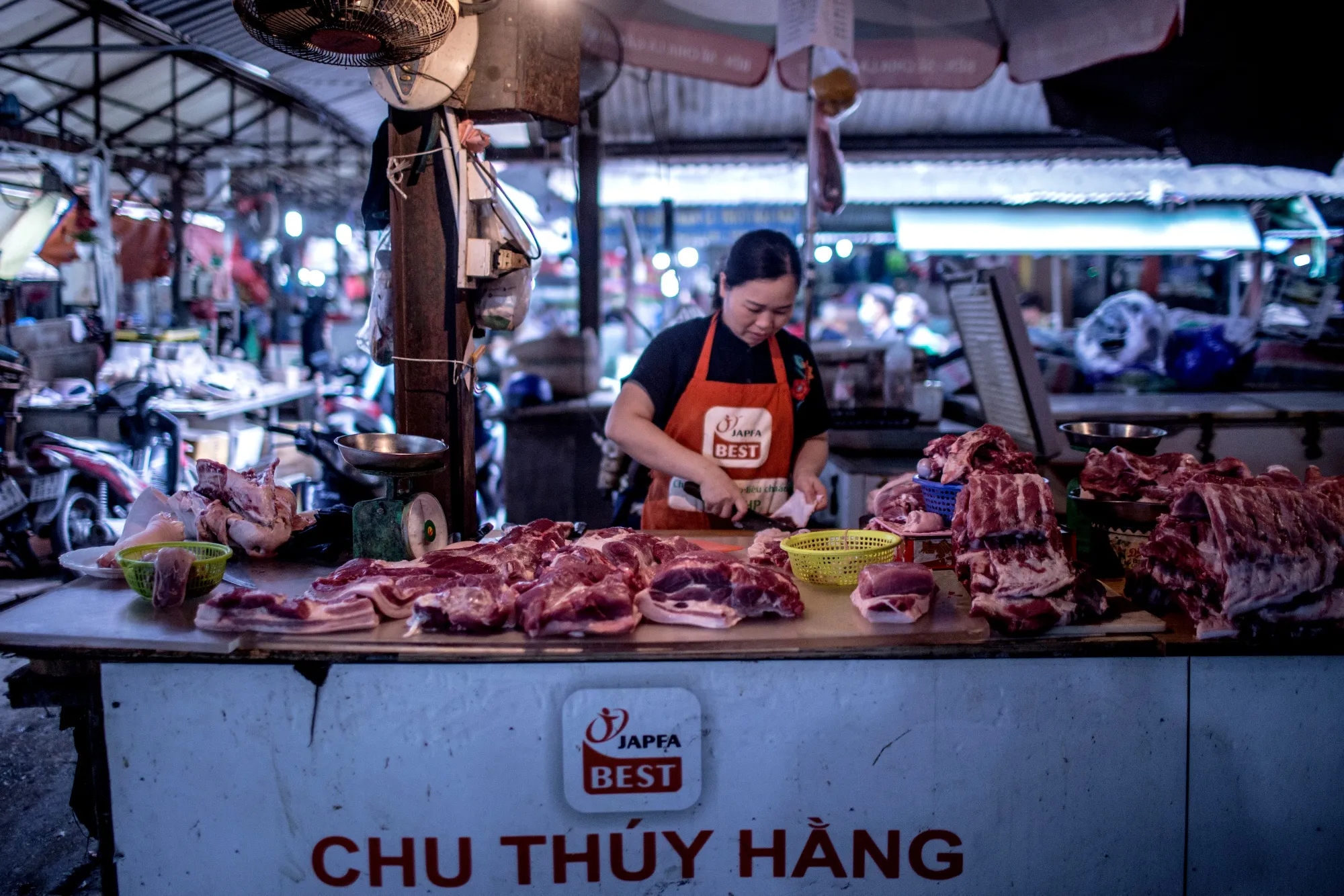
Vietnam has been forced to cull over 1.23 million pigs in just 11 months due to African swine fever (ASF), not counting additional losses from floods.
As Tet 2026 approaches, concerns are growing over a possible supply shortage and sharp spike in pork prices.
On December 5, Nguyen The Chinh from the Management Board of the Ha Nam livestock wholesale market told local media that live pig prices are climbing rapidly.
Currently, pigs at the market are selling for USD 2.24-2.28 per kg and just two days ago, prices even spiked to USD 2.35-2.39 per kg. This represents a jump of USD 0.27-0.38 per kg compared to late October.


“Prices are going up, but the volume of pigs arriving at the market is still around 1,000 per day,” Mr Chinh noted, adding that these supplies mainly come from large farming companies, with small-scale household farms largely absent.
Last year, around Tet, the market received up to 2,000 pigs daily. The current figure is only half of that, signaling a significant supply drop that could continue to push prices higher.
Nguyen Cong Bac, CEO of Loc Phat Livestock, confirmed that market supply now primarily comes from large-scale producers. “Most small farmers have run out of pigs to sell,” he said.
ASF and market losses hit production
ASF outbreaks earlier this year, combined with plummeting live pig prices, have driven many farmers into severe losses. This discouraged reinvestment, leading both households and companies to scale back production.
“In October alone, I lost billions of dong selling pigs from my own farms at just USD 1.74-1.90 per kg,” Mr Bac shared.
However, in the past week, prices have rebounded. By December 5, Mr Bac was selling pigs at USD 2.35-2.39 per kg.
“Now, traders are buying everything I have. There’s no more difficulty moving inventory like before,” he revealed.
Tet pork prices may reach USD 2.66 per kg
According to the Ministry of Agriculture and Environment’s November report, live pig prices dropped earlier in the month as consumers hesitated due to ASF concerns.
But toward the end of November, prices rebounded due to reduced supply from small-scale farms.
Over the past 11 months, Vietnam has culled more than 1.23 million pigs due to ASF.
Looking ahead to Tet 2026, Mr Bac predicts that prices could reach USD 2.66 per kg due to a seasonal spike in consumption and shrinking supplies from small farms.
Nguyen Kim Doan, Vice Chairman of the Dong Nai Livestock Association, also expects prices to climb around Tet, though not excessively.
He attributed the upward trend to supply disruptions from central region floods and ASF, and said farmers are buying underweight pigs (under 100 kg) from companies to fatten for resale at 120-140 kg.
Rising demand has triggered supply hoarding, with companies delaying sales to wait for better prices, driving the surge over the past week.
However, Mr Doan does not expect the upward trend to last indefinitely. If prices climb too high, the government is likely to intervene by boosting imports to stabilize the market.
Pork imports surge nearly 96%
When ASF broke out earlier this year, many companies anticipated supply shortages and began ramping up pork imports.
In the first 10 months of 2025, Vietnam imported 159,400 tons of fresh, chilled, or frozen pork, valued at nearly USD 358.3 million.
This marked a 95.7% increase in volume and a 90.8% increase in value year-on-year.
The pork market around Tet usually sees two price surges:
During these two periods, live pig prices typically rise. For Tet 2026, the price is expected to hit around USD 2.66 per kg, a level considered ‘balanced’ for both producers and consumers.
“Prices are unlikely to soar like they did in 2020,” Mr Doan noted, “because while supply is tight, it is not yet at a crisis level.”
At a December 4 press briefing, Deputy Minister of Agriculture and Environment Phung Duc Tien said the pig herd is recovering. Though pork prices have risen significantly in recent days, the increase remains manageable and should not threaten Tet market stability.
Still, Mr Tien emphasized the need to secure adequate food supplies to help stabilize Consumer Price Index in the coming months.


Subscribe now to the technical pig magazine
AUTHORS

Bifet Gracia Farm & Nedap – Automated feeding in swine nurseries

The importance of Water on pig farms
Fernando Laguna Arán
Microbiota & Intestinal Barrier Integrity – Keys to Piglet Health
Alberto Morillo Alujas
Impact of Reducing Antibiotic use, the Dutch experience
Ron Bergevoet
The keys to successful Lactation in hyperprolific sows
Mercedes Sebastián Lafuente
Addressing the challenge of Management in Transition
Víctor Fernández Segundo
Dealing with the rise of Swine Dysentery
Roberto M. C. Guedes
Actinobacillus pleuropneumoniae – What are we dealing with?
Marcelo Gottschalk
The new era of Animal Welfare in Pig Production – Are we ready?
Antonio Velarde
Gut health in piglets – What can we do to measure and improve it?
Alberto Morillo Alujas
Interview with Cristina Massot – Animal Health in Europe after April 2021
Cristina Massot
Differential diagnosis of respiratory processes in pigs
Desirée Martín Jurado Gema Chacón Pérez