


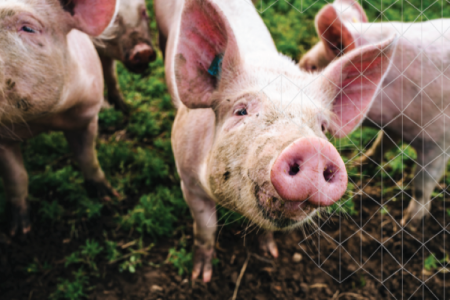
When H5N1 jumped to US dairy cattle in early 2024, it triggered alarm among epidemiologists and livestock officials for a reason that extended well beyond the immediate damage to dairy farms: the question of what happens if the virus reaches pigs.
That concern became concrete in late 2024, when authorities confirmed the first detection of the virus in outdoor pigs in Oregon.
As H5N1 continues to spread across mammalian species globally, the evidence is clear: pigs represent a uniquely dangerous host with spillover potential, wrote Global Biodefense in a report.
Why pigs are different and why that matters
Pigs occupy an unusual ecological niche in influenza’s evolution. Unlike cattle, which are poor hosts for most influenza viruses, or birds, which are the natural reservoir, pigs express both avian and human influenza receptors in their respiratory tract.
This dual-receptor system means they can be infected by viruses from multiple species simultaneously, and when that happens, genetic reassortment becomes possible.
Reassortment is influenza’s most dangerous evolutionary trick: when two different flu viruses co-infect the same cell, their genetic segments can mix and match, creating entirely novel strains.
That capability has catastrophic historical precedent. The 2009 H1N1 pandemic that infected hundreds of millions of people and killed an estimated 280,000 globally originated in swine.
More recent laboratory studies have shown that H5N1 from cattle can infect pigs, with some infected animals developing mutations associated with mammalian adaptation — including changes to the hemagglutinin protein that enhance binding to human-like receptors.
The economic implications compound the biosecurity concern. An outbreak of H5N1 in commercial swine herds would disrupt food supply chains, devastate producer income, and potentially create a massive secondary source of human exposure across a workforce already at occupational risk.
The evidence: Limited so far, but concerning
Experimental studies paint a mixed picture that is sobering precisely because it is not uniformly alarming. When researchers exposed pigs to H5N1 from cattle, the virus replicated primarily in the lower respiratory tract, causing subclinical to mild disease.
Critically, pig-to-pig transmission occurred in some but not all studies — suggesting the virus can spread between animals, but less efficiently than endemic swine influenza strains.
Experimental conditions differ substantially from commercial farm settings, where animal density, age structure, and concurrent infections with other pathogens could dramatically alter transmission dynamics.
Additionally, several pigs infected with H5N1 have developed mutations linked to antiviral resistance and mammalian adaptation, including changes to the polymerase basic protein (PB2) gene that historically presage increased human transmissibility.
Field-based evidence is scarce but geographically dispersed. Serological surveys have documented H5N1 exposure in pigs across Asia, Europe, and Africa — mostly in backyard or mixed-species farming systems where biosecurity is minimal.
The Oregon detection in late 2024 broke new ground: it was the first confirmed H5N1 infection in US swine, found in outdoor pigs on a mixed livestock-poultry farm where animals shared water sources and equipment.
The reassortment risk
The scenario that keeps epidemiologists and pandemic preparedness planners awake is straightforward and plausible: H5N1 enters a pig herd already circulating endemic swine influenza viruses — H1N1, H1N2, and H3N2 subtypes that co-circulate globally in swine populations.
The two viruses co-infect the same cells. Genetic segments exchange. A novel reassortant emerges with the high pathogenicity of H5N1 and the transmissibility profile of a virus already adapted to mammalian hosts.
The 2009 H1N1 pandemic itself was a reassortant — a genetic mosaic of swine, avian, and human influenza segments. The newly evolved strain spread human-to-human with ease, jumping species barriers that the parent viruses could not breach.
There is no guarantee a similar reassortant event would occur if H5N1 established itself in pigs; but there is also no guarantee it would not.
Pigs in the US have varying levels of population immunity to seasonal influenza strains. In some herds, prior exposure to H1N1 pandemic-origin viruses may confer partial cross-protection against H5N1 through neuraminidase-inhibiting antibodies.
In others — particularly herds that are influenza-naive — the virus could establish more readily and circulate longer, providing more evolutionary opportunity.
Surveillance and biosecurity: The gaps
Current swine influenza surveillance in the US is largely voluntary and fragmented. Standard diagnostic assays developed for endemic swine strains may fail to detect H5N1, creating a detection lag that could allow silent viral spread across multiple herds before identification.
An integrated approach spanning wild birds, poultry, livestock, peridomestic species, and human occupational exposures is essential. This means tailored molecular assays targeting H5N1, enhanced water and environmental monitoring on farms, and closer attention to high-risk interfaces — mixed-species farms, agricultural exhibitions, and areas with significant feral swine populations.
The US harbors more than 5 million feral pigs across at least 35 states, and evidence suggests they have been exposed to both avian and swine influenza viruses, creating another potential reservoir for viral evolution.
Biosecurity measures familiar from endemic swine influenza control — vehicle sanitation, personnel protocols, movement restrictions — will help but may not be sufficient for a pathogen this transmissible and this evolutionarily plastic.
Vaccination, while the cornerstone of swine influenza control, may offer limited protection against H5N1 given the antigenic distance between endemic swine strains and the novel virus.