


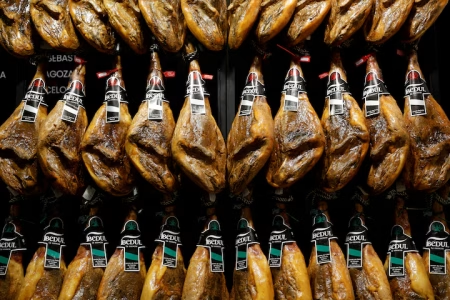
China has suspended pork imports from Barcelona province after Spain confirmed African swine fever (ASF) in wild boar.
The decision immediately disrupted trade flows, reflecting Beijing’s strict animal health protocols and its reliance on Spanish pork supplies. Spain is one of China’s largest pork exporters, making the suspension particularly significant for both markets.
Reuters reported that the ban was announced soon after Spain confirmed the outbreak, underscoring the speed of China’s response.
Spain confirms first ASF case since 1994
Spanish authorities reported ASF in wild boar, marking the country’s first detection since 1994. Officials stressed that domestic pigs remain unaffected, but the outbreak raised concerns among trading partners.
The agriculture ministry announced enhanced monitoring and containment measures to prevent spread. Surveillance efforts are being intensified, with biosecurity protocols reinforced across farms and transport networks.
Trade and industry implications
Barcelona province is a major hub for pork production and exports. The suspension affects shipments from this region, creating uncertainty for exporters and producers. Industry groups warned that localized ASF detections can trigger broader disruptions. Exporters now face delays, while producers in unaffected regions hope to maintain access to international buyers.
Spain’s pork industry has grown steadily, with exports playing a vital role in supporting farmers and processors. China’s suspension highlights vulnerabilities in global pork trade when animal health events occur. Even limited outbreaks can reshape supply chains, forcing producers to adjust quickly.
Government response and outlook
Spain’s agriculture ministry emphasized that ASF poses no risk to human health but requires strict controls to protect livestock. Officials reassured partners that surveillance and biosecurity measures are being reinforced. The ministry also highlighted coordination with regional authorities to ensure rapid containment.
China’s cautious stance reflects its experience with past ASF outbreaks, which devastated domestic herds and reshaped global pork markets. The suspension may prompt other importing countries to review protocols, though no wider bans have yet been announced.
The outbreak underscores how quickly animal health events can reshape trade. Spain must balance containment efforts with reassurance to trading partners, while exporters adjust to sudden market restrictions. The incident also illustrates the importance of transparent communication between governments and industry stakeholders.
Broader implications for global trade
ASF remains one of the most serious threats to swine populations worldwide. While Spain’s outbreak is limited to wild boar, the detection has already influenced international trade. China’s swift suspension demonstrates how importing countries act decisively to protect domestic herds.
For Spain, the challenge lies in containing the outbreak while maintaining confidence among buyers. The situation may encourage diversification of export markets and renewed investment in biosecurity. Global pork trade will continue to face risks from animal diseases, requiring vigilance and cooperation across borders.