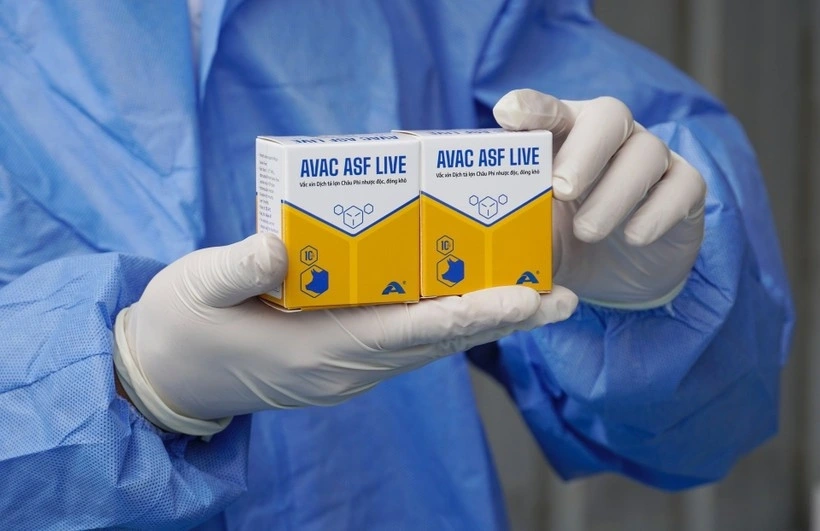
Colombian exporters see the Philippines as a gateway to Asia-Pacific growth, with rising demand for imported pork driving opportunities.





Colombia has secured approval to export pork and beef to the Philippines. The decision follows the Philippine Department of Agriculture’s recognition of Colombian health certificates for both products. This marks a significant step in Colombia’s efforts to expand its presence in Asia.
The approval was announced after technical evaluations confirmed that Colombian sanitary standards met Philippine requirements. The move opens a new Asia-Pacific market for Colombian livestock producers, who have been seeking broader international opportunities.
The recognition of Colombian health certificates is central to the agreement. Philippine authorities reviewed documentation from Colombia’s National Institute for Food and Drug Surveillance and the Colombian Agricultural Institute. Both agencies oversee sanitary and phytosanitary compliance for meat exports.
By granting approval, the Philippines signaled confidence in Colombia’s food safety systems. This recognition allows Colombian exporters to ship pork and beef directly, without additional certification hurdles. It also strengthens bilateral agricultural ties between the two countries.
Colombian producers view the Philippines as a gateway to the wider Asia-Pacific region. The country’s growing demand for imported meat, particularly pork, offers opportunities for new suppliers. Rising consumption and supply gaps have made the Philippines an attractive destination for exporters.
Colombia’s livestock sector has been working to diversify markets beyond Latin America. Access to the Philippines adds to existing trade relationships in countries such as Chile and Russia. Industry leaders believe this expansion will help stabilize prices and support domestic producers.
The Colombian Federation of Livestock Farmers (Fedegán) welcomed the announcement. Officials highlighted the importance of gaining entry into a market with strong demand for pork and beef. They emphasized that the approval reflects years of work to meet international standards.
Fedegán noted that Colombian pork and beef exports have grown steadily in recent years. The Philippines’ decision is expected to accelerate this trend by opening a new channel for shipments. Producers are preparing to meet demand with consistent supply and quality.
For the Philippines, the approval diversifies its meat import sources. The country has relied heavily on Brazil, US, and European suppliers. Adding Colombia reduces dependence on traditional partners and strengthens food security.
Philippine officials stressed that expanding supplier options helps stabilize domestic markets. With pork deficits continuing to challenge local producers, imports remain essential to meet consumer demand. Colombia’s entry into the market supports this strategy.
Colombian exporters are expected to begin shipments once logistics are finalized. Industry groups are coordinating with Philippine importers to establish supply chains. Initial volumes may be modest, but stakeholders anticipate growth as confidence builds.
The approval also enhances Colombia’s reputation as a reliable meat exporter. Success in the Philippines could encourage other Asia-Pacific countries to consider similar agreements. For Colombian producers, this represents a long-term opportunity to expand their global footprint.





Subscribe now to the technical pig magazine
AUTHORS

Bifet Gracia Farm & Nedap – Automated feeding in swine nurseries

The importance of Water on pig farms
Fernando Laguna Arán
Microbiota & Intestinal Barrier Integrity – Keys to Piglet Health
Alberto Morillo Alujas
Impact of Reducing Antibiotic use, the Dutch experience
Ron Bergevoet
The keys to successful Lactation in hyperprolific sows
Mercedes Sebastián Lafuente
Addressing the challenge of Management in Transition
Víctor Fernández Segundo
Dealing with the rise of Swine Dysentery
Roberto M. C. Guedes
Actinobacillus pleuropneumoniae – What are we dealing with?
Marcelo Gottschalk
The new era of Animal Welfare in Pig Production – Are we ready?
Antonio Velarde
Gut health in piglets – What can we do to measure and improve it?
Alberto Morillo Alujas
Interview with Cristina Massot – Animal Health in Europe after April 2021
Cristina Massot
Differential diagnosis of respiratory processes in pigs
Desirée Martín Jurado Gema Chacón Pérez


To provide the best experiences, we use technologies like cookies...