The Agriculture Department’s plan to raise tariffs faces opposition from importers and foreign groups citing inflation and trade risks.





The debate over pork tariffs in the Philippines has intensified, with local and foreign industry groups warning that higher duties could fuel inflation, disrupt supply chains, and trigger trade disputes. The Department of Agriculture’s (DA) proposal to reclassify pork jowl as pork meat faces strong opposition from importers and international stakeholders.
The DA has proposed raising tariffs on imported pork in general. In‑quota imports would face a 25% duty, while out‑quota shipments would be charged 35%. By 2028, rates would rise further to 30% and 40%. Officials argue that higher tariffs will protect local pig producers and align tariff treatment with commercial use. Industry groups counter that the move risks raising consumer prices and complicating trade relations.
Beyond the general tariff increase, pork jowl has become a focal point. Currently classified as offal, jowl imports enjoy lower duties. The DA wants to reclassify jowl as swine meat, subjecting it to the higher pork tariff schedule. Officials estimate this could generate USD 21.6–43.2 million (USD 1:PHP 62) in added revenue. Critics argue that jowl is widely used in Filipino cuisine, particularly sisig, and reclassification would sharply raise costs for households and restaurants.
The Meat Importers and Traders Association (MITA) has strongly opposed both the general tariff hike and the jowl reclassification. President Emeritus Jesus Cham explained that falling live pig prices were driven by ASF‑related preemptive liquidations, not import competition. He warned that higher tariffs would inflate retail pork prices, penalizing households already struggling with food costs. MITA also stressed that processors, restaurants, and small enterprises would face higher input costs, forcing menu price increases nationwide.


Meanwhile, the US’ National Pork Producers Council (NPPC) urged Philippine regulators to retain pork jowls as edible offal, consistent with World Customs Organization (WCO) standards. The NPPC highlighted the US Customs and Border Protection’s 2025 ruling affirming pork jowls as offal, as well as EU practices treating similar cuts the same way. Reclassification, they warned, could violate trade norms and expose the Philippines to disputes.
The British Chamber of Commerce Philippines (BCCP) echoed concerns, urging clarity on tariff rules to avoid inflationary pressures. Executive Vice Chairman Chris Nelson noted that raising tariffs contradicts efforts to stabilize supply amid inflation risks. He pointed out that local pig production remains constrained, with swine inventory at 8.7 million heads in Q1 2026, the lowest since 1994. ASF continues to affect 13 regions and 31 provinces, limiting recovery. Mr Nelson also highlighted growing UK interest in the Philippine market, with pork and beef exports rising year‑to‑date.
Headline inflation slowed to 6.1% in August, but food inflation remains a concern. Pork accounts for a significant share of the consumer price index basket, meaning tariff hikes could directly impact household budgets. Importers warn that higher duties would raise costs for canned goods, processed meat, and staples, while squeezing margins for restaurants and food service operators. Consumers would likely face higher prices at supermarkets and eateries, compounding inflationary pressures.
Industry groups also flagged potential repercussions for Philippine trade negotiations with the EU, Canada, Chile, and members of the Comprehensive and Progressive Agreement for Trans‑Pacific Partnership (CPTPP). Unilateral tariff hikes could complicate talks and weaken the country’s credibility in adhering to international standards. The NPPC stressed that inconsistent classification of pork jowls could undermine trust in Philippine regulatory practices, discouraging investment and trade expansion.
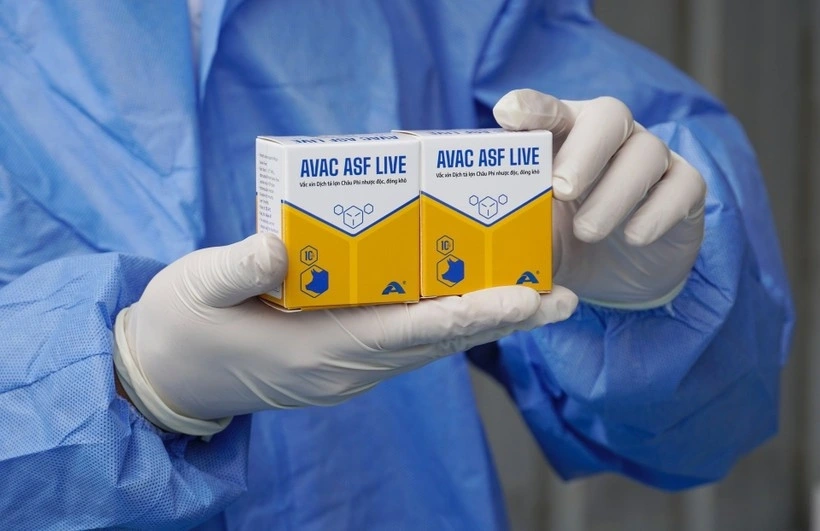
The debate also underscores the lingering impact of African swine fever (ASF) on local production. Despite efforts to rebuild herds, outbreaks continue to limit recovery. The DA’s tariff proposal aims to shield local producers, but critics argue that protectionist measures cannot offset disease‑related supply constraints. Instead, they call for stronger biosecurity, vaccination programs, and support for farmers to restore production capacity.
The Tariff Commission is expected to deliberate on the DA’s proposal, with hearings and position papers shaping the final decision. Stakeholders remain divided: local producers seek protection, while importers and foreign groups stress affordability and compliance with global rules. The outcome will determine whether tariffs rise, potentially reshaping pork supply chains and consumer prices in the Philippines.





Subscribe now to the technical pig magazine
AUTHORS

Bifet Gracia Farm & Nedap – Automated feeding in swine nurseries

The importance of Water on pig farms
Fernando Laguna Arán
Microbiota & Intestinal Barrier Integrity – Keys to Piglet Health
Alberto Morillo Alujas
Impact of Reducing Antibiotic use, the Dutch experience
Ron Bergevoet
The keys to successful Lactation in hyperprolific sows
Mercedes Sebastián Lafuente
Addressing the challenge of Management in Transition
Víctor Fernández Segundo
Dealing with the rise of Swine Dysentery
Roberto M. C. Guedes
Actinobacillus pleuropneumoniae – What are we dealing with?
Marcelo Gottschalk
The new era of Animal Welfare in Pig Production – Are we ready?
Antonio Velarde
Gut health in piglets – What can we do to measure and improve it?
Alberto Morillo Alujas
Interview with Cristina Massot – Animal Health in Europe after April 2021
Cristina Massot
Differential diagnosis of respiratory processes in pigs
Desirée Martín Jurado Gema Chacón Pérez


To provide the best experiences, we use technologies like cookies...