Historically, ASF infections tend to increase during the rainy season.





Fears over a potential African swine fever (ASF) outbreak pulled down pork prices ahead of the rainy season, the Philippines’ Department of Agriculture (DA) said.
The DA said local pig raisers rushed to sell their animals before the rainy season, worried that changing weather conditions could trigger another ASF outbreak.
The agency previously noted that historically, ASF infections tend to increase during the rainy season.
Agriculture Secretary Francisco Tiu Laurel Jr said this fast break move, rather than rising imports, was the reason behind declining farm-gate prices.


Mr Tiu Laurel said pig prices in Mindanao decreased despite the minimal entry of imported pork into the region.
“Rather than risk getting hit by ASF, or having an outbreak occur next door, they want to sell everything before they are affected,” he told Inquirer.
Pig and pork prices
Data from the Philippine Statistics Authority (PSA) showed that the average farm-gate prices of pigs had declined by almost 19% to around USD 2.75/kg in Q2 2026 from around USD 3.38/kg a year ago.
Mr Tiu Laurel said the situation was a contrast to the sharp increases in pork prices last year, with pork belly prices ranging from around USD 7.17 to USD 7.81 a kilo, while pork shoulder rose to around USD 6.38/kg amid an ASF outbreak.
“The decline comes after high pork prices last year encouraged raisers to expand production, bringing more pigs to market this year,” he added.
Production versus import
As of August 7, the Bureau of Animal Industry (BAI) recorded active ASF cases in 20 provinces spanning 12 regions.
Despite the prevalence of the animal disease, the PSA reported that pork production had climbed by 5.6% to 412,280 tons in the second quarter.
Meanwhile, pork imports totaled 541.41 million kg between January and July this year, up 10.3% from last year, based on data from BAI.
BAI is projecting pork imports to drop by about 50,000 tons this year from the 851,760 tons recorded in 2025 due to a combination of higher local production and higher import volume last year by food processors.
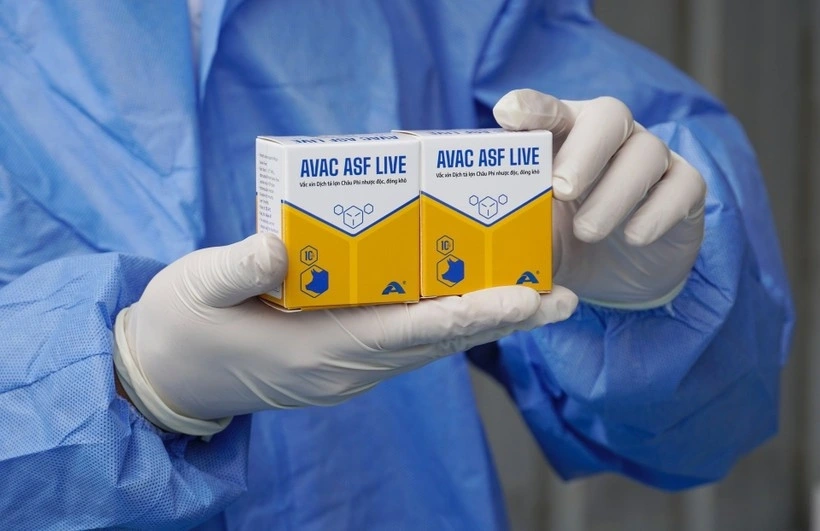
The DA said the BAI’s approval of the commercial sale of an ASF vaccine could lead to a shift in the market.
“The vaccine should encourage pig raisers to expand production in the coming months, helping stabilize domestic supply and gradually reduce the need for imports,” Mr Tiu Laurel said.





Subscribe now to the technical pig magazine
AUTHORS

Bifet Gracia Farm & Nedap – Automated feeding in swine nurseries

The importance of Water on pig farms
Fernando Laguna Arán
Microbiota & Intestinal Barrier Integrity – Keys to Piglet Health
Alberto Morillo Alujas
Impact of Reducing Antibiotic use, the Dutch experience
Ron Bergevoet
The keys to successful Lactation in hyperprolific sows
Mercedes Sebastián Lafuente
Addressing the challenge of Management in Transition
Víctor Fernández Segundo
Dealing with the rise of Swine Dysentery
Roberto M. C. Guedes
Actinobacillus pleuropneumoniae – What are we dealing with?
Marcelo Gottschalk
The new era of Animal Welfare in Pig Production – Are we ready?
Antonio Velarde
Gut health in piglets – What can we do to measure and improve it?
Alberto Morillo Alujas
Interview with Cristina Massot – Animal Health in Europe after April 2021
Cristina Massot
Differential diagnosis of respiratory processes in pigs
Desirée Martín Jurado Gema Chacón Pérez


To provide the best experiences, we use technologies like cookies...