


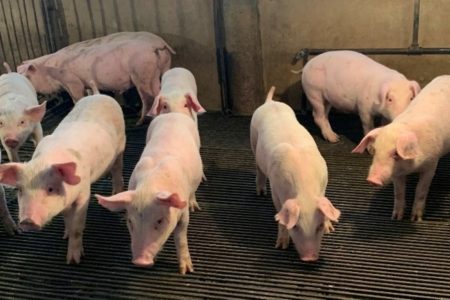
Weaning is one of the most critical and stressful phases in swine production, with long-term impacts on lifetime growth and market performance. Piglets are typically weaned between 3 to 4 weeks of age, an abrupt transition when both their digestive and immune systems remain immature. The sudden shift from sow milk to dry feed—combined with environmental and social stress, frequently leads to low feed intake, gut dysfunction, and post-weaning diarrhea.
In tropical and subtropical regions such as Southeast Asia, elevated ambient temperatures and humidity further suppress feed intake, making post-weaning nutritional management even more decisive. Research demonstrates that piglets with zero growth in the first week post-weaning require up to 10 additional days to reach market weight compared to cohorts gaining over 227 g/day. Overcoming early intake lag is therefore essential to maintain farm efficiency and profitability.
The importance of early feed and water intake
During the initial 24 to 48 hours post-weaning, piglets typically experience a severe energy deficit. Only about 50% of weaned pigs consume dry feed within the first 24 hours, and just 60% eat within 48 hours. Consequently, piglets can lose 100–250 g of body weight on day one and may require 3 to 7 days just to recover their initial weaning weight. It can take up to 8 to 14 days post-weaning to regain pre-weaning energy intake levels.
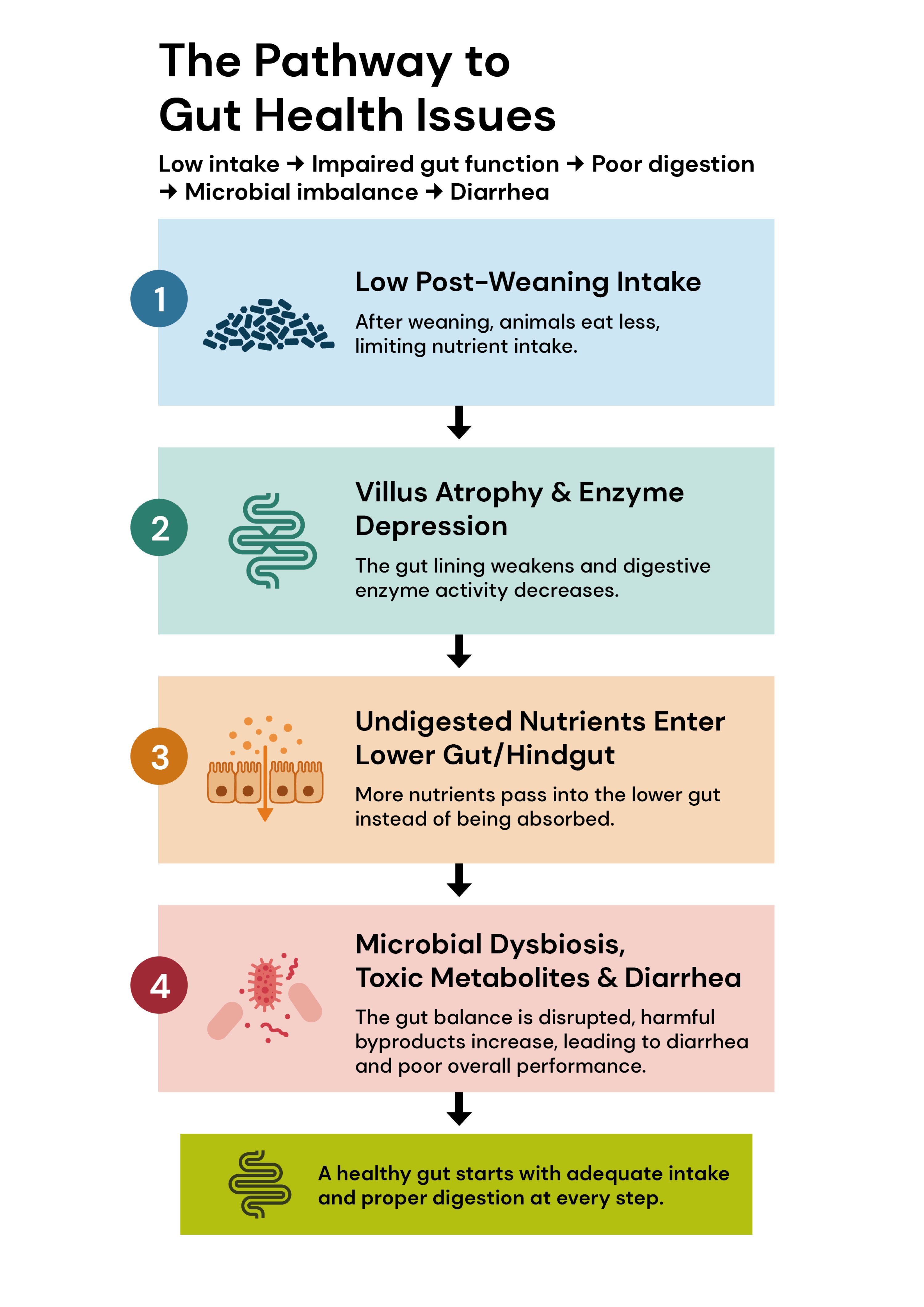

This period of low intake triggers villus atrophy, reduces digestive enzyme secretion, and impairs nutrient absorption. Undigested nutrients enter the large intestine, fueling pathogenic fermentation that generates toxic metabolites like ammonia and biogenic amines (such as cadaverine from lysine decarboxylation). This dysbiosis inflames gut tissue, triggers post-weaning diarrhea, and increases mortality.
To mitigate this transition:
- ✅ High-palatability creep feeding: Offering creep feed during late lactation prepares the gut microbiome, stimulates digestive enzyme activity (carbohydrases and proteases), and bridges the sensory gap from liquid milk to dry solid feed.
- ✅ Unrestricted clean water access: Water intake directly drives solid feed intake; ensuring adequate flow rates and cool, clean water encourages early dry feed consumption.
- ✅ Target intake benchmarks: Achieving an intake of over 250 g/day during week one helps pigs reach target slaughter weight up to 10 days earlier.
Phytogenic feed additives: Modes of action
Phytogenic feed additives (PFAs)—standardized natural blends of plant extracts, essential oils, and herbs—provide a proven nutritional strategy to stimulate feed intake and support gut integrity. Formulations combining active botanicals like oregano, star anise, and citrus oils deliver targeted modes of action:
- ✅ Sensory enhancement: Pigs have a highly sensitive olfactory and taste system, showing clear preferences for sweet, fruity, and milky flavor profiles. Plant-derived flavor compounds mask unpalatable feed ingredients and encourage voluntary feed intake during the critical post-weaning window.
- ✅ Digestive enzyme stimulation: Phytogenic compounds stimulate endogenous secretion of digestive enzymes (amylase, pepsin, and trypsin), improving the breakdown and absorption of crude protein and amino acids.
- ✅ Microbial balance & gut integrity: Active constituents such as carvacrol and anethole suppress pathogenic proliferation in the gut. By limiting pathogenic bacterial load, PFAs reduce competitive nutrient uptake, lower inflammatory tissue turnover, and decrease harmful metabolite production (e.g., ammonia).
Impact on digestibility and animal performance
Trials evaluating PFA supplementation (e.g., 300 g/t) in weaned piglets demonstrate significant enhancements in ileal nutrient digestibility and overall performance:


Complementary research at the Centre of Animal Nutrition (Mank, Austria) confirmed that PFA supplementation drives body weight gains of over 6.5% and improves nursery feed conversion ratio (FCR).
Establishing robust feed intake in the immediate post-weaning window is fundamental to lifetime pig performance and farm profitability. Phytogenic feed additives offer a practical, science-backed solution to stimulate appetite, improve ileal amino acid digestibility, and protect intestinal architecture during this vulnerable transition. Integrating proven phytogenic solutions into nursery feeding programs enables producers to minimize post-weaning lag, maintain gut health, and maximize total throughput.