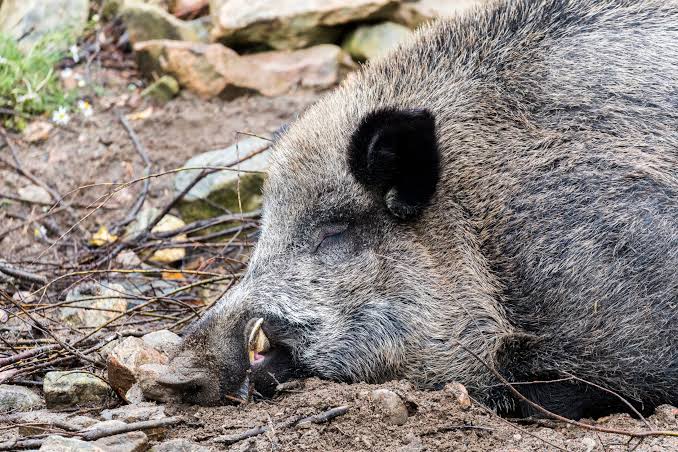
Authorities confirmed the ASF virus as a recombinant strain linked to China, prompting strict quarantine, surveillance, and public awareness campaigns.





Taiwan has intensified epidemic prevention after a pig carcass found in a Kinmen beach tested positive for African swine fever (ASF), raising concerns about cross-border transmission from China. Authorities confirmed the virus as a recombinant strain linked to outbreaks in coastal China, prompting strict quarantine, surveillance, and public awareness measures.
President Lai Ching-te urged government agencies to remain alert following the discovery. The carcass, which had drifted ashore, was quickly incinerated and buried. Authorities disinfected the site and suspended shipments of pork and processed products from Kinmen to Taiwan proper and other offshore islands.
This case marked the 21st ASF-positive carcass found since 2018, underscoring the persistent risk of the virus crossing from China. Mr Lai emphasized that interagency coordination and public communication are essential to safeguard Taiwan’s pig industry.
The Coast Guard Administration has stepped up coastal patrols and anti-smuggling operations, while the Animal and Plant Health Inspection Agency reinforced border quarantine checks. Health inspections of nearby pig farms confirmed that all animals remain healthy.


The Veterinary Research Institute sequenced the virus, identifying a novel recombinant strain widespread in China and linked to a 2024 Hong Kong isolate.
Officials classified the case as imported, underscoring China’s ongoing epidemic conditions and Taiwan’s urgent need to uphold strict biosecurity measures.
Authorities have launched awareness campaigns at airports and ports, warning travelers against bringing pork products into Taiwan. Contaminated meat, kitchen waste, or improperly handled carcasses can transmit ASF. Officials stressed that anyone spotting pig carcasses should avoid contact and immediately report to local epidemic prevention units.
The Kinmen County Animal and Plant Disease Control Center inspected 25 pig farms within 10km of the site, with all animals testing negative. Personnel, vehicles, and tools involved in handling the case were disinfected to prevent spread.
In April, the World Organisation for Animal Health recognized Taiwan’s ASF-free status. The latest case, however, demonstrates the fragility of that designation. Mr Lai noted that Taiwan’s prevention expertise remains strong, but vigilance is vital to protect the pig farming sector and food safety.
The government launched top-level epidemic measures, stressing Taiwan’s ASF-free status relies on cooperation among agencies, farmers, and citizens.



Subscribe now to the technical pig magazine
AUTHORS

Bifet Gracia Farm & Nedap – Automated feeding in swine nurseries

The importance of Water on pig farms
Fernando Laguna Arán
Microbiota & Intestinal Barrier Integrity – Keys to Piglet Health
Alberto Morillo Alujas
Impact of Reducing Antibiotic use, the Dutch experience
Ron Bergevoet
The keys to successful Lactation in hyperprolific sows
Mercedes Sebastián Lafuente
Addressing the challenge of Management in Transition
Víctor Fernández Segundo
Dealing with the rise of Swine Dysentery
Roberto M. C. Guedes
Actinobacillus pleuropneumoniae – What are we dealing with?
Marcelo Gottschalk
The new era of Animal Welfare in Pig Production – Are we ready?
Antonio Velarde
Gut health in piglets – What can we do to measure and improve it?
Alberto Morillo Alujas
Interview with Cristina Massot – Animal Health in Europe after April 2021
Cristina Massot
Differential diagnosis of respiratory processes in pigs
Desirée Martín Jurado Gema Chacón Pérez


To provide the best experiences, we use technologies like cookies...