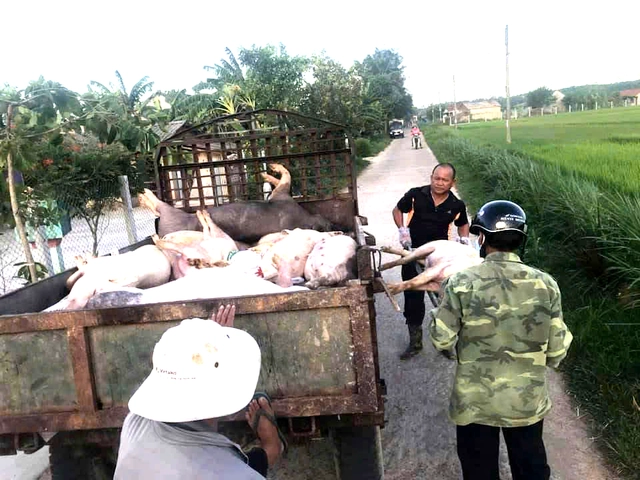
A study of the ASF outbreak in Lipa City revealed how disease can cripple farms, communities, and ecosystems, underscoring the need for sustainable pig farming.





From 2020 to 2024, the African swine fever (ASF) crisis in Lipa City, Batangas Province, Philippines showed how animal disease outbreaks can extend far beyond farms. What began as a threat to swine health became a multidimensional crisis affecting farm productivity, livelihoods, local economies, public resources, and the environment. The lesson is clear: the future of Philippine swine production must rest not only on disease prevention and biosecurity, but also on environmental sustainability and responsible resource management.
The outbreak severely disrupted the local piggery industry. Farmers experienced mass culling, operational shutdowns, increased biosecurity expenditures, and significant economic uncertainty. Workers, suppliers, processors, and communities likewise experienced declining income and disrupted economic activity. Government agencies and local authorities faced increased demands for disease containment, compensation, monitoring, and recovery programs.
One of the most consequential yet often overlooked dimensions of the ASF crisis is its environmental impact. Intensive pig production already generates substantial quantities of manure and wastewater. During an outbreak, however, the sudden need to dispose of large numbers of culled animals creates an added environmental burden.
In Lipa City, poor management of manure and wastewater contributed to the contamination of rivers and streams through nutrients and pathogens. Excessive nitrates and phosphates can contribute to eutrophication and declining water quality, threatening aquatic ecosystems. Meanwhile, the improper burial or burning of infected carcasses created more risks to soil, groundwater, and air quality.


The extensive use of disinfectants, antibiotics, and other chemicals during disease-control operations also raises environmental concerns. These substances, when poorly managed, may contribute to ecological disruption and reinforce concerns about antimicrobial resistance. The experience therefore highlights the necessity of integrating environmental management into comprehensive ASF preparedness and response systems.
The government has established protocols for carcass disposal, waste management, and water quality protection through relevant agencies, including the Department of Agriculture and the Department of Environment and Natural Resources. However, the effectiveness of these policies depends on consistent implementation, adequate monitoring, institutional coordination, and compliance at the farm and local-government levels.
The ASF experience shows that regulations alone are insufficient. Sustainable disease management needs a governance framework in which farmers, local governments, national agencies, technical experts, and communities share responsibility. Monitoring mechanisms must be strengthened, enforcement must be consistent, and farmers should be supported through appropriate incentives and technical assistance.
Despite the severity of the crisis, the recovery of Lipa’s swine industry illustrates the resilience of farmers and agricultural enterprises. Pork production declined significantly during 2020 and 2021 but began to recover in 2022. By 2024, production had reached approximately 14,200 tons, while exports represented about 15 percent of distribution. The recovery was associated with improved biosecurity, modernization of farm practices, better waste management systems, diversification, and exploration of renewable energy solutions.
This recovery shows that productivity and environmental responsibility do not have to be competing goals. On the contrary, investments in biosecurity, resource efficiency, waste treatment, and renewable energy can contribute to both farm resilience and long-term economic viability.
The recovery, however, should not be interpreted as the end of the crisis. ASF recurrence remains a major threat to production and profitability. Rising feed costs, volatile market conditions, competition from imported pork, and increasing environmental expectations continue to place pressure on producers.
A particularly important structural weakness is still inadequate waste-management infrastructure. Farms that lack appropriate systems for treating and disposing of animal waste face risks of water and soil pollution, while methane and ammonia emissions contribute to broader environmental and climate concerns. Failure to comply with environmental standards may ultimately threaten the continued operation of vulnerable farms.
ASF should therefore be understood as more than a veterinary problem. Its consequences extend throughout the agricultural value chain. Mass culling reduces employment and farm income, while production disruptions affect feed suppliers, processors, traders, retailers, and consumers. At the provincial and national levels, a decline in pork supply can contribute to price increases and food-security concerns, while government expenditures on biosecurity and compensation place additional pressure on public resources.
This interconnected impact calls for a more integrated approach to agricultural policy—one that recognizes the relationship between animal health, environmental protection, economic resilience, food security, and community welfare.
The central lesson from the ASF experience is clear: the recovery of the swine industry must be accompanied by a transformation toward more sustainable production systems.
Sustainable pig farming requires more than rebuilding herd populations. It requires investment in proper waste-treatment facilities, responsible carcass-disposal systems, water-quality protection, efficient resource use, renewable-energy technologies, and strengthened farm biosecurity. It also requires farmers and institutions to recognize environmental compliance as an essential part of business continuity rather than merely a regulatory obligation.
The environmental consequences of improper carcass burial, uncontrolled burning, and inadequate waste management show the urgency of this transition. Without stronger environmental safeguards, disease-control measures themselves may inadvertently create secondary ecological risks.
The ASF crisis in Lipa City offers a valuable case study for the future of Philippine agriculture. It reveals the vulnerability of the swine industry to biological shocks while simultaneously showing the capacity of farmers and institutions to adapt and recover.
The challenge now is to transform the lessons of the crisis into long-term policy and industry practice. Stronger enforcement, integrated government coordination, sustainable waste management, green technologies, improved biosecurity, and responsible farm governance must become fundamental elements of modern pig production.
Sustainable swine farming is not simply about producing more pork. It is about producing responsibly, protecting farmers and consumers, and preserving the soil, water, air, and ecosystems on which agricultural communities depend.
The ASF crisis has shown us the cost of unsustainable practices. The opportunity before us is to build a swine industry that is more resilient, more environmentally responsible, and better prepared for future challenges.
*Almond Ray Baldovino, PhD is President and CEO of Realvet Inc Philippines, a business engaged in the importation and distribution of animal health, nutrition, and sanitation products in the Philippines.





Subscribe now to the technical pig magazine
AUTHORS

Bifet Gracia Farm & Nedap – Automated feeding in swine nurseries

The importance of Water on pig farms
Fernando Laguna Arán
Microbiota & Intestinal Barrier Integrity – Keys to Piglet Health
Alberto Morillo Alujas
Impact of Reducing Antibiotic use, the Dutch experience
Ron Bergevoet
The keys to successful Lactation in hyperprolific sows
Mercedes Sebastián Lafuente
Addressing the challenge of Management in Transition
Víctor Fernández Segundo
Dealing with the rise of Swine Dysentery
Roberto M. C. Guedes
Actinobacillus pleuropneumoniae – What are we dealing with?
Marcelo Gottschalk
The new era of Animal Welfare in Pig Production – Are we ready?
Antonio Velarde
Gut health in piglets – What can we do to measure and improve it?
Alberto Morillo Alujas
Interview with Cristina Massot – Animal Health in Europe after April 2021
Cristina Massot
Differential diagnosis of respiratory processes in pigs
Desirée Martín Jurado Gema Chacón Pérez